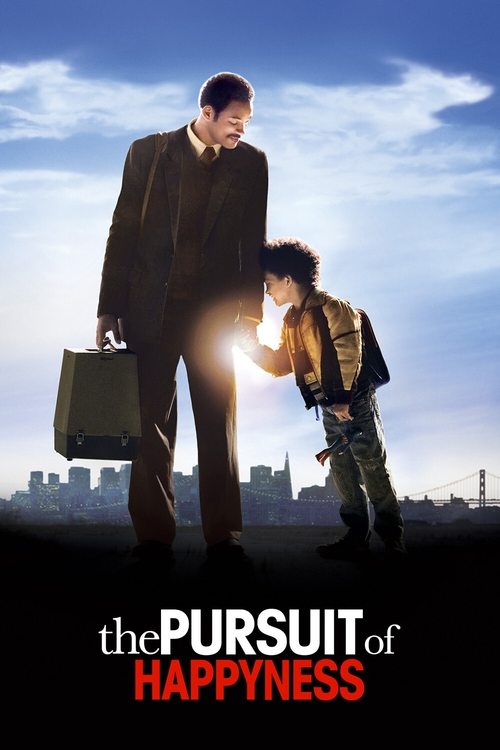
The Pursuit of Happyness
A struggling salesman takes custody of his son as he's poised to begin a life-changing professional career.
Despite a moderate budget of $55.0M, The Pursuit of Happyness became a financial success, earning $307.1M worldwide—a 458% return.
Nominated for 1 Oscar. 12 wins & 26 nominations


Plot Structure
Story beats plotted across runtime


Narrative Arc
Emotional journey through the story's key moments
Story Circle
Blueprint 15-beat structure
Arcplot Score Breakdown
Weighted: Precision (70%) + Arc (15%) + Theme (15%)
The Pursuit of Happyness (2006) reveals precise narrative design, characteristic of Gabriele Muccino's storytelling approach. This structural analysis examines how the film's 15-point plot structure maps to proven narrative frameworks across 1 hour and 57 minutes. With an Arcplot score of 7.6, the film showcases strong structural fundamentals.
Structural Analysis
The Status Quo at 2 minutes (2% through the runtime) establishes Chris Gardner struggles as a salesman selling bone density scanners in San Francisco, barely making ends meet with his wife Linda and young son Christopher. We see him running through the streets, establishing his world of constant hustle and financial strain.. Notably, this early placement immediately immerses viewers in the story world.
The inciting incident occurs at 13 minutes when Linda leaves Chris, taking their son with her initially, unable to bear the financial strain any longer. Chris's world collapses as his marriage falls apart and he faces the prospect of losing his family while drowning in debt.. At 12% through the film, this Disruption aligns precisely with traditional story structure. This beat shifts the emotional landscape, launching the protagonist into the central conflict.
The First Threshold at 29 minutes marks the transition into Act II, occurring at 25% of the runtime. This reveals the protagonist's commitment to Chris makes the active choice to pursue the Dean Witter internship despite it being unpaid for six months. He commits to this path, accepting that he and Christopher will face even greater hardship but betting on a better future., moving from reaction to action.
At 59 minutes, the Midpoint arrives at 50% of the runtime—precisely centered, creating perfect narrative symmetry. Notably, this crucial beat Chris and Christopher are forced to sleep in a subway bathroom, barricading the door while Chris holds his crying son. This false defeat shows the depths of their homelessness. The stakes raise dramatically - it's no longer just about career success but basic survival and dignity., fundamentally raising what's at risk. The emotional intensity shifts, dividing the narrative into clear before-and-after phases.
The Collapse moment at 87 minutes (74% through) represents the emotional nadir. Here, Chris's closest hope dies when he learns only one intern position out of twenty will be offered a job. He realizes the overwhelming odds against him. Additionally, one of his bone density scanners (his financial backup) is stolen, representing the death of his safety net and former identity., indicates the protagonist at their lowest point. This beat's placement in the final quarter sets up the climactic reversal.
The Second Threshold at 93 minutes initiates the final act resolution at 80% of the runtime. Chris completes the internship program and is called in for the final meeting. He realizes he has done everything possible - worked harder, made more calls, and never gave up despite impossible circumstances. He enters the meeting knowing he gave his absolute best., demonstrating the transformation achieved throughout the journey.
Emotional Journey
The Pursuit of Happyness's emotional architecture traces a deliberate progression across 15 carefully calibrated beats.
Narrative Framework
This structural analysis employs proven narrative structure principles that track dramatic progression. By mapping The Pursuit of Happyness against these established plot points, we can identify how Gabriele Muccino utilizes or subverts traditional narrative conventions. The plot point approach reveals not only adherence to structural principles but also creative choices that distinguish The Pursuit of Happyness within the drama genre.
Gabriele Muccino's Structural Approach
Among the 3 Gabriele Muccino films analyzed on Arcplot, the average structural score is 7.6, reflecting strong command of classical structure. The Pursuit of Happyness exemplifies the director's characteristic narrative technique. For comparative analysis, explore the complete Gabriele Muccino filmography.
Comparative Analysis
Additional drama films include After Thomas, South Pacific and Dirty Dancing: Havana Nights. For more Gabriele Muccino analyses, see There's No Place Like Home, Playing for Keeps.
Plot Points by Act
Act I
SetupStatus Quo
Chris Gardner struggles as a salesman selling bone density scanners in San Francisco, barely making ends meet with his wife Linda and young son Christopher. We see him running through the streets, establishing his world of constant hustle and financial strain.
Theme
Chris sees a happy man in a red Ferrari and asks him what he does and how he does it. The man replies he's a stockbroker. This moment plants the seed that happiness can be pursued through a different path, embodying the film's theme about the pursuit of happiness through self-determination.
Worldbuilding
We see Chris's daily struggles: selling scanners that no one wants, his wife Linda working double shifts, their mounting debts, and parking tickets. His relationship with his son is loving but strained by poverty. Linda grows increasingly frustrated with their situation.
Disruption
Linda leaves Chris, taking their son with her initially, unable to bear the financial strain any longer. Chris's world collapses as his marriage falls apart and he faces the prospect of losing his family while drowning in debt.
Resistance
Chris debates whether he can pursue the Dean Witter internship program while being a single father. He impresses Jay Twistle at Dean Witter by solving a Rubik's Cube in a taxi. Christopher returns to live with him. Chris struggles between stability and opportunity, knowing the internship is unpaid.
Act II
ConfrontationFirst Threshold
Chris makes the active choice to pursue the Dean Witter internship despite it being unpaid for six months. He commits to this path, accepting that he and Christopher will face even greater hardship but betting on a better future.
Mirror World
Chris's relationship with his son Christopher becomes the emotional core and thematic mirror. Christopher represents pure faith and love, teaching Chris what true happiness means beyond material success. Their bond deepens as they face homelessness together.
Premise
Chris navigates the competitive internship program while juggling single fatherhood. He works harder than the other interns, making calls without hanging up the phone to save time. He and Christopher lose their apartment and cycle through motels, shelters, and even a subway bathroom. Despite mounting adversity, Chris maintains determination.
Midpoint
Chris and Christopher are forced to sleep in a subway bathroom, barricading the door while Chris holds his crying son. This false defeat shows the depths of their homelessness. The stakes raise dramatically - it's no longer just about career success but basic survival and dignity.
Opposition
Life becomes increasingly difficult. Chris must line up earlier and earlier at the homeless shelter to secure beds. He's arrested for unpaid parking tickets, losing precious work time. He sells his last scanner. Other interns seem to have advantages he lacks. The pressure of protecting Christopher while excelling at work intensifies.
Collapse
Chris's closest hope dies when he learns only one intern position out of twenty will be offered a job. He realizes the overwhelming odds against him. Additionally, one of his bone density scanners (his financial backup) is stolen, representing the death of his safety net and former identity.
Crisis
In his darkest moment, Chris continues showing up, working harder than everyone else. He has an emotional moment with Christopher, telling him never to let anyone tell him he can't do something. He processes his despair while maintaining hope for his son.
Act III
ResolutionSecond Threshold
Chris completes the internship program and is called in for the final meeting. He realizes he has done everything possible - worked harder, made more calls, and never gave up despite impossible circumstances. He enters the meeting knowing he gave his absolute best.
Synthesis
Chris sits with the Dean Witter partners who review his performance. They ask him difficult questions, including how he would respond if they said no. The tension builds as they make him wait, testing his resolve one final time before delivering their decision.
Transformation
Chris is offered the stockbroker position. He walks out into the crowd, tears streaming down his face, applauding himself in his mind. He picks up Christopher from daycare and embraces him. The closing titles reveal the real Chris Gardner went on to found his own multimillion-dollar brokerage firm. From homeless to successful, the transformation is complete.