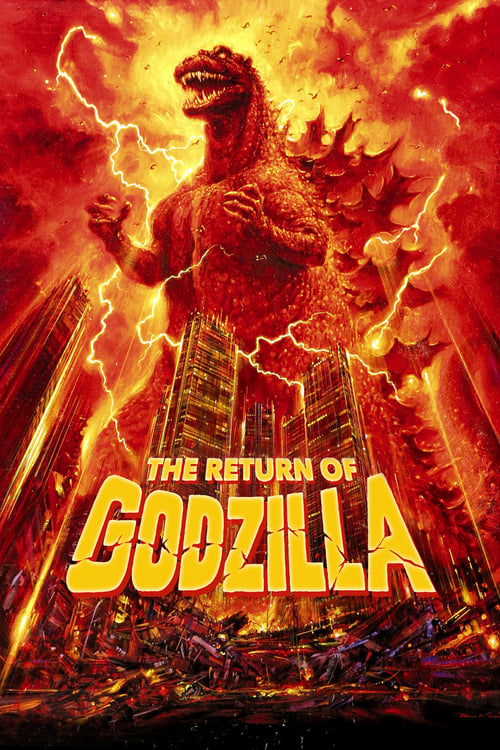
The Return of Godzilla
After a fishing boat is attacked, the sole surviving crew member realizes it is none other than a resurrected Godzilla. However, efforts to bring the story to light are suppressed by the Japanese government amid growing political tensions between the United States and the Soviet Union, who are both willing to bomb Japan to stop the monster.
Working with a tight budget of $6.0M, the film achieved a steady performer with $11.0M in global revenue (+83% profit margin).


Plot Structure
Story beats plotted across runtime


Narrative Arc
Emotional journey through the story's key moments
Story Circle
Blueprint 15-beat structure
Arcplot Score Breakdown
Weighted: Precision (70%) + Arc (15%) + Theme (15%)
The Return of Godzilla (1984) demonstrates precise story structure, characteristic of Koji Hashimoto's storytelling approach. This structural analysis examines how the film's 15-point plot structure maps to proven narrative frameworks across 1 hour and 43 minutes. With an Arcplot score of 7.1, the film balances conventional beats with creative variation.
Structural Analysis
The Status Quo at 1 minutes (1% through the runtime) establishes A fishing vessel, the Yahata-Maru, navigates calm Pacific waters during a routine voyage. Japan exists in peaceful normalcy, decades removed from the original Godzilla attacks.. The analysis reveals that this early placement immediately immerses viewers in the story world.
The inciting incident occurs at 12 minutes when Godzilla is confirmed alive after attacking the fishing vessel and a Soviet nuclear submarine. The monster that Japan believed dead has returned, shattering the nation's sense of security.. At 12% through the film, this Disruption aligns precisely with traditional story structure. This beat shifts the emotional landscape, launching the protagonist into the central conflict.
The First Threshold at 26 minutes marks the transition into Act II, occurring at 25% of the runtime. This illustrates the protagonist's commitment to Prime Minister Mitamura publicly announces Godzilla's existence and Japan's commitment to face the threat without nuclear weapons, rejecting pressure from both superpowers. Japan chooses to confront its nightmare., moving from reaction to action.
At 52 minutes, the Midpoint arrives at 50% of the runtime—precisely centered, creating perfect narrative symmetry. Notably, this crucial beat Godzilla makes landfall at a nuclear power plant, feeding on the reactor's radiation and growing more powerful. The military's conventional weapons prove completely ineffective—this is a false defeat revealing the true scale of the threat., fundamentally raising what's at risk. The emotional intensity shifts, dividing the narrative into clear before-and-after phases.
The Collapse moment at 77 minutes (75% through) represents the emotional nadir. Here, The US intercepts the Soviet missile, but the nuclear explosion in the atmosphere revives Godzilla with electromagnetic energy. The Super X is destroyed, Tokyo lies in ruins, and all hope seems lost as the monster rampages unchecked., demonstrates the protagonist at their lowest point. This beat's placement in the final quarter sets up the climactic reversal.
The Second Threshold at 82 minutes initiates the final act resolution at 80% of the runtime. Hayashida successfully activates the magnetic wave device emitting bird frequencies that capture Godzilla's attention. Rather than destruction, they will use understanding of the creature's nature to redirect it., demonstrating the transformation achieved throughout the journey.
Emotional Journey
The Return of Godzilla's emotional architecture traces a deliberate progression across 15 carefully calibrated beats.
Narrative Framework
This structural analysis employs structural analysis methodology used to understand storytelling architecture. By mapping The Return of Godzilla against these established plot points, we can identify how Koji Hashimoto utilizes or subverts traditional narrative conventions. The plot point approach reveals not only adherence to structural principles but also creative choices that distinguish The Return of Godzilla within the science fiction genre.
Comparative Analysis
Additional science fiction films include The Postman, Mad Max 2 and AVP: Alien vs. Predator.
Plot Points by Act
Act I
SetupStatus Quo
A fishing vessel, the Yahata-Maru, navigates calm Pacific waters during a routine voyage. Japan exists in peaceful normalcy, decades removed from the original Godzilla attacks.
Theme
Reporter Goro Maki discovers sole survivor Hiroshi Okumura who warns that some forces of nature cannot be controlled or reasoned with—humanity must learn to coexist with forces beyond its power.
Worldbuilding
The world of 1980s Japan is established: Cold War tensions between the US and Soviet Union, a modernized Tokyo, and the traumatic collective memory of the original Godzilla attack in 1954. Maki investigates the mysterious ship disaster.
Disruption
Godzilla is confirmed alive after attacking the fishing vessel and a Soviet nuclear submarine. The monster that Japan believed dead has returned, shattering the nation's sense of security.
Resistance
The Japanese government debates how to handle Godzilla's return while keeping it secret from the public. Professor Hayashida emerges as a scientific advisor, studying Godzilla's biology and behavior patterns.
Act II
ConfrontationFirst Threshold
Prime Minister Mitamura publicly announces Godzilla's existence and Japan's commitment to face the threat without nuclear weapons, rejecting pressure from both superpowers. Japan chooses to confront its nightmare.
Mirror World
Maki reconnects Hiroshi Okumura with his sister Naoko, who works with Professor Hayashida. Their reunion represents hope and human connection amid the crisis, while Naoko's work becomes central to finding a solution.
Premise
Japan prepares military defenses while Hayashida researches Godzilla's sensitivity to bird calls, theorizing the creature can be lured. International tensions rise as both the US and USSR demand nuclear options against the monster.
Midpoint
Godzilla makes landfall at a nuclear power plant, feeding on the reactor's radiation and growing more powerful. The military's conventional weapons prove completely ineffective—this is a false defeat revealing the true scale of the threat.
Opposition
Godzilla advances toward Tokyo despite all defenses. The Super X aerial weapon engages Godzilla with cadmium missiles, temporarily stopping the creature. Meanwhile, a Soviet satellite malfunction triggers an accidental nuclear missile launch toward Tokyo.
Collapse
The US intercepts the Soviet missile, but the nuclear explosion in the atmosphere revives Godzilla with electromagnetic energy. The Super X is destroyed, Tokyo lies in ruins, and all hope seems lost as the monster rampages unchecked.
Crisis
With conventional and advanced weapons exhausted and nuclear options rejected, Japan faces complete devastation. Hayashida realizes his bird-call theory is their only remaining chance as Godzilla destroys everything in its path.
Act III
ResolutionSecond Threshold
Hayashida successfully activates the magnetic wave device emitting bird frequencies that capture Godzilla's attention. Rather than destruction, they will use understanding of the creature's nature to redirect it.
Synthesis
Using the bird-call signal, Hayashida and the team lure Godzilla away from Tokyo toward Mount Mihara. The plan works as the creature follows the magnetic frequencies across the landscape toward the volcanic crater.
Transformation
Godzilla plunges into Mount Mihara's volcanic crater as controlled explosions seal the monster within. Japan survives not through military might but through scientific understanding. The creature is contained, not destroyed—nature endures.