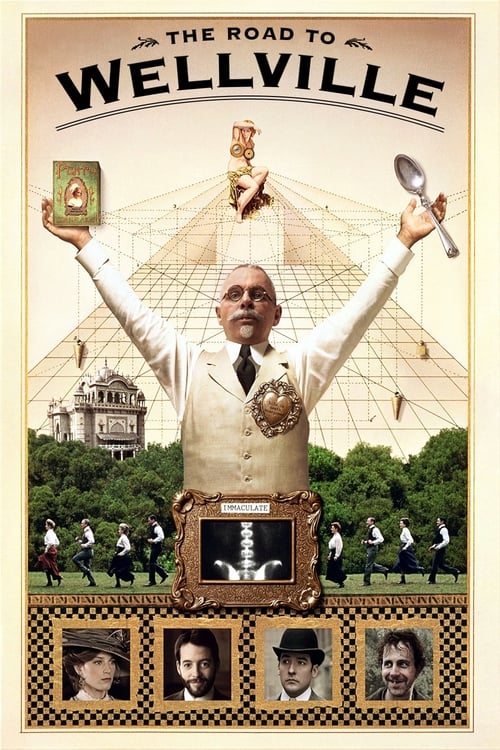
The Road to Wellville
An unhappy young couple visit the infamous Kellogg spa in Battle Creek, Michigan while a young hustler tries get into the breakfast-cereal business and compete against John Kellogg's corn flakes.
Working with a respectable budget of $25.0M, the film achieved a steady performer with $26.0M in global revenue (+4% profit margin).


Plot Structure
Story beats plotted across runtime


Narrative Arc
Emotional journey through the story's key moments
Story Circle
Blueprint 15-beat structure
Arcplot Score Breakdown
Weighted: Precision (70%) + Arc (15%) + Theme (15%)
The Road to Wellville (1994) demonstrates precise story structure, characteristic of Alan Parker's storytelling approach. This structural analysis examines how the film's 15-point plot structure maps to proven narrative frameworks across 1 hour and 58 minutes. With an Arcplot score of 7.5, the film showcases strong structural fundamentals.
Structural Analysis
The Status Quo at 1 minutes (1% through the runtime) establishes William and Eleanor Lightbody travel by train to Battle Creek, Michigan. William suffers from chronic digestive troubles while Eleanor eagerly anticipates the healing promised by Dr. Kellogg's famous sanitarium, establishing their dysfunctional marriage and desperate search for wellness.. The analysis reveals that this early placement immediately immerses viewers in the story world.
The inciting incident occurs at 14 minutes when William and Eleanor are separated into different wings of the sanitarium, forbidden from conjugal relations as part of their treatment. William is subjected to humiliating examinations and realizes the "cure" will be far more invasive and dehumanizing than he imagined.. At 12% through the film, this Disruption aligns precisely with traditional story structure. This beat shifts the emotional landscape, launching the protagonist into the central conflict.
The First Threshold at 30 minutes marks the transition into Act II, occurring at 25% of the runtime. This reveals the protagonist's commitment to William and Eleanor fully commit to the sanitarium lifestyle, allowing themselves to be completely separated and subjecting themselves to the full battery of treatments. William accepts the sinusoidal bath and other humiliating procedures, crossing into a new world of institutional health obsession., moving from reaction to action.
At 59 minutes, the Midpoint arrives at 50% of the runtime—precisely centered, creating perfect narrative symmetry. Significantly, this crucial beat Eleanor discovers William's transgressions—sneaking meat and his attraction to Nurse Graves—while William learns of Eleanor's emotional intimacy with Dr. Spitzvogel. Their marriage reaches a crisis point as the sanitarium's philosophy of suppression has driven them further apart rather than healing them. False defeat: their attempt at wellness has made everything worse., fundamentally raising what's at risk. The emotional intensity shifts, dividing the narrative into clear before-and-after phases.
The Collapse moment at 89 minutes (75% through) represents the emotional nadir. Here, William collapses from the accumulated stress of treatments and emotional turmoil. George Kellogg's factory burns down, destroying Charles Ossining's investment. The sanitarium's facade cracks as patients suffer and relationships crumble. The "whiff of death" permeates as William nearly dies and the dream of manufactured wellness lies in ashes., demonstrates the protagonist at their lowest point. This beat's placement in the final quarter sets up the climactic reversal.
The Second Threshold at 94 minutes initiates the final act resolution at 80% of the runtime. Eleanor chooses William over the sanitarium's ideology, realizing that accepting each other's imperfections is the true path to wellness. They decide to leave Battle Creek together, synthesizing the lesson: genuine health comes from human connection, not institutional control or the denial of natural desires., demonstrating the transformation achieved throughout the journey.
Emotional Journey
The Road to Wellville's emotional architecture traces a deliberate progression across 15 carefully calibrated beats.
Narrative Framework
This structural analysis employs a 15-point narrative structure framework that maps key story moments. By mapping The Road to Wellville against these established plot points, we can identify how Alan Parker utilizes or subverts traditional narrative conventions. The plot point approach reveals not only adherence to structural principles but also creative choices that distinguish The Road to Wellville within the comedy genre.
Alan Parker's Structural Approach
Among the 9 Alan Parker films analyzed on Arcplot, the average structural score is 7.0, reflecting strong command of classical structure. The Road to Wellville represents one of the director's most structurally precise works. For comparative analysis, explore the complete Alan Parker filmography.
Comparative Analysis
Additional comedy films include The Bad Guys, Ella Enchanted and The Evening Star. For more Alan Parker analyses, see Fame, The Life of David Gale and Shoot the Moon.
Plot Points by Act
Act I
SetupStatus Quo
William and Eleanor Lightbody travel by train to Battle Creek, Michigan. William suffers from chronic digestive troubles while Eleanor eagerly anticipates the healing promised by Dr. Kellogg's famous sanitarium, establishing their dysfunctional marriage and desperate search for wellness.
Theme
Dr. Kellogg lectures arriving patients that "the road to health is paved with the intestine," suggesting that true wellness requires purging the body of its impurities and desires—a philosophy the film will ultimately satirize as missing the point of genuine human fulfillment.
Worldbuilding
The elaborate world of the Battle Creek Sanitarium is established—its bizarre treatments, rigid dietary restrictions, enema obsessions, and mechanical exercise contraptions. We meet the eccentric Dr. Kellogg, the various patients seeking cures, and parallel to this, Charles Ossining's desperate scheme to manufacture corn flakes with the unstable George Kellogg.
Disruption
William and Eleanor are separated into different wings of the sanitarium, forbidden from conjugal relations as part of their treatment. William is subjected to humiliating examinations and realizes the "cure" will be far more invasive and dehumanizing than he imagined.
Resistance
William reluctantly submits to the sanitarium's regimen while questioning its methods. Eleanor becomes increasingly devoted to Dr. Kellogg's philosophy. The debate emerges: should they embrace these extreme treatments or trust their own instincts? Meanwhile, Charles Ossining struggles to launch his corn flake venture with the troubled George Kellogg.
Act II
ConfrontationFirst Threshold
William and Eleanor fully commit to the sanitarium lifestyle, allowing themselves to be completely separated and subjecting themselves to the full battery of treatments. William accepts the sinusoidal bath and other humiliating procedures, crossing into a new world of institutional health obsession.
Mirror World
William encounters Nurse Graves, who represents earthy sensuality in contrast to the sanitarium's repression. Eleanor becomes close to Dr. Spitzvogel, exploring her own suppressed desires. These relationships mirror what's missing in the Lightbodys' marriage—genuine human connection and acceptance of physical nature.
Premise
The satirical promise of the premise unfolds: absurd treatments including yogurt enemas, electrical stimulation, and mechanical exercise devices. William sneaks forbidden meat while Eleanor rises in Dr. Kellogg's esteem. Charles Ossining's corn flake scheme progresses through comic disasters. The film delivers its dark comedy of health fanaticism taken to extremes.
Midpoint
Eleanor discovers William's transgressions—sneaking meat and his attraction to Nurse Graves—while William learns of Eleanor's emotional intimacy with Dr. Spitzvogel. Their marriage reaches a crisis point as the sanitarium's philosophy of suppression has driven them further apart rather than healing them. False defeat: their attempt at wellness has made everything worse.
Opposition
The consequences of the sanitarium's extremism mount. William's health actually deteriorates from the treatments. Eleanor becomes fanatically devoted while growing distant from William. Charles Ossining's business venture faces disaster as George Kellogg proves increasingly unhinged. Dr. Kellogg's methods are revealed as more about control than healing.
Collapse
William collapses from the accumulated stress of treatments and emotional turmoil. George Kellogg's factory burns down, destroying Charles Ossining's investment. The sanitarium's facade cracks as patients suffer and relationships crumble. The "whiff of death" permeates as William nearly dies and the dream of manufactured wellness lies in ashes.
Crisis
In the aftermath of collapse, Eleanor must confront what the sanitarium's philosophy has cost her marriage. William lies recovering, forced to reckon with his own weakness and deceptions. Charles Ossining faces financial ruin. The dark night forces each character to question whether their pursuit of perfection was worth the destruction it caused.
Act III
ResolutionSecond Threshold
Eleanor chooses William over the sanitarium's ideology, realizing that accepting each other's imperfections is the true path to wellness. They decide to leave Battle Creek together, synthesizing the lesson: genuine health comes from human connection, not institutional control or the denial of natural desires.
Synthesis
The Lightbodys depart the sanitarium, their marriage renewed through acceptance rather than "cure." Dr. Kellogg continues his empire, oblivious to the human cost of his philosophy. Charles Ossining, despite his losses, survives with his spirit intact. The finale shows the sanitarium continuing its absurd rituals while our protagonists escape to embrace imperfect, genuine life.
Transformation
William and Eleanor leave Battle Creek together, transformed not by the sanitarium's treatments but by their rejection of them. The final image contrasts with the opening: instead of seeking external cures, they've found healing in accepting themselves and each other. They eat real food, touch freely, and face life's uncertainties together—imperfect but genuinely well.