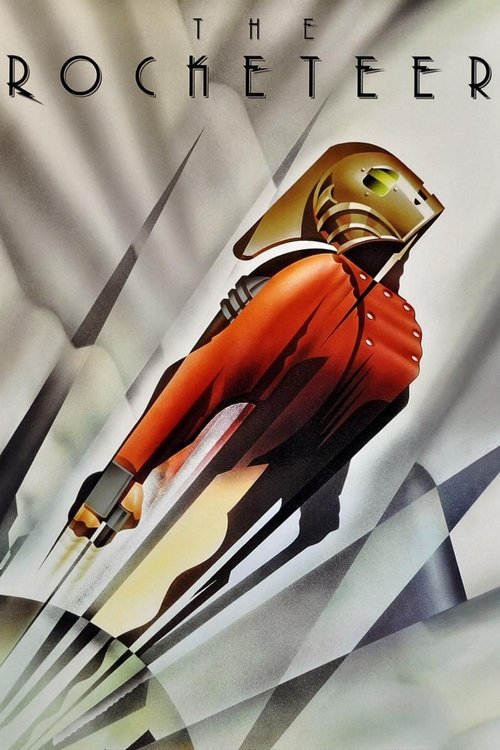
The Rocketeer
A stunt pilot comes across a prototype jetpack that gives him the ability to fly. However, evil forces of the world also want this jetpack at any cost.
Working with a mid-range budget of $42.0M, the film achieved a steady performer with $46.7M in global revenue (+11% profit margin).
2 wins & 6 nominations


Plot Structure
Story beats plotted across runtime


Narrative Arc
Emotional journey through the story's key moments
Story Circle
Blueprint 15-beat structure
Arcplot Score Breakdown
Weighted: Precision (70%) + Arc (15%) + Theme (15%)
The Rocketeer (1991) showcases carefully calibrated narrative design, characteristic of Joe Johnston's storytelling approach. This structural analysis examines how the film's 15-point plot structure maps to proven narrative frameworks across 1 hour and 48 minutes. With an Arcplot score of 7.0, the film balances conventional beats with creative variation.
Structural Analysis
The Status Quo at 1 minutes (1% through the runtime) establishes Cliff Secord is a struggling stunt pilot in 1938 Los Angeles, performing dangerous aerial stunts with his mechanic Peevy, barely scraping by financially but living his dream of flying.. Notably, this early placement immediately immerses viewers in the story world.
The inciting incident occurs at 13 minutes when During a shootout between FBI agents and gangsters at the airfield, Cliff's Gee Bee racer is destroyed when a bullet pierces the fuel tank, ending his chance to compete in the nationals and crushing his dreams.. At 12% through the film, this Disruption aligns precisely with traditional story structure. This beat shifts the emotional landscape, launching the protagonist into the central conflict.
The First Threshold at 27 minutes marks the transition into Act II, occurring at 25% of the runtime. This indicates the protagonist's commitment to Cliff makes the active choice to become "the Rocketeer" by donning the rocket pack and helmet to rescue Malcolm from a runaway biplane at the airshow, publicly revealing the rocket's existence and committing himself to this new identity., moving from reaction to action.
At 54 minutes, the Midpoint arrives at 50% of the runtime—precisely centered, creating perfect narrative symmetry. Significantly, this crucial beat False defeat: Sinclair kidnaps Jenny to force Cliff to surrender the rocket pack. Cliff's attempt to have both his heroic identity and his relationship collapses, raising the stakes from adventure to life-and-death for the person he loves most., fundamentally raising what's at risk. The emotional intensity shifts, dividing the narrative into clear before-and-after phases.
The Collapse moment at 81 minutes (75% through) represents the emotional nadir. Here, All is lost: Sinclair captures both Jenny and the rocket pack, prepares to escape to a Nazi U-boat with both, and seems to have won completely. Cliff has lost everything - the girl, the rocket, and his chance to stop the Nazis., demonstrates the protagonist at their lowest point. This beat's placement in the final quarter sets up the climactic reversal.
The Second Threshold at 86 minutes initiates the final act resolution at 80% of the runtime. Eddie Valentine and his gangsters, upon learning Sinclair is a Nazi, switch sides: "I may be a crook, but I'm 100% American." This alliance gives Cliff the manpower to assault the airfield, synthesizing unlikely partnerships for a greater cause., demonstrating the transformation achieved throughout the journey.
Emotional Journey
The Rocketeer's emotional architecture traces a deliberate progression across 15 carefully calibrated beats.
Narrative Framework
This structural analysis employs systematic plot point analysis that identifies crucial turning points. By mapping The Rocketeer against these established plot points, we can identify how Joe Johnston utilizes or subverts traditional narrative conventions. The plot point approach reveals not only adherence to structural principles but also creative choices that distinguish The Rocketeer within the action genre.
Joe Johnston's Structural Approach
Among the 9 Joe Johnston films analyzed on Arcplot, the average structural score is 6.9, demonstrating varied approaches to story architecture. The Rocketeer represents one of the director's most structurally precise works. For comparative analysis, explore the complete Joe Johnston filmography.
Comparative Analysis
Additional action films include The Bad Guys, Puss in Boots and Venom: The Last Dance. For more Joe Johnston analyses, see Captain America: The First Avenger, Jumanji and The Pagemaster.
Plot Points by Act
Act I
SetupStatus Quo
Cliff Secord is a struggling stunt pilot in 1938 Los Angeles, performing dangerous aerial stunts with his mechanic Peevy, barely scraping by financially but living his dream of flying.
Theme
Peevy tells Cliff that heroes don't need to show off or prove themselves - "When you need to be a hero, you will be" - establishing the film's theme about true heroism coming from character, not glory-seeking.
Worldbuilding
Establishing 1930s Hollywood world: Cliff's relationship with actress girlfriend Jenny, his financial struggles, the air show competition, Nazi spies pursuing a stolen rocket pack, and gangster Eddie Valentine's involvement in the search.
Disruption
During a shootout between FBI agents and gangsters at the airfield, Cliff's Gee Bee racer is destroyed when a bullet pierces the fuel tank, ending his chance to compete in the nationals and crushing his dreams.
Resistance
Cliff and Peevy discover the hidden rocket pack in their biplane, debate what to do with it, test it secretly, and realize its incredible potential while Nazi agents and the FBI intensify their search for the device.
Act II
ConfrontationFirst Threshold
Cliff makes the active choice to become "the Rocketeer" by donning the rocket pack and helmet to rescue Malcolm from a runaway biplane at the airshow, publicly revealing the rocket's existence and committing himself to this new identity.
Mirror World
Jenny is cast in Neville Sinclair's new film, bringing her into the movie star's orbit. This relationship subplot becomes the vehicle for exploring themes of authenticity versus image, as Sinclair represents everything Cliff is not: famous, wealthy, but secretly villainous.
Premise
The fun of being the Rocketeer: Cliff becomes a media sensation, enjoys the thrills of rocket-powered flight, investigates the device's origins, attempts to balance heroism with his relationship with Jenny, while Nazi agent Sinclair closes in.
Midpoint
False defeat: Sinclair kidnaps Jenny to force Cliff to surrender the rocket pack. Cliff's attempt to have both his heroic identity and his relationship collapses, raising the stakes from adventure to life-and-death for the person he loves most.
Opposition
Pressure intensifies as Cliff must rescue Jenny from Sinclair's mansion, discovers Sinclair is a Nazi spy planning to deliver the rocket technology to Hitler, barely escapes capture, and realizes the rocket pack threatens not just his life but the entire world.
Collapse
All is lost: Sinclair captures both Jenny and the rocket pack, prepares to escape to a Nazi U-boat with both, and seems to have won completely. Cliff has lost everything - the girl, the rocket, and his chance to stop the Nazis.
Crisis
Dark night: Cliff and Peevy realize they must raid the Nazi airfield despite impossible odds. Cliff processes that being a hero means sacrifice, not glory. FBI agent Wooly reveals the government's awareness of the Nazi plot and cannot act in time.
Act III
ResolutionSecond Threshold
Eddie Valentine and his gangsters, upon learning Sinclair is a Nazi, switch sides: "I may be a crook, but I'm 100% American." This alliance gives Cliff the manpower to assault the airfield, synthesizing unlikely partnerships for a greater cause.
Synthesis
The finale: Cliff and allies raid the airfield, battle Nazi soldiers, rescue Jenny, and pursue Sinclair's zeppelin. Cliff uses the rocket pack not for show but for genuine heroism, confronting Sinclair in aerial combat and destroying the Nazi spy along with the rocket technology.
Transformation
Cliff reunites with Jenny at the airfield, no longer needing the rocket or fame to define him. Howard Hughes promises to build Cliff a new plane. Cliff has transformed from a glory-seeking stunt pilot into a genuine hero who sacrificed his dreams for others.