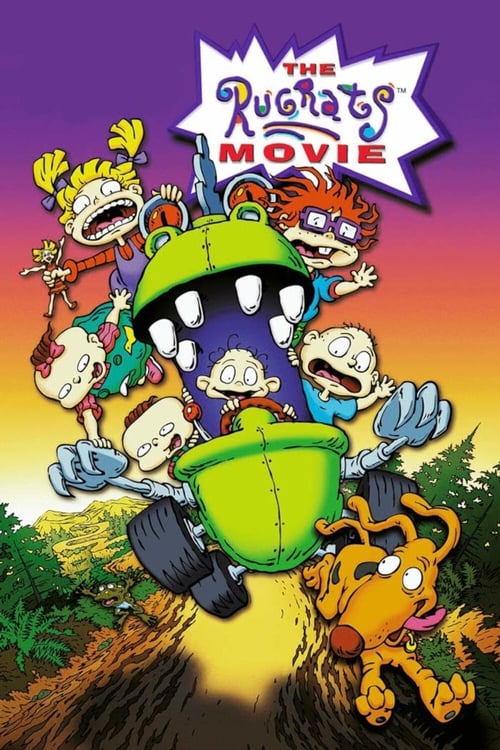
The Rugrats Movie
Based on the popular Nickelodeon TV series Rugrats, this is the first full-length feature animated movie to star the little tots. It's the story of diaper-clad kids, told from a baby's point- of-view, and they were one of the hottest-selling toy franchises of the late '90s.
Despite a mid-range budget of $30.0M, The Rugrats Movie became a box office success, earning $100.5M worldwide—a 235% return.
2 wins & 6 nominations


Plot Structure
Story beats plotted across runtime


Narrative Arc
Emotional journey through the story's key moments
Story Circle
Blueprint 15-beat structure
Arcplot Score Breakdown
Weighted: Precision (70%) + Arc (15%) + Theme (15%)
The Rugrats Movie (1998) exemplifies deliberately positioned story structure, characteristic of Norton Virgien's storytelling approach. This structural analysis examines how the film's 15-point plot structure maps to proven narrative frameworks across 1 hour and 20 minutes. With an Arcplot score of 7.8, the film showcases strong structural fundamentals.
Structural Analysis
The Status Quo at 1 minutes (1% through the runtime) establishes Tommy Pickles and his friends play imaginatively in the backyard, happy and carefree in their world of adventure. Tommy is the confident leader of the group.. The analysis reveals that this early placement immediately immerses viewers in the story world.
The inciting incident occurs at 9 minutes when Baby Dil arrives and immediately dominates all attention, crying constantly and disrupting Tommy's life. Tommy begins to feel jealous and resentful.. At 11% through the film, this Disruption aligns precisely with traditional story structure. This beat shifts the emotional landscape, launching the protagonist into the central conflict.
The First Threshold at 19 minutes marks the transition into Act II, occurring at 24% of the runtime. This reveals the protagonist's commitment to During a chaotic trip to the Pickles' family reunion, Tommy and the babies accidentally take Dil in the Reptar Wagon and get lost in the forest. Tommy chooses to take charge and find the way home., moving from reaction to action.
At 39 minutes, the Midpoint arrives at 49% of the runtime—precisely centered, creating perfect narrative symmetry. Of particular interest, this crucial beat Tommy snaps and nearly abandons Dil to the monkeys, declaring he doesn't want to be a brother anymore. The group fragments as Tommy's leadership fails., fundamentally raising what's at risk. The emotional intensity shifts, dividing the narrative into clear before-and-after phases.
The Collapse moment at 58 minutes (73% through) represents the emotional nadir. Here, Scar Snout attacks and Tommy realizes he has failed as a brother. Dil is in mortal danger and it's Tommy's fault. Tommy's sense of self as a leader and brother dies., reveals the protagonist at their lowest point. This beat's placement in the final quarter sets up the climactic reversal.
The Second Threshold at 63 minutes initiates the final act resolution at 79% of the runtime. Tommy finds true courage and declares "He's my brother, and I'm gonna save him!" He accepts responsibility and becomes a real big brother by choice, not obligation., demonstrating the transformation achieved throughout the journey.
Emotional Journey
The Rugrats Movie's emotional architecture traces a deliberate progression across 15 carefully calibrated beats.
Narrative Framework
This structural analysis employs structural analysis methodology used to understand storytelling architecture. By mapping The Rugrats Movie against these established plot points, we can identify how Norton Virgien utilizes or subverts traditional narrative conventions. The plot point approach reveals not only adherence to structural principles but also creative choices that distinguish The Rugrats Movie within the family genre.
Comparative Analysis
Additional family films include The Black Stallion, The Bad Guys and Ella Enchanted.
Plot Points by Act
Act I
SetupStatus Quo
Tommy Pickles and his friends play imaginatively in the backyard, happy and carefree in their world of adventure. Tommy is the confident leader of the group.
Theme
Didi tells Tommy he'll be a big brother now and will need to be responsible, introducing the theme of growing up and what it means to be a brother.
Worldbuilding
The Pickles family prepares for the new baby. Tommy is excited but doesn't fully understand what having a brother means. The other babies and parents are introduced at the hospital.
Disruption
Baby Dil arrives and immediately dominates all attention, crying constantly and disrupting Tommy's life. Tommy begins to feel jealous and resentful.
Resistance
Tommy struggles with Dil's presence as the baby takes his toys, gets all the attention, and makes life difficult. Tommy debates whether he wants to be a big brother at all.
Act II
ConfrontationFirst Threshold
During a chaotic trip to the Pickles' family reunion, Tommy and the babies accidentally take Dil in the Reptar Wagon and get lost in the forest. Tommy chooses to take charge and find the way home.
Mirror World
The monkeys in the forest mirror Tommy's jealousy - they fight over food just as Tommy and Dil fight over everything, showing Tommy what his behavior looks like.
Premise
The babies journey through the forest, facing various obstacles and adventures. Tommy leads the group but grows increasingly frustrated with Dil's selfishness and crying.
Midpoint
Tommy snaps and nearly abandons Dil to the monkeys, declaring he doesn't want to be a brother anymore. The group fragments as Tommy's leadership fails.
Opposition
The babies split up in anger. A storm approaches and dangers intensify. Meanwhile, the parents desperately search for their children, and the wolf Scar Snout stalks the babies.
Collapse
Scar Snout attacks and Tommy realizes he has failed as a brother. Dil is in mortal danger and it's Tommy's fault. Tommy's sense of self as a leader and brother dies.
Crisis
Tommy faces his darkest moment, understanding that being a brother means protecting someone even when it's hard, even when they're annoying, even when you don't want to.
Act III
ResolutionSecond Threshold
Tommy finds true courage and declares "He's my brother, and I'm gonna save him!" He accepts responsibility and becomes a real big brother by choice, not obligation.
Synthesis
Tommy and the babies work together to defeat Scar Snout and rescue Dil. The parents find them and the family is reunited. Tommy has proven himself as a protective big brother.
Transformation
Back home, Tommy watches over a sleeping Dil with genuine love and protection, mirroring the opening but now as a transformed big brother who understands responsibility and family.