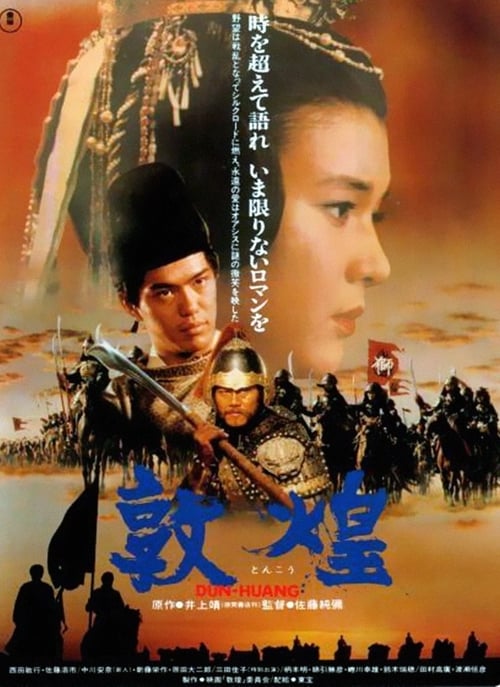
The Silk Road
In 1026, students in western China are shanghaied into the forces of crown prince Li Yuanhao of Xi Xia, who wants to control the length of the Silk Road. One student is Zhao Xingde, who becomes the favorite of his commander, Zhu Wangli. While sacking a fortress, Xingde discovers Tsurpia, princess of the Uighur. He hides her; they fall in love. When he's sent away to study Xixian, he leaves Tsurpia in Zhu's care, but returns to find her engaged to Li. Tragedy follows, and he and Zhu enter a pact to take revenge when Li arrives at Dun-Huang, the region's seat of learning and culture. Against overwhelming odds, they find a surprising way to leave a monument to their life and love.
The film earned $74.1M at the global box office.
Plot Structure
Story beats plotted across runtime


Narrative Arc
Emotional journey through the story's key moments
Story Circle
Blueprint 15-beat structure
Arcplot Score Breakdown
Weighted: Precision (70%) + Arc (15%) + Theme (15%)
The Silk Road (1988) exemplifies strategically placed dramatic framework, characteristic of Junya Satō's storytelling approach. This structural analysis examines how the film's 15-point plot structure maps to proven narrative frameworks across 2 hours and 23 minutes. With an Arcplot score of 7.3, the film balances conventional beats with creative variation.
Structural Analysis
The Status Quo at 2 minutes (1% through the runtime) establishes Zhao Xingshu lives peacefully as a scholar in Chang'an, devoted to his studies and maintaining traditional values in Tang Dynasty China.. Notably, this early placement immediately immerses viewers in the story world.
The inciting incident occurs at 18 minutes when Zhao's father is killed by bandits returning from a trading expedition, and Zhao discovers a mysterious artifact that his father died protecting - a map to a sacred site along the Silk Road.. At 12% through the film, this Disruption aligns precisely with traditional story structure. This beat shifts the emotional landscape, launching the protagonist into the central conflict.
The First Threshold at 36 minutes marks the transition into Act II, occurring at 25% of the runtime. This reveals the protagonist's commitment to Zhao makes the active choice to leave Chang'an and journey westward along the Silk Road, abandoning his planned scholarly career to understand his father's mission and protect the artifact., moving from reaction to action.
At 72 minutes, the Midpoint arrives at 50% of the runtime—precisely centered, creating perfect narrative symmetry. Significantly, this crucial beat Zhao's caravan reaches Samarkand where he decodes the map, but discovers that rival factions - both Chinese and Persian - are hunting for the artifact, believing it leads to a powerful relic that could shift regional power., fundamentally raising what's at risk. The emotional intensity shifts, dividing the narrative into clear before-and-after phases.
The Collapse moment at 107 minutes (75% through) represents the emotional nadir. Here, Master Liang sacrifices himself to save Zhao from an ambush. In his dying words, he reveals that Zhao's father didn't die protecting treasure, but protecting the idea that the Silk Road should unite rather than divide peoples., reveals the protagonist at their lowest point. This beat's placement in the final quarter sets up the climactic reversal.
The Second Threshold at 114 minutes initiates the final act resolution at 80% of the runtime. Zhao realizes the artifact itself is a symbol - its true power lies in bringing together the caravan members from different cultures who now fight as one family. He chooses to make a stand not for the relic, but for what it represents., demonstrating the transformation achieved throughout the journey.
Emotional Journey
The Silk Road's emotional architecture traces a deliberate progression across 15 carefully calibrated beats.
Narrative Framework
This structural analysis employs structural analysis methodology used to understand storytelling architecture. By mapping The Silk Road against these established plot points, we can identify how Junya Satō utilizes or subverts traditional narrative conventions. The plot point approach reveals not only adherence to structural principles but also creative choices that distinguish The Silk Road within the drama genre.
Comparative Analysis
Additional drama films include After Thomas, South Pacific and Dirty Dancing: Havana Nights.
Plot Points by Act
Act I
SetupStatus Quo
Zhao Xingshu lives peacefully as a scholar in Chang'an, devoted to his studies and maintaining traditional values in Tang Dynasty China.
Theme
An elder merchant tells Zhao that "the greatest treasures are found not in silk or gold, but in understanding between peoples" - establishing the film's theme of cultural exchange.
Worldbuilding
Introduction to 8th century Chang'an, the Silk Road trade networks, Zhao's family obligations, and the political tensions between Tang China and the Western regions.
Disruption
Zhao's father is killed by bandits returning from a trading expedition, and Zhao discovers a mysterious artifact that his father died protecting - a map to a sacred site along the Silk Road.
Resistance
Zhao debates whether to honor his father by continuing his scholarly path or seeking answers about the artifact. He meets Master Liang, a former Silk Road traveler who becomes his reluctant mentor.
Act II
ConfrontationFirst Threshold
Zhao makes the active choice to leave Chang'an and journey westward along the Silk Road, abandoning his planned scholarly career to understand his father's mission and protect the artifact.
Mirror World
Zhao meets Aila, a Persian merchant's daughter traveling eastward. She represents the cultural exchange his journey embodies - she seeks knowledge of China as he seeks knowledge of the West.
Premise
The adventure of the Silk Road - Zhao's caravan crosses deserts, navigates oasis cities, encounters diverse cultures, and experiences the wonder and danger of the ancient trade route.
Midpoint
Zhao's caravan reaches Samarkand where he decodes the map, but discovers that rival factions - both Chinese and Persian - are hunting for the artifact, believing it leads to a powerful relic that could shift regional power.
Opposition
Pursued by hostile forces, Zhao must navigate political intrigue, survive assassination attempts, and protect both the artifact and his growing caravan family. Trust becomes scarce as betrayals mount.
Collapse
Master Liang sacrifices himself to save Zhao from an ambush. In his dying words, he reveals that Zhao's father didn't die protecting treasure, but protecting the idea that the Silk Road should unite rather than divide peoples.
Crisis
Zhao grieves his mentor and questions whether any ideal is worth the bloodshed. Aila and the caravan members mourn as enemies close in from all sides.
Act III
ResolutionSecond Threshold
Zhao realizes the artifact itself is a symbol - its true power lies in bringing together the caravan members from different cultures who now fight as one family. He chooses to make a stand not for the relic, but for what it represents.
Synthesis
Zhao leads his multinational caravan in a final confrontation, using knowledge from both Chinese strategy and Persian tactics. They expose the rival factions' leaders as corrupt opportunists and broker a peace accord at the sacred site.
Transformation
Zhao, now a bridge between cultures rather than just a Chinese scholar, stands at the crossroads with Aila and their caravan family. Where he once sought only Chinese wisdom, he now embodies the Silk Road itself - a living connection between East and West.