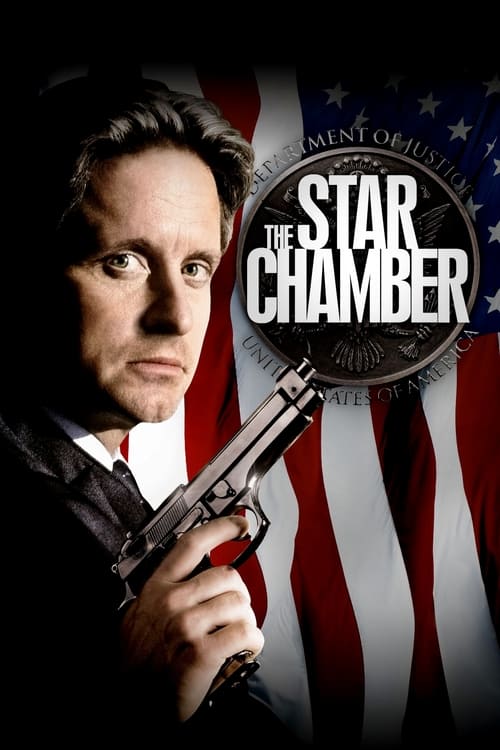
The Star Chamber
As violence escalates in Los Angeles and heinous murders are committed, Steven Hardin, a young judge of the California Supreme Court, must struggle with his tortured conscience and growing despair as he watches helplessly as the ruthless criminals brought before his court go free because clever lawyers find obscure loopholes in the law.
The film underperformed commercially against its tight budget of $8.0M, earning $5.6M globally (-31% loss). While initial box office returns were modest, the film has gained appreciation for its innovative storytelling within the drama genre.


Plot Structure
Story beats plotted across runtime


Narrative Arc
Emotional journey through the story's key moments
Story Circle
Blueprint 15-beat structure
Arcplot Score Breakdown
Weighted: Precision (70%) + Arc (15%) + Theme (15%)
The Star Chamber (1983) reveals precise narrative architecture, characteristic of Peter Hyams's storytelling approach. This structural analysis examines how the film's 15-point plot structure maps to proven narrative frameworks across 1 hour and 45 minutes. With an Arcplot score of 7.1, the film balances conventional beats with creative variation.
Characters
Cast & narrative archetypes

Steven Hardin
Benjamin Caulfield
Harry Lowes
Emily Hardin
Dr. Harold Lewin
Arthur Cooms
Monk
Main Cast & Characters
Steven Hardin
Played by Michael Douglas
An idealistic Superior Court judge who becomes disillusioned when legal technicalities force him to release criminals he believes are guilty, leading him to join a secret vigilante court.
Benjamin Caulfield
Played by Hal Holbrook
A veteran judge and mentor figure who introduces Hardin to the Star Chamber, representing the judicial establishment's frustration with the legal system.
Harry Lowes
Played by Yaphet Kotto
A tenacious detective who investigates child murders and becomes entangled in the consequences of the Star Chamber's vigilante justice.
Emily Hardin
Played by Sharon Gless
Steven Hardin's supportive wife who grows concerned about her husband's moral struggles and increasingly erratic behavior.
Dr. Harold Lewin
Played by James B. Sikking
A member of the Star Chamber who represents the medical profession's participation in the secret vigilante court.
Arthur Cooms
Played by Keith Carradine
One of two suspects released on a technicality whom Hardin believes murdered a young boy, later revealed to be innocent of that particular crime.
Monk
Played by Don Calfa
Cooms' accomplice, also released on a technicality and targeted by the Star Chamber for execution.
Structural Analysis
The Status Quo at 1 minutes (1% through the runtime) establishes Judge Steven Hardin presides over his courtroom in Los Angeles, embodying the ideal of a principled jurist committed to upholding the law despite its frustrations.. Notably, this early placement immediately immerses viewers in the story world.
The inciting incident occurs at 13 minutes when Hardin is forced to dismiss charges against two men accused of murdering a young boy because the evidence was obtained through an illegal search, devastating the victim's family.. At 12% through the film, this Disruption aligns precisely with traditional story structure. This beat shifts the emotional landscape, launching the protagonist into the central conflict.
The First Threshold at 26 minutes marks the transition into Act II, occurring at 25% of the runtime. This indicates the protagonist's commitment to Hardin accepts Judge Caulfield's invitation to join The Star Chamber, a secret society of judges who meet to deliver extralegal death sentences on criminals who escaped justice., moving from reaction to action.
At 53 minutes, the Midpoint arrives at 50% of the runtime—precisely centered, creating perfect narrative symmetry. Significantly, this crucial beat Hardin learns that the two men he helped condemn to death for the boy's murder are actually innocent—the real killer has been found, but the Star Chamber's hitman is already hunting them., fundamentally raising what's at risk. The emotional intensity shifts, dividing the narrative into clear before-and-after phases.
The Collapse moment at 79 minutes (75% through) represents the emotional nadir. Here, The innocent men are killed despite Hardin's efforts to warn them. Hardin confronts the horror that he has become complicit in murder, no better than the criminals he sought to punish., indicates the protagonist at their lowest point. This beat's placement in the final quarter sets up the climactic reversal.
The Second Threshold at 84 minutes initiates the final act resolution at 80% of the runtime. Hardin decides he must expose and destroy The Star Chamber from within, choosing to uphold true justice even at the cost of his career and possibly his life., demonstrating the transformation achieved throughout the journey.
Emotional Journey
The Star Chamber's emotional architecture traces a deliberate progression across 15 carefully calibrated beats.
Narrative Framework
This structural analysis employs a 15-point narrative structure framework that maps key story moments. By mapping The Star Chamber against these established plot points, we can identify how Peter Hyams utilizes or subverts traditional narrative conventions. The plot point approach reveals not only adherence to structural principles but also creative choices that distinguish The Star Chamber within the drama genre.
Peter Hyams's Structural Approach
Among the 14 Peter Hyams films analyzed on Arcplot, the average structural score is 7.1, reflecting strong command of classical structure. The Star Chamber takes a more unconventional approach compared to the director's typical style. For comparative analysis, explore the complete Peter Hyams filmography.
Comparative Analysis
Additional drama films include After Thomas, South Pacific and Dirty Dancing: Havana Nights. For more Peter Hyams analyses, see Capricorn One, Timecop and The Musketeer.
Plot Points by Act
Act I
SetupStatus Quo
Judge Steven Hardin presides over his courtroom in Los Angeles, embodying the ideal of a principled jurist committed to upholding the law despite its frustrations.
Theme
A fellow judge remarks to Hardin that sometimes the law protects the guilty more than the innocent, asking whether justice and legality are truly the same thing.
Worldbuilding
Hardin's world is established: his comfortable home life, his dedication to the bench, and his growing frustration as he watches guilty criminals walk free due to procedural technicalities.
Disruption
Hardin is forced to dismiss charges against two men accused of murdering a young boy because the evidence was obtained through an illegal search, devastating the victim's family.
Resistance
Senior Judge Benjamin Caulfield observes Hardin's moral anguish and begins subtly mentioning an alternative form of justice, while Hardin debates his role in a broken system.
Act II
ConfrontationFirst Threshold
Hardin accepts Judge Caulfield's invitation to join The Star Chamber, a secret society of judges who meet to deliver extralegal death sentences on criminals who escaped justice.
Mirror World
Detective Harry Lowes becomes Hardin's conscience and counterpoint, a cop who works within the system despite its flaws, representing the path of lawful integrity Hardin has abandoned.
Premise
Hardin participates in Star Chamber proceedings, experiencing the seductive power of being able to ensure criminals face consequences, believing he is serving true justice.
Midpoint
Hardin learns that the two men he helped condemn to death for the boy's murder are actually innocent—the real killer has been found, but the Star Chamber's hitman is already hunting them.
Opposition
Hardin desperately tries to stop the execution, but The Star Chamber refuses to recall their assassin. The organization reveals its darker nature as Hardin realizes he's become part of an unaccountable murder conspiracy.
Collapse
The innocent men are killed despite Hardin's efforts to warn them. Hardin confronts the horror that he has become complicit in murder, no better than the criminals he sought to punish.
Crisis
Hardin grapples with his guilt and the realization that vigilante justice is inherently corrupted. The Star Chamber now views him as a threat who knows too much.
Act III
ResolutionSecond Threshold
Hardin decides he must expose and destroy The Star Chamber from within, choosing to uphold true justice even at the cost of his career and possibly his life.
Synthesis
Hardin confronts The Star Chamber in a deadly showdown, exposing their operations and facing the assassin they send after him in a violent climax at their meeting place.
Transformation
Hardin survives but is forever changed—he returns to his courtroom understanding that imperfect legal justice is preferable to perfect vigilante tyranny, bearing the weight of innocent blood on his hands.