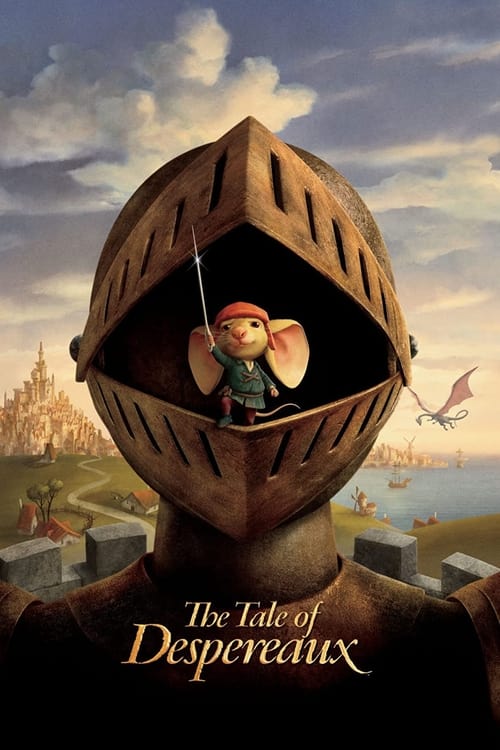
The Tale of Despereaux
Once upon a time... in the far away kingdom of Dor... lived a brave and virtuous mouse with comically oversized ears who dreamt of becoming a knight. Banished from his home for having such lofty ambitions, Despereaux sets off on an amazing adventure with his good-hearted rat friend Roscuro, who leads him, at long last, on a very noble quest to rescue an endangered princess and save an entire kingdom from darkness.
Working with a mid-range budget of $60.0M, the film achieved a respectable showing with $87.0M in global revenue (+45% profit margin).
1 win & 8 nominations


Plot Structure
Story beats plotted across runtime


Narrative Arc
Emotional journey through the story's key moments
Story Circle
Blueprint 15-beat structure
Arcplot Score Breakdown
Weighted: Precision (70%) + Arc (15%) + Theme (15%)
The Tale of Despereaux (2008) demonstrates strategically placed narrative architecture, characteristic of Robert Stevenhagen's storytelling approach. This structural analysis examines how the film's 15-point plot structure maps to proven narrative frameworks across 1 hour and 33 minutes. With an Arcplot score of 7.6, the film showcases strong structural fundamentals.
Characters
Cast & narrative archetypes

Despereaux Tilling
Roscuro
Princess Pea
Miggery Sow
Botticelli Remorso
Lester Tilling
Antoinette Tilling
Chef Andre
Main Cast & Characters
Despereaux Tilling
Played by Matthew Broderick
A brave, book-loving mouse with unusually large ears who refuses to be afraid and embarks on a quest to save Princess Pea.
Roscuro
Played by Dustin Hoffman
A guilt-ridden rat who loves light and beauty but accidentally causes the Queen's death, leading to his eventual redemption.
Princess Pea
Played by Emma Watson
The kind-hearted princess of Dor who becomes imprisoned and learns about courage and forgiveness.
Miggery Sow
Played by Tracey Ullman
A simple-minded servant girl who dreams of becoming a princess and gets manipulated into helping kidnap Princess Pea.
Botticelli Remorso
Played by Ciaran Hinds
The sinister leader of the rats who thrives in darkness and seeks revenge against the humans above.
Lester Tilling
Played by William H. Macy
Despereaux's timid, rule-following father who reluctantly sends his son to the dungeon for breaking mouse law.
Antoinette Tilling
Played by Frances Conroy
Despereaux's dramatic, French-accented mother who faints frequently and cannot understand her unusual son.
Chef Andre
Played by Kevin Kline
The royal chef whose grief over the Queen's death causes him to lose his passion for cooking and soup is banned.
Structural Analysis
The Status Quo at 1 minutes (1% through the runtime) establishes The kingdom of Dor is introduced as a place of joy, light, and soup, where the annual Royal Soup Day celebration brings everyone together in happiness and harmony.. Structural examination shows that this early placement immediately immerses viewers in the story world.
The inciting incident occurs at 11 minutes when Despereaux is sent to the Mouse Council for his "un-mouse-like" behavior (reading, not cowering, talking to humans). He is sentenced to the dungeon—a death sentence for a mouse—because he refuses to renounce his courage and curiosity.. At 11% through the film, this Disruption aligns precisely with traditional story structure. This beat shifts the emotional landscape, launching the protagonist into the central conflict.
The First Threshold at 24 minutes marks the transition into Act II, occurring at 25% of the runtime. This shows the protagonist's commitment to Despereaux is dropped into the dungeon by his own father. He actively chooses not to cower or give up, instead determining to survive and find a way to bring back the light, despite facing certain death., moving from reaction to action.
At 47 minutes, the Midpoint arrives at 51% of the runtime—precisely centered, creating perfect narrative symmetry. Of particular interest, this crucial beat Princess Pea is kidnapped and taken to the dungeon by Roscuro and Mig. The stakes are raised—it's no longer just about Despereaux's survival but about saving the Princess and the entire kingdom. This is a false defeat as darkness seems to have won., fundamentally raising what's at risk. The emotional intensity shifts, dividing the narrative into clear before-and-after phases.
The Collapse moment at 68 minutes (74% through) represents the emotional nadir. Here, Despereaux is captured by the rats and appears to be defeated. He is tiny, alone, and seemingly powerless against the entire rat army. The whiff of death: he faces execution, and it seems the darkness has won completely., reveals the protagonist at their lowest point. This beat's placement in the final quarter sets up the climactic reversal.
The Second Threshold at 73 minutes initiates the final act resolution at 78% of the runtime. Despereaux forgives Roscuro, showing that light can overcome darkness through compassion. This synthesis of courage and forgiveness transforms Roscuro and inspires everyone to choose light over darkness. The power of the story's theme becomes real., demonstrating the transformation achieved throughout the journey.
Emotional Journey
The Tale of Despereaux's emotional architecture traces a deliberate progression across 15 carefully calibrated beats.
Narrative Framework
This structural analysis employs systematic plot point analysis that identifies crucial turning points. By mapping The Tale of Despereaux against these established plot points, we can identify how Robert Stevenhagen utilizes or subverts traditional narrative conventions. The plot point approach reveals not only adherence to structural principles but also creative choices that distinguish The Tale of Despereaux within the adventure genre.
Comparative Analysis
Additional adventure films include The Black Stallion, The Bad Guys and Puss in Boots.
Plot Points by Act
Act I
SetupStatus Quo
The kingdom of Dor is introduced as a place of joy, light, and soup, where the annual Royal Soup Day celebration brings everyone together in happiness and harmony.
Theme
The narrator states: "A story is light. Light is precious in a world so dark." This establishes the film's central theme about courage, hope, and the power of stories to bring light to darkness.
Worldbuilding
The kingdom's love of soup is established. Roscuro the rat arrives at the castle and causes the Queen's death by falling into her soup. The King bans soup, rats, and happiness, plunging the kingdom into permanent gray gloom. Despereaux is born as an unusually small mouse with big ears who doesn't conform.
Disruption
Despereaux is sent to the Mouse Council for his "un-mouse-like" behavior (reading, not cowering, talking to humans). He is sentenced to the dungeon—a death sentence for a mouse—because he refuses to renounce his courage and curiosity.
Resistance
Despereaux meets Princess Pea and they bond over stories and bravery. He falls in love with her ideals of honor and courage. Meanwhile, Roscuro is consumed by guilt and darkness in the dungeon. Miggery Sow, a servant girl, dreams of becoming a princess. The three storylines develop in parallel.
Act II
ConfrontationFirst Threshold
Despereaux is dropped into the dungeon by his own father. He actively chooses not to cower or give up, instead determining to survive and find a way to bring back the light, despite facing certain death.
Mirror World
In the dungeon, Despereaux encounters Gregory the jailer who tells him stories and represents the thematic mirror—a human who, like Despereaux, believes in the power of stories and light even in the darkest place.
Premise
Despereaux navigates the dungeon with Gregory's help. Roscuro, twisted by darkness and rejection, manipulates the simple-minded Mig into helping him kidnap Princess Pea. The three character arcs converge as Despereaux learns about true courage, Roscuro wrestles with his darkness, and Mig is exploited for her dreams.
Midpoint
Princess Pea is kidnapped and taken to the dungeon by Roscuro and Mig. The stakes are raised—it's no longer just about Despereaux's survival but about saving the Princess and the entire kingdom. This is a false defeat as darkness seems to have won.
Opposition
Despereaux must navigate the dangerous dungeon to reach the Princess. He faces rats, darkness, and his own fears. Roscuro's plan unravels as he realizes revenge won't heal his pain. Mig discovers she's been used. The antagonistic forces close in as the rat army surrounds them.
Collapse
Despereaux is captured by the rats and appears to be defeated. He is tiny, alone, and seemingly powerless against the entire rat army. The whiff of death: he faces execution, and it seems the darkness has won completely.
Crisis
In the darkest moment, Despereaux and the others face their fears and failures. Roscuro confronts his guilt over the Queen's death. Mig realizes her worth isn't in being a princess. Despereaux must find courage not from a storybook but from within.
Act III
ResolutionSecond Threshold
Despereaux forgives Roscuro, showing that light can overcome darkness through compassion. This synthesis of courage and forgiveness transforms Roscuro and inspires everyone to choose light over darkness. The power of the story's theme becomes real.
Synthesis
The group works together to escape the dungeon. Roscuro redeems himself by helping save the Princess. The rats stand down. They return to the surface where the King is reunited with Pea. Soup and light are restored to the kingdom. All character arcs resolve.
Transformation
The kingdom celebrates with soup and sunlight again. Despereaux, once rejected for being different, is now honored. The closing image mirrors the opening: joy, light, and soup—but now earned through courage, forgiveness, and the power of stories to transform darkness into light.