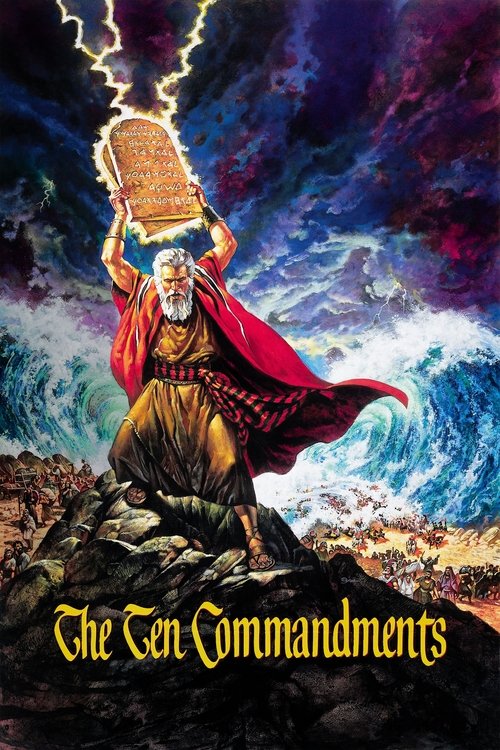
The Ten Commandments
Escaping death, a Hebrew infant is raised in a royal household to become a prince. Upon discovery of his true heritage, Moses embarks on a personal quest to reclaim his destiny as the leader and liberator of the Hebrew people.
Despite its limited budget of $13.0M, The Ten Commandments became a massive hit, earning $122.7M worldwide—a remarkable 844% return. The film's unique voice resonated with audiences, demonstrating that strong storytelling can transcend budget limitations.


Plot Structure
Story beats plotted across runtime


Narrative Arc
Emotional journey through the story's key moments
Story Circle
Blueprint 15-beat structure
Arcplot Score Breakdown
Weighted: Precision (70%) + Arc (15%) + Theme (15%)
The Ten Commandments (1956) demonstrates strategically placed dramatic framework, characteristic of Cecil B. DeMille's storytelling approach. This structural analysis examines how the film's 15-point plot structure maps to proven narrative frameworks across 3 hours and 40 minutes. With an Arcplot score of 7.2, the film balances conventional beats with creative variation.
Characters
Cast & narrative archetypes

Moses
Rameses II
Nefretiri
Sephora
Dathan
Joshua
Bithiah
Lilia
Main Cast & Characters
Moses
Played by Charlton Heston
Hebrew prophet raised as Egyptian prince who leads his people from slavery to freedom, transforming from privileged royalty to humble servant of God.
Rameses II
Played by Yul Brynner
Pharaoh of Egypt who begins as Moses' adoptive brother but becomes his nemesis, refusing to free the Hebrew slaves despite devastating plagues.
Nefretiri
Played by Anne Baxter
Egyptian queen who loves Moses deeply but is bound by duty to marry Rameses, torn between her heart and her position.
Sephora
Played by Yvonne De Carlo
Jethro's daughter who becomes Moses' wife, providing grounding and faith during his transformation from prince to prophet.
Dathan
Played by Edward G. Robinson
Treacherous Hebrew overseer who collaborates with the Egyptians and repeatedly undermines Moses' leadership for personal gain.
Joshua
Played by John Derek
Young Hebrew warrior who becomes Moses' loyal lieutenant and eventual successor, representing the next generation of leadership.
Bithiah
Played by Nina Foch
Egyptian princess who rescues baby Moses from the Nile and raises him as her son, showing compassion across cultural divides.
Lilia
Played by Debra Paget
Young Hebrew woman who loves Joshua and suffers under Egyptian cruelty, embodying the oppressed people's plight.
Structural Analysis
The Status Quo at 5 minutes (2% through the runtime) establishes Opening image of enslaved Hebrews building Pharaoh's city under Egyptian oppression. Baby Moses hidden in basket among the reeds, representing the hope that will emerge from slavery.. The analysis reveals that this early placement immediately immerses viewers in the story world.
The inciting incident occurs at 25 minutes when Moses discovers his true Hebrew identity when he saves an old woman (his actual mother) from being crushed. The life he knew is revealed as a lie—he is not Egyptian royalty but the son of slaves.. At 12% through the film, this Disruption aligns precisely with traditional story structure. This beat shifts the emotional landscape, launching the protagonist into the central conflict.
The First Threshold at 56 minutes marks the transition into Act II, occurring at 25% of the runtime. This indicates the protagonist's commitment to Moses is cast out into the desert as a wanted man, stripped of his Egyptian identity and power. He actively chooses to leave his old world behind and enter the wilderness, beginning his transformation from prince to shepherd to prophet., moving from reaction to action.
At 111 minutes, the Midpoint arrives at 50% of the runtime—precisely centered, creating perfect narrative symmetry. Of particular interest, this crucial beat The Passover and Exodus from Egypt. False victory: the Hebrews are freed and depart Egypt triumphantly with great treasures. Moses seems to have won, but Rameses will pursue them and the people's faith will be tested. Stakes are raised., fundamentally raising what's at risk. The emotional intensity shifts, dividing the narrative into clear before-and-after phases.
The Collapse moment at 164 minutes (75% through) represents the emotional nadir. Here, Moses ascends Mount Sinai to receive the commandments and is gone for forty days. In his absence, the people build the golden calf and abandon their faith. Aaron fails to lead. The covenant appears broken—spiritual death of the people's faith and Moses' dream., illustrates the protagonist at their lowest point. This beat's placement in the final quarter sets up the climactic reversal.
The Second Threshold at 174 minutes initiates the final act resolution at 79% of the runtime. Moses receives the second tablets and returns with renewed understanding. He synthesizes mercy with justice—some are punished but the covenant is renewed. Moses understands he must lead with both the law and compassion. New resolve for the final journey., demonstrating the transformation achieved throughout the journey.
Emotional Journey
The Ten Commandments's emotional architecture traces a deliberate progression across 15 carefully calibrated beats.
Narrative Framework
This structural analysis employs structural analysis methodology used to understand storytelling architecture. By mapping The Ten Commandments against these established plot points, we can identify how Cecil B. DeMille utilizes or subverts traditional narrative conventions. The plot point approach reveals not only adherence to structural principles but also creative choices that distinguish The Ten Commandments within the drama genre.
Cecil B. DeMille's Structural Approach
Among the 3 Cecil B. DeMille films analyzed on Arcplot, the average structural score is 7.4, reflecting strong command of classical structure. The Ten Commandments takes a more unconventional approach compared to the director's typical style. For comparative analysis, explore the complete Cecil B. DeMille filmography.
Comparative Analysis
Additional drama films include After Thomas, South Pacific and Dirty Dancing: Havana Nights. For more Cecil B. DeMille analyses, see Samson and Delilah, The Greatest Show on Earth.
Plot Points by Act
Act I
SetupStatus Quo
Opening image of enslaved Hebrews building Pharaoh's city under Egyptian oppression. Baby Moses hidden in basket among the reeds, representing the hope that will emerge from slavery.
Theme
Pharaoh's daughter Bithiah declares "You shall be my son" to baby Moses, stating the theme: identity, destiny, and choosing between the law of men versus the law of God.
Worldbuilding
Moses grows to become Pharaoh's favored prince and architect. Establishment of the Egyptian court, Moses' rivalry with Rameses, introduction of Nefretiri. Moses is powerful, confident, and unaware of his Hebrew heritage.
Disruption
Moses discovers his true Hebrew identity when he saves an old woman (his actual mother) from being crushed. The life he knew is revealed as a lie—he is not Egyptian royalty but the son of slaves.
Resistance
Moses debates his identity and duty. He begins helping the Hebrew slaves, kills an Egyptian overseer, and is eventually betrayed. Rameses exiles him to the desert wilderness after learning the truth. Moses resists accepting his Hebrew destiny.
Act II
ConfrontationFirst Threshold
Moses is cast out into the desert as a wanted man, stripped of his Egyptian identity and power. He actively chooses to leave his old world behind and enter the wilderness, beginning his transformation from prince to shepherd to prophet.
Mirror World
Moses meets Sephora at the well in Midian, representing the new world of humble faith and service. She and her father Jethro will teach Moses humility, patience, and devotion to God—the opposite of Egyptian pride and power.
Premise
Moses becomes a shepherd, marries Sephora, and lives peacefully in Midian. He learns humility and faith. The burning bush calls him to free his people. Moses returns to Egypt, confronts Rameses, and unleashes the ten plagues upon Egypt—the premise of God's power versus Pharaoh's.
Midpoint
The Passover and Exodus from Egypt. False victory: the Hebrews are freed and depart Egypt triumphantly with great treasures. Moses seems to have won, but Rameses will pursue them and the people's faith will be tested. Stakes are raised.
Opposition
The Hebrews journey through the wilderness. Rameses pursues with his army. The people doubt Moses and complain. Pressure intensifies at the Red Sea with Pharaoh's army closing in. Opposition from both external enemies and internal rebellion.
Collapse
Moses ascends Mount Sinai to receive the commandments and is gone for forty days. In his absence, the people build the golden calf and abandon their faith. Aaron fails to lead. The covenant appears broken—spiritual death of the people's faith and Moses' dream.
Crisis
Moses descends with the tablets to find the people worshipping the idol in debauchery. His rage and grief as he shatters the tablets. The darkness of seeing his life's work seemingly destroyed. The people must face judgment and consequences.
Act III
ResolutionSecond Threshold
Moses receives the second tablets and returns with renewed understanding. He synthesizes mercy with justice—some are punished but the covenant is renewed. Moses understands he must lead with both the law and compassion. New resolve for the final journey.
Synthesis
Moses leads the people through the wilderness toward the Promised Land. He implements the law, judges the people, and prepares them for their destiny. Final confrontation with doubt and rebellion is resolved through adherence to God's commandments.
Transformation
Moses stands on the mountain viewing the Promised Land. Transformed from Egyptian prince to Hebrew liberator to lawgiver. He has led his people to freedom but cannot enter himself—his destiny fulfilled through service and sacrifice, not personal glory.