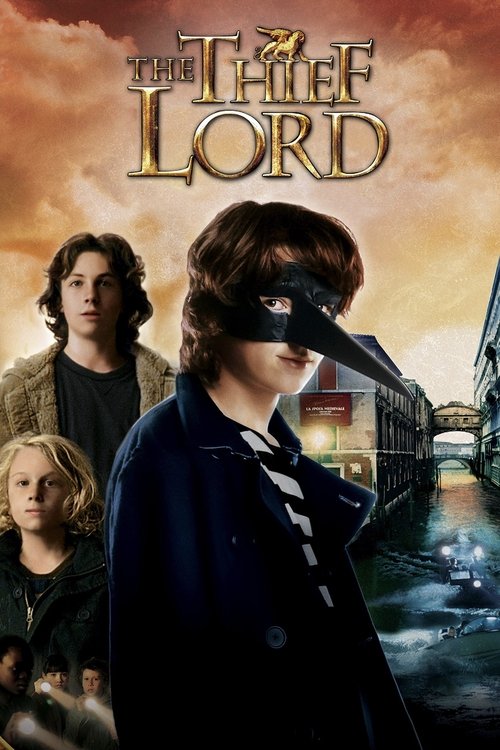
The Thief Lord
A tale about two young boys, Prosper and Bo, who flee to Venice after being orphaned and dumped in the care of a cruel auntie. Hiding in the canals and alleyways of the city, the boys are befriended by a gang of young urchins and their enigmatic leader, the Thief Lord. From their home base of an old cinema theater, the children steal from the rich to support themselves and soon capture the interest of a bumbling detective. However, a greater threat to the children is something from a forgotten past - a beautiful magical treasure with the power to spin time itself
Despite its tight budget of $2.0M, The Thief Lord became a financial success, earning $5.1M worldwide—a 157% return.
1 nomination
Plot Structure
Story beats plotted across runtime


Narrative Arc
Emotional journey through the story's key moments
Story Circle
Blueprint 15-beat structure
Arcplot Score Breakdown
Weighted: Precision (70%) + Arc (15%) + Theme (15%)
The Thief Lord (2006) reveals deliberately positioned narrative architecture, characteristic of Richard Claus's storytelling approach. This structural analysis examines how the film's 15-point plot structure maps to proven narrative frameworks across 1 hour and 38 minutes. With an Arcplot score of 6.7, the film balances conventional beats with creative variation.
Characters
Cast & narrative archetypes

Prosper
Scipio (The Thief Lord)
Bo
Hornet
Victor Getz
Conte
Barbarossa
Ida Spavento
Main Cast & Characters
Prosper
Played by Aaron Taylor-Johnson
A teenage boy protecting his younger brother Bo while living as a street orphan in Venice.
Scipio (The Thief Lord)
Played by Rollo Weeks
The mysterious masked leader of the orphan gang who steals from the wealthy to support his group.
Bo
Played by Jasper Harris
Prosper's young brother, a cheerful and innocent child sought by their aunt and uncle.
Hornet
Played by Poppy Rogers
A resourceful and compassionate girl in the orphan gang who befriends Prosper and Bo.
Victor Getz
Played by Bob Hoskins
A kind-hearted detective hired to find Prosper and Bo who develops sympathy for the children.
Conte
Played by Jim Carter
A wealthy businessman obsessed with obtaining a magical carousel that grants eternal youth.
Barbarossa
Played by Richard Clements
A cunning antique dealer who fences stolen goods and harbors his own secret agenda.
Ida Spavento
Played by Carole Boyd
A kind photographer who befriends the children and offers them refuge.
Structural Analysis
The Status Quo at 1 minutes (1% through the runtime) establishes Prosper and Bo are on a train fleeing to Venice after their mother's death, escaping their cold Aunt Esther who only wants to adopt the younger Bo. The brothers are alone, frightened, but determined to stay together.. Significantly, this early placement immediately immerses viewers in the story world.
The inciting incident occurs at 13 minutes when The mysterious Conte approaches Scipio with a dangerous job: steal a wooden wing from the home of Ida Spavento. This mission sets the main plot in motion and raises the stakes beyond petty theft to something much larger and more dangerous.. At 13% through the film, this Disruption is delayed, allowing extended setup of the story world. This beat shifts the emotional landscape, launching the protagonist into the central conflict.
The First Threshold at 25 minutes marks the transition into Act II, occurring at 26% of the runtime. This indicates the protagonist's commitment to The gang commits to the heist and breaks into Ida Spavento's house. Prosper fully commits to Scipio's world by participating in the theft. This is an active choice that crosses a moral line - they are no longer just hiding but actively engaging in crime together as a family., moving from reaction to action.
At 49 minutes, the Midpoint arrives at 50% of the runtime—precisely centered, creating perfect narrative symmetry. Notably, this crucial beat The children discover the location of the magical merry-go-round on the Isola Segreta. Scipio's deception is fully exposed to the group, creating both crisis and opportunity. This is a false victory - they have found the magic but don't yet understand its cost or the Conte's true intentions., fundamentally raising what's at risk. The emotional intensity shifts, dividing the narrative into clear before-and-after phases.
The Collapse moment at 74 minutes (76% through) represents the emotional nadir. Here, Bo is captured by Aunt Esther and taken away from Prosper. The found family is torn apart. Scipio's father publicly humiliates him. Everything they built together seems destroyed - the whiff of death is the death of childhood innocence and the family they created., reveals the protagonist at their lowest point. This beat's placement in the final quarter sets up the climactic reversal.
The Second Threshold at 79 minutes initiates the final act resolution at 81% of the runtime. Victor switches sides and helps the children. Ida offers to adopt Prosper and Bo, providing a legal solution. Scipio decides to use the merry-go-round to become an adult so he can never be controlled by his father again. The synthesis of magic and love offers a path forward., demonstrating the transformation achieved throughout the journey.
Emotional Journey
The Thief Lord's emotional architecture traces a deliberate progression across 15 carefully calibrated beats.
Narrative Framework
This structural analysis employs structural analysis methodology used to understand storytelling architecture. By mapping The Thief Lord against these established plot points, we can identify how Richard Claus utilizes or subverts traditional narrative conventions. The plot point approach reveals not only adherence to structural principles but also creative choices that distinguish The Thief Lord within the adventure genre.
Richard Claus's Structural Approach
Among the 2 Richard Claus films analyzed on Arcplot, the average structural score is 7.0, reflecting strong command of classical structure. The Thief Lord takes a more unconventional approach compared to the director's typical style. For comparative analysis, explore the complete Richard Claus filmography.
Comparative Analysis
Additional adventure films include The Black Stallion, The Bad Guys and Puss in Boots. For more Richard Claus analyses, see The Little Vampire 3D.
Plot Points by Act
Act I
SetupStatus Quo
Prosper and Bo are on a train fleeing to Venice after their mother's death, escaping their cold Aunt Esther who only wants to adopt the younger Bo. The brothers are alone, frightened, but determined to stay together.
Theme
Hornet tells the brothers that the Stella is their home now - "We're a family here, we look after each other." This establishes the theme that true family is chosen through love, not determined by blood.
Worldbuilding
The brothers arrive in Venice and are taken in by Scipio's gang of orphans living in an abandoned movie theater called the Stella. We meet Hornet, Mosca, and Riccio. Victor Getz is introduced as the detective hired by Aunt Esther to find the boys. The magical, labyrinthine world of Venice is established as both refuge and danger.
Disruption
The mysterious Conte approaches Scipio with a dangerous job: steal a wooden wing from the home of Ida Spavento. This mission sets the main plot in motion and raises the stakes beyond petty theft to something much larger and more dangerous.
Resistance
Scipio debates whether to take the Conte's job while Victor gets closer to finding the boys. The gang prepares for the heist. Prosper struggles with his role as protector of Bo while being drawn into Scipio's world of thievery. The children stake out Ida's house and plan their approach.
Act II
ConfrontationFirst Threshold
The gang commits to the heist and breaks into Ida Spavento's house. Prosper fully commits to Scipio's world by participating in the theft. This is an active choice that crosses a moral line - they are no longer just hiding but actively engaging in crime together as a family.
Mirror World
Ida Spavento catches the children but instead of turning them in, she becomes an ally and protector. She represents the caring adult figure they lack and embodies the theme - she chooses to help these children who aren't hers. Her connection to the magical merry-go-round introduces the fantasy element.
Premise
The children explore the mystery of the magical merry-go-round that can make children into adults and adults into children. Scipio's secret is revealed - he's actually the wealthy son of a neglectful businessman, not a street orphan. Victor bonds with the children despite being hired to catch them. The wing is delivered but the adventure deepens as they learn the Conte wants to use the merry-go-round.
Midpoint
The children discover the location of the magical merry-go-round on the Isola Segreta. Scipio's deception is fully exposed to the group, creating both crisis and opportunity. This is a false victory - they have found the magic but don't yet understand its cost or the Conte's true intentions.
Opposition
Victor closes in on the children while Aunt Esther arrives in Venice demanding Bo. The Conte's sinister plans become clearer - he and the Contessa want to use the merry-go-round to become young again. Scipio struggles with his identity crisis. The group fractures under pressure as Bo is nearly captured and the adults' world threatens to destroy their found family.
Collapse
Bo is captured by Aunt Esther and taken away from Prosper. The found family is torn apart. Scipio's father publicly humiliates him. Everything they built together seems destroyed - the whiff of death is the death of childhood innocence and the family they created.
Crisis
Prosper despairs at losing Bo. The gang is scattered and defeated. Victor must decide whose side he's truly on. Scipio confronts his pain of having a family that doesn't want him while the orphans have no family at all. The contrast between blood family and chosen family reaches its crisis point.
Act III
ResolutionSecond Threshold
Victor switches sides and helps the children. Ida offers to adopt Prosper and Bo, providing a legal solution. Scipio decides to use the merry-go-round to become an adult so he can never be controlled by his father again. The synthesis of magic and love offers a path forward.
Synthesis
The children journey to the Isola Segreta for the climactic confrontation. Scipio rides the merry-go-round and becomes an adult. The Conte and Contessa use it to become children, trading places with Scipio. Victor and Ida unite to protect the children from Aunt Esther. Prosper refuses to ride the merry-go-round, choosing to grow up naturally with Bo by his side.
Transformation
The new family is formed: Ida adopts Prosper and Bo, the orphans have a home, and even Victor has found a place with them. Adult Scipio waves goodbye as he sets off on his own adventure. The brothers who fled alone now have a true family built on choice and love, not blood obligation.