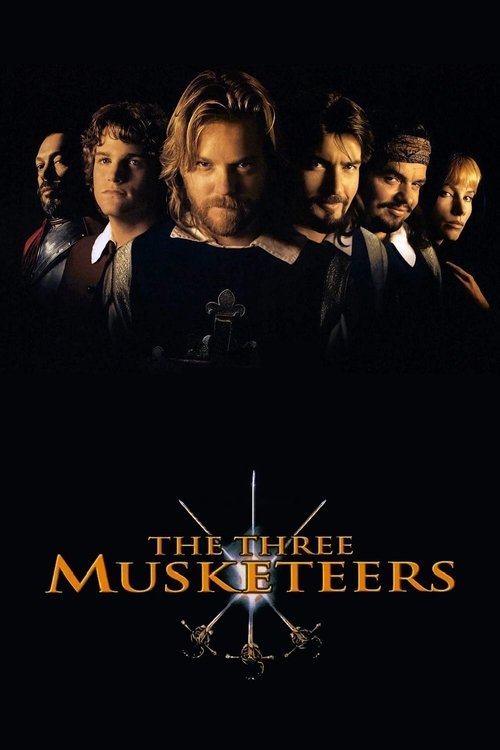
The Three Musketeers
D'Artagnan travels to Paris hoping to become a musketeer, one of the French king's elite bodyguards, only to discover that the corps has been disbanded by conniving Cardinal Richelieu, who secretly hopes to usurp the throne. Fortunately, Athos, Porthos and Aramis have refused to lay down their weapons and continue to protect their king. D'Artagnan joins with the rogues to expose Richelieu's plot against the crown.
Despite a mid-range budget of $30.0M, The Three Musketeers became a solid performer, earning $111.9M worldwide—a 273% return.
2 wins & 3 nominations


Plot Structure
Story beats plotted across runtime


Narrative Arc
Emotional journey through the story's key moments
Story Circle
Blueprint 15-beat structure
Arcplot Score Breakdown
Weighted: Precision (70%) + Arc (15%) + Theme (15%)
The Three Musketeers (1993) exemplifies carefully calibrated narrative design, characteristic of Stephen Herek's storytelling approach. This structural analysis examines how the film's 15-point plot structure maps to proven narrative frameworks across 1 hour and 45 minutes. With an Arcplot score of 7.3, the film balances conventional beats with creative variation.
Characters
Cast & narrative archetypes

D'Artagnan
Athos
Aramis
Porthos
Cardinal Richelieu
Milady de Winter
Constance Bonacieux
King Louis XIII
Main Cast & Characters
D'Artagnan
Played by Chris O'Donnell
A headstrong young Gascon who travels to Paris to join the King's Musketeers and becomes embroiled in political intrigue.
Athos
Played by Kiefer Sutherland
The noble and melancholic leader of the three musketeers, haunted by his past.
Aramis
Played by Charlie Sheen
The romantic and spiritual musketeer who struggles between duty and religious calling.
Porthos
Played by Oliver Platt
The flamboyant and fun-loving musketeer with a taste for luxury and adventure.
Cardinal Richelieu
Played by Tim Curry
The cunning and ruthless chief minister who schemes to control France and undermine the King.
Milady de Winter
Played by Rebecca De Mornay
A beautiful and deadly spy working for Cardinal Richelieu with a dark connection to Athos.
Constance Bonacieux
Played by Gabrielle Anwar
The Queen's lady-in-waiting who becomes D'Artagnan's love interest and ally.
King Louis XIII
Played by Hugh O'Conor
The young and insecure King of France, manipulated by Cardinal Richelieu.
Structural Analysis
The Status Quo at 1 minutes (1% through the runtime) establishes D'Artagnan in rural France, training with his father to become a Musketeer. He is eager, idealistic, and dreams of glory in Paris.. Of particular interest, this early placement immediately immerses viewers in the story world.
The inciting incident occurs at 12 minutes when D'Artagnan arrives in Paris to find the Musketeers disbanded by Cardinal Richelieu. His dream of joining them is shattered - they no longer exist as a fighting force.. At 12% through the film, this Disruption aligns precisely with traditional story structure. This beat shifts the emotional landscape, launching the protagonist into the central conflict.
The First Threshold at 26 minutes marks the transition into Act II, occurring at 25% of the runtime. This indicates the protagonist's commitment to D'Artagnan and the three Musketeers choose to fight Cardinal's guards together despite the odds. This active choice to stand united launches them into the adventure and reforms their brotherhood., moving from reaction to action.
At 51 minutes, the Midpoint arrives at 49% of the runtime—precisely centered, creating perfect narrative symmetry. Significantly, this crucial beat The Musketeers successfully retrieve the Queen's diamonds from England, saving her from Richelieu's trap. False victory - they think they've won, but Richelieu escalates his schemes., fundamentally raising what's at risk. The emotional intensity shifts, dividing the narrative into clear before-and-after phases.
The Collapse moment at 77 minutes (74% through) represents the emotional nadir. Here, The Musketeers are captured and imprisoned, facing execution. D'Artagnan believes Constance has been killed. The brotherhood seems broken, their cause lost, and death imminent., shows the protagonist at their lowest point. This beat's placement in the final quarter sets up the climactic reversal.
The Second Threshold at 82 minutes initiates the final act resolution at 78% of the runtime. The Musketeers escape prison and discover Richelieu's final plot against the King. They synthesize their individual skills with their newfound unity, ready for the final confrontation., demonstrating the transformation achieved throughout the journey.
Emotional Journey
The Three Musketeers's emotional architecture traces a deliberate progression across 15 carefully calibrated beats.
Narrative Framework
This structural analysis employs systematic plot point analysis that identifies crucial turning points. By mapping The Three Musketeers against these established plot points, we can identify how Stephen Herek utilizes or subverts traditional narrative conventions. The plot point approach reveals not only adherence to structural principles but also creative choices that distinguish The Three Musketeers within the action genre.
Stephen Herek's Structural Approach
Among the 11 Stephen Herek films analyzed on Arcplot, the average structural score is 7.2, reflecting strong command of classical structure. The Three Musketeers represents one of the director's most structurally precise works. For comparative analysis, explore the complete Stephen Herek filmography.
Comparative Analysis
Additional action films include The Bad Guys, Puss in Boots and Venom: The Last Dance. For more Stephen Herek analyses, see Rock Star, 101 Dalmatians and Critters.
Plot Points by Act
Act I
SetupStatus Quo
D'Artagnan in rural France, training with his father to become a Musketeer. He is eager, idealistic, and dreams of glory in Paris.
Theme
D'Artagnan's father tells him about honor, loyalty, and the Musketeers' motto: "All for one, one for all" - establishing the core theme of unity over individualism.
Worldbuilding
Introduction to D'Artagnan's world in Gascony, his father's murder by Rochefort, and D'Artagnan's journey to Paris. Establishes Cardinal Richelieu's plot against the Musketeers and the King.
Disruption
D'Artagnan arrives in Paris to find the Musketeers disbanded by Cardinal Richelieu. His dream of joining them is shattered - they no longer exist as a fighting force.
Resistance
D'Artagnan meets Athos, Porthos, and Aramis. He challenges all three to duels, discovers they are the legendary Musketeers. They debate whether to fight the Cardinal's guards or surrender to the new reality.
Act II
ConfrontationFirst Threshold
D'Artagnan and the three Musketeers choose to fight Cardinal's guards together despite the odds. This active choice to stand united launches them into the adventure and reforms their brotherhood.
Mirror World
D'Artagnan meets Constance, the Queen's lady-in-waiting. Their relationship begins and she represents the thematic ideal of loyalty and selfless service to a greater cause.
Premise
The Musketeers work together on adventures, uncovering Richelieu's plot involving the Queen's diamonds. Swashbuckling action, camaraderie, and the fun of seeing the four heroes operate as a team.
Midpoint
The Musketeers successfully retrieve the Queen's diamonds from England, saving her from Richelieu's trap. False victory - they think they've won, but Richelieu escalates his schemes.
Opposition
Richelieu intensifies his plot to overthrow the King. The Musketeers are hunted, separated, and face increasing danger. Milady de Winter's betrayal complicates matters. Pressure mounts from all sides.
Collapse
The Musketeers are captured and imprisoned, facing execution. D'Artagnan believes Constance has been killed. The brotherhood seems broken, their cause lost, and death imminent.
Crisis
In their darkest hour imprisoned, the Musketeers reconcile their differences and reaffirm their bond. D'Artagnan mourns Constance but finds resolve in his brothers' loyalty.
Act III
ResolutionSecond Threshold
The Musketeers escape prison and discover Richelieu's final plot against the King. They synthesize their individual skills with their newfound unity, ready for the final confrontation.
Synthesis
The Musketeers storm Richelieu's fortress, save the King, defeat Rochefort, and expose the Cardinal's treachery. D'Artagnan avenges his father and proves himself a true Musketeer.
Transformation
D'Artagnan is officially made a Musketeer, standing united with Athos, Porthos, and Aramis. The closing image mirrors the opening but shows transformation: he is no longer a lone dreamer but part of a brotherhood, embodying "All for one, one for all."