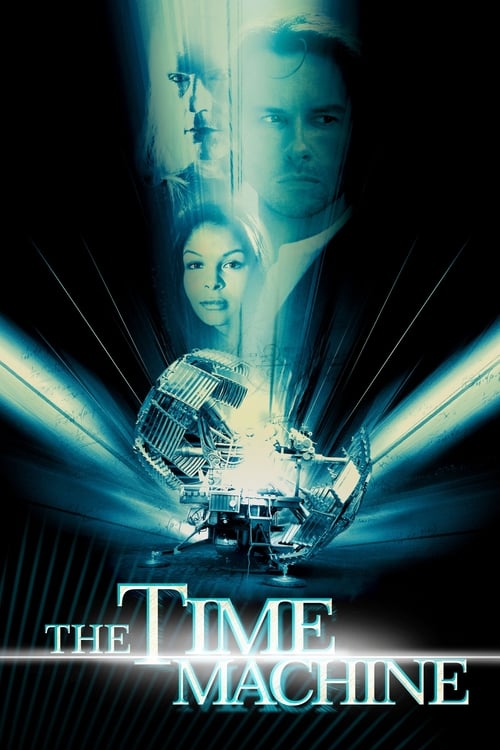
The Time Machine
Hoping to alter the events of the past, a 19th century inventor instead travels 800,000 years into the future, where he finds mankind divided into two warring races.
Working with a substantial budget of $80.0M, the film achieved a modest success with $123.7M in global revenue (+55% profit margin).
Nominated for 1 Oscar. 2 wins & 4 nominations


Plot Structure
Story beats plotted across runtime


Narrative Arc
Emotional journey through the story's key moments
Story Circle
Blueprint 15-beat structure
Arcplot Score Breakdown
Weighted: Precision (70%) + Arc (15%) + Theme (15%)
The Time Machine (2002) demonstrates deliberately positioned plot construction, characteristic of Simon Wells's storytelling approach. This structural analysis examines how the film's 15-point plot structure maps to proven narrative frameworks across 1 hour and 36 minutes. With an Arcplot score of 7.4, the film balances conventional beats with creative variation.
Characters
Cast & narrative archetypes

Alexander Hartdegen
Mara
Über-Morlock
Emma
Vox
David Philby
Main Cast & Characters
Alexander Hartdegen
Played by Guy Pearce
A brilliant scientist and inventor who builds a time machine to change the past after losing his fiancée, becoming obsessed with understanding why the past cannot be changed.
Mara
Played by Samantha Mumba
A brave and compassionate Eloi woman who befriends Alexander in the distant future and becomes his guide to understanding the new world.
Über-Morlock
Played by Jeremy Irons
The telepathic leader of the Morlocks who reveals the horrifying truth about humanity's future and the nature of time itself.
Emma
Played by Sienna Guillory
Alexander's beloved fiancée whose tragic death drives him to build the time machine in a desperate attempt to save her.
Vox
Played by Orlando Jones
A holographic librarian AI from 2030 who provides information and becomes Alexander's companion during his journey through time.
David Philby
Played by Mark Addy
Alexander's best friend and colleague who tries to dissuade him from his obsessive quest and worries about his mental state.
Structural Analysis
The Status Quo at 1 minutes (1% through the runtime) establishes Alexander Hartdegen teaches at Columbia University in 1899 New York, a brilliant inventor preparing to propose to his beloved Emma. His world is ordered, intellectual, focused on the future.. Structural examination shows that this early placement immediately immerses viewers in the story world.
The inciting incident occurs at 11 minutes when Emma is killed in a random mugging during Alexander's marriage proposal in the park. This tragedy shatters Alexander's world and becomes the driving force behind his obsession.. At 11% through the film, this Disruption aligns precisely with traditional story structure. This beat shifts the emotional landscape, launching the protagonist into the central conflict.
The First Threshold at 23 minutes marks the transition into Act II, occurring at 24% of the runtime. This demonstrates the protagonist's commitment to Alexander makes the active choice to enter the time machine and travel back to save Emma. He crosses the threshold from grief-stricken inventor into time traveler, committing to change the past., moving from reaction to action.
At 47 minutes, the Midpoint arrives at 49% of the runtime—precisely centered, creating perfect narrative symmetry. Structural examination shows that this crucial beat Alexander awakens among the peaceful Eloi tribe and meets Mara, who cares for him. This seems like a paradise—a false victory—but we soon learn the Morlocks hunt the Eloi. Stakes are raised as Alexander discovers this new world's dark truth., fundamentally raising what's at risk. The emotional intensity shifts, dividing the narrative into clear before-and-after phases.
The Collapse moment at 71 minutes (74% through) represents the emotional nadir. Here, The Uber-Morlock explains Alexander can never save Emma—her death is a fixed point that caused the machine's creation. If she lived, there would be no machine, creating a paradox. Alexander's four-year obsession has been futile. His dream dies., illustrates the protagonist at their lowest point. This beat's placement in the final quarter sets up the climactic reversal.
The Second Threshold at 76 minutes initiates the final act resolution at 79% of the runtime. Alexander realizes he cannot change the past, but he CAN change the future. He breaks free and chooses to save Mara and the Eloi rather than remain trapped by grief. He synthesizes his loss with new purpose: protecting the living, not resurrecting the dead., demonstrating the transformation achieved throughout the journey.
Emotional Journey
The Time Machine's emotional architecture traces a deliberate progression across 15 carefully calibrated beats.
Narrative Framework
This structural analysis employs proven narrative structure principles that track dramatic progression. By mapping The Time Machine against these established plot points, we can identify how Simon Wells utilizes or subverts traditional narrative conventions. The plot point approach reveals not only adherence to structural principles but also creative choices that distinguish The Time Machine within the science fiction genre.
Simon Wells's Structural Approach
Among the 3 Simon Wells films analyzed on Arcplot, the average structural score is 7.3, reflecting strong command of classical structure. The Time Machine represents one of the director's most structurally precise works. For comparative analysis, explore the complete Simon Wells filmography.
Comparative Analysis
Additional science fiction films include The Postman, Mad Max 2 and AVP: Alien vs. Predator. For more Simon Wells analyses, see Balto, Mars Needs Moms.
Plot Points by Act
Act I
SetupStatus Quo
Alexander Hartdegen teaches at Columbia University in 1899 New York, a brilliant inventor preparing to propose to his beloved Emma. His world is ordered, intellectual, focused on the future.
Theme
Alexander's colleague Philby asks, "What if you could change the past?" foreshadowing the central question: can we change what has already happened, or must we accept loss and move forward?
Worldbuilding
Establishment of 1899 New York, Alexander's life as a professor and inventor, his relationship with Emma, his friendship with Philby and Mrs. Watchit. The world is one of Victorian propriety and scientific optimism.
Disruption
Emma is killed in a random mugging during Alexander's marriage proposal in the park. This tragedy shatters Alexander's world and becomes the driving force behind his obsession.
Resistance
Alexander becomes consumed with grief and obsessively builds a time machine over four years. He debates whether to use it, wrestles with the impossibility of his goal, but cannot let go of Emma. Friends express concern about his isolation.
Act II
ConfrontationFirst Threshold
Alexander makes the active choice to enter the time machine and travel back to save Emma. He crosses the threshold from grief-stricken inventor into time traveler, committing to change the past.
Mirror World
Alexander saves Emma from the mugging but she dies anyway in a carriage accident. He realizes he cannot change her death—only the circumstances. This paradox introduces the thematic mirror: you cannot change the past, only learn from it.
Premise
Alexander travels forward through time seeking answers. He witnesses technological progress, visits 2030 New York library with Vox the AI, then accidentally travels to 2037 during lunar demolition. The machine carries him 800,000 years into the future where he discovers the Eloi.
Midpoint
Alexander awakens among the peaceful Eloi tribe and meets Mara, who cares for him. This seems like a paradise—a false victory—but we soon learn the Morlocks hunt the Eloi. Stakes are raised as Alexander discovers this new world's dark truth.
Opposition
Alexander learns about the Morlock-Eloi relationship. When Morlocks raid and take Mara, Alexander tries to use the time machine but it's dragged underground. He's captured and meets the Uber-Morlock who reveals the terrible truth: Alexander cannot save Emma because her death was the reason he built the machine—a temporal paradox.
Collapse
The Uber-Morlock explains Alexander can never save Emma—her death is a fixed point that caused the machine's creation. If she lived, there would be no machine, creating a paradox. Alexander's four-year obsession has been futile. His dream dies.
Crisis
Alexander sits in darkness processing this revelation. He must choose between his past (Emma) and his present (Mara and the Eloi). He wrestles with acceptance of Emma's death and what his life's purpose should be.
Act III
ResolutionSecond Threshold
Alexander realizes he cannot change the past, but he CAN change the future. He breaks free and chooses to save Mara and the Eloi rather than remain trapped by grief. He synthesizes his loss with new purpose: protecting the living, not resurrecting the dead.
Synthesis
Alexander rescues Mara, battles Morlocks, and destroys the time machine, which creates a temporal explosion that collapses the Morlock caverns. The Eloi are freed from their predators. Alexander chooses to remain in the future with Mara rather than return to 1899.
Transformation
Alexander sits peacefully with Mara and the Eloi children, teaching them. In 1899, Philby and Mrs. Watchit visit Alexander's home and realize he's not coming back. Alexander has transformed from a man trapped in the past to one living fully in the present, having found new love and purpose.