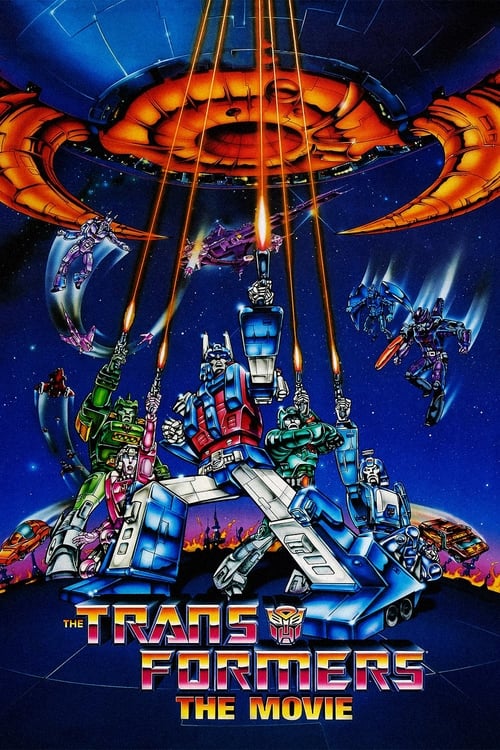
The Transformers: The Movie
The Autobots must stop a colossal planet-consuming robot who goes after the Autobot Matrix of Leadership. At the same time, they must defend themselves against an all-out attack from the Decepticons.
The film struggled financially against its limited budget of $6.0M, earning $5.9M globally (-2% loss).


Plot Structure
Story beats plotted across runtime


Narrative Arc
Emotional journey through the story's key moments
Story Circle
Blueprint 15-beat structure
Arcplot Score Breakdown
Weighted: Precision (70%) + Arc (15%) + Theme (15%)
The Transformers: The Movie (1986) reveals precise narrative design, characteristic of Nelson Shin's storytelling approach. This structural analysis examines how the film's 15-point plot structure maps to proven narrative frameworks across 1 hour and 24 minutes. With an Arcplot score of 7.4, the film balances conventional beats with creative variation.
Characters
Cast & narrative archetypes

Optimus Prime
Hot Rod
Megatron
Unicron
Ultra Magnus
Galvatron
Starscream
Arcee
Kup
Main Cast & Characters
Optimus Prime
Played by Peter Cullen
Noble leader of the Autobots who sacrifices himself to protect the Matrix of Leadership and passes it to the next generation.
Hot Rod
Played by Judd Nelson
Impulsive young Autobot who matures into Rodimus Prime after receiving the Matrix of Leadership.
Megatron
Played by Frank Welker
Ruthless Decepticon leader who is reborn as Galvatron after being reformatted by Unicron.
Unicron
Played by Orson Welles
Planet-sized chaos bringer who devours worlds and manipulates Galvatron to destroy the Matrix.
Ultra Magnus
Played by Robert Stack
Stoic Autobot commander who reluctantly carries the burden of leadership after Optimus's death.
Galvatron
Played by Leonard Nimoy
Megatron's upgraded form, a powerful but unstable Decepticon servant of Unicron.
Starscream
Played by Chris Latta
Treacherous Decepticon air commander who briefly crowns himself leader before being destroyed by Galvatron.
Arcee
Played by Susan Blu
Fierce female Autobot warrior who fights alongside Hot Rod and develops a bond with him.
Kup
Played by Lionel Stander
Veteran Autobot warrior who shares war stories and wisdom with the younger generation.
Structural Analysis
The Status Quo at 1 minutes (1% through the runtime) establishes Unicron devours a planet, establishing the cosmic threat. Meanwhile, the Autobots control Cybertron and Earth bases in an ongoing but stable war with Decepticons.. Significantly, this early placement immediately immerses viewers in the story world.
The inciting incident occurs at 9 minutes when Megatron and the Decepticons ambush and slaughter the Autobot shuttle crew, then use it to infiltrate Autobot City on Earth, launching a devastating surprise attack.. At 11% through the film, this Disruption aligns precisely with traditional story structure. This beat shifts the emotional landscape, launching the protagonist into the central conflict.
The First Threshold at 21 minutes marks the transition into Act II, occurring at 25% of the runtime. This shows the protagonist's commitment to Optimus Prime dies and the Matrix is passed. The Decepticons are cast out into space. The old order is shattered, forcing the Autobots (especially Hot Rod) into a new world without their legendary leader., moving from reaction to action.
At 42 minutes, the Midpoint arrives at 50% of the runtime—precisely centered, creating perfect narrative symmetry. The analysis reveals that this crucial beat Galvatron destroys Ultra Magnus and claims the Matrix, seemingly achieving victory. The Matrix is lost and scattered, representing the complete failure of Optimus's succession plan., fundamentally raising what's at risk. The emotional intensity shifts, dividing the narrative into clear before-and-after phases.
The Collapse moment at 62 minutes (74% through) represents the emotional nadir. Here, Galvatron defeats Hot Rod inside Unicron. Hot Rod is thrown down, seemingly beaten. His mentor figures are consumed or helpless. Death surrounds him as Unicron devours Cybertron and his friends., shows the protagonist at their lowest point. This beat's placement in the final quarter sets up the climactic reversal.
The Second Threshold at 67 minutes initiates the final act resolution at 80% of the runtime. Hot Rod seizes the Matrix from Galvatron. "Arise, Rodimus Prime!" He transforms into a mature leader, finally opening the Matrix and unleashing its power. The synthesis of youth and responsibility., demonstrating the transformation achieved throughout the journey.
Emotional Journey
The Transformers: The Movie's emotional architecture traces a deliberate progression across 15 carefully calibrated beats.
Narrative Framework
This structural analysis employs a 15-point narrative structure framework that maps key story moments. By mapping The Transformers: The Movie against these established plot points, we can identify how Nelson Shin utilizes or subverts traditional narrative conventions. The plot point approach reveals not only adherence to structural principles but also creative choices that distinguish The Transformers: The Movie within the animation genre.
Nelson Shin's Structural Approach
Among the 2 Nelson Shin films analyzed on Arcplot, the average structural score is 7.1, reflecting strong command of classical structure. The Transformers: The Movie represents one of the director's most structurally precise works. For comparative analysis, explore the complete Nelson Shin filmography.
Comparative Analysis
Additional animation films include The Bad Guys, Puss in Boots and Violet Evergarden: Eternity and the Auto Memory Doll. For more Nelson Shin analyses, see Empress Chung.
Plot Points by Act
Act I
SetupStatus Quo
Unicron devours a planet, establishing the cosmic threat. Meanwhile, the Autobots control Cybertron and Earth bases in an ongoing but stable war with Decepticons.
Theme
Ironhide or Kup speaks about the cost of leadership and sacrifice in war, foreshadowing the film's central theme about the price of protecting others.
Worldbuilding
Establishment of the Autobot-Decepticon war status quo. Hot Rod is shown as an impulsive young warrior. Autobots shuttle energon from Earth to Cybertron. Optimus Prime leads with wisdom and strength.
Disruption
Megatron and the Decepticons ambush and slaughter the Autobot shuttle crew, then use it to infiltrate Autobot City on Earth, launching a devastating surprise attack.
Resistance
The Battle of Autobot City rages. Optimus Prime arrives from Cybertron to save the day. The climactic confrontation between Optimus and Megatron results in mutual fatal wounds. Optimus Prime dies, passing the Matrix of Leadership to Ultra Magnus.
Act II
ConfrontationFirst Threshold
Optimus Prime dies and the Matrix is passed. The Decepticons are cast out into space. The old order is shattered, forcing the Autobots (especially Hot Rod) into a new world without their legendary leader.
Mirror World
Galvatron is created from Megatron's body by Unicron, forming a dark mirror to Hot Rod's eventual transformation. Unicron becomes the new puppet master, demanding the Matrix be destroyed.
Premise
Hot Rod, Kup, and others are separated across space. Adventures on Quintessa, meeting the Sharkticons and Junkions. Ultra Magnus struggles with leadership. The quest to survive and reunite becomes the focus.
Midpoint
Galvatron destroys Ultra Magnus and claims the Matrix, seemingly achieving victory. The Matrix is lost and scattered, representing the complete failure of Optimus's succession plan.
Opposition
The Autobots recover the Matrix pieces and reunite. Galvatron serves Unicron but cannot open the Matrix. Unicron begins consuming Cybertron. The Autobots race to stop the planet-eater while Galvatron's forces close in.
Collapse
Galvatron defeats Hot Rod inside Unicron. Hot Rod is thrown down, seemingly beaten. His mentor figures are consumed or helpless. Death surrounds him as Unicron devours Cybertron and his friends.
Crisis
Hot Rod struggles internally, realizing he must rise to leadership not by being chosen, but by choosing to act. The dark moment before transformation where he must accept his destiny.
Act III
ResolutionSecond Threshold
Hot Rod seizes the Matrix from Galvatron. "Arise, Rodimus Prime!" He transforms into a mature leader, finally opening the Matrix and unleashing its power. The synthesis of youth and responsibility.
Synthesis
Rodimus Prime uses the Matrix's power to destroy Unicron from within. The Autobots escape as Unicron explodes. Galvatron is cast out into space. Peace is restored to Cybertron.
Transformation
Rodimus Prime stands as the new leader on Cybertron, surrounded by the Autobots. The impulsive youth has become a wise leader. Where Optimus once stood, Rodimus now stands—transformed and ready to lead.