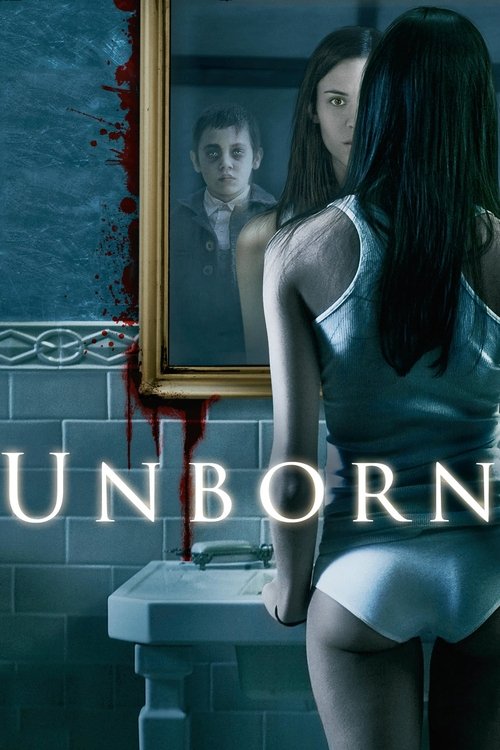
The Unborn
A young woman fights the spirit that is slowly taking possession of her.
Despite a moderate budget of $16.0M, The Unborn became a solid performer, earning $76.5M worldwide—a 378% return.


Plot Structure
Story beats plotted across runtime


Narrative Arc
Emotional journey through the story's key moments
Story Circle
Blueprint 15-beat structure
Arcplot Score Breakdown
Weighted: Precision (70%) + Arc (15%) + Theme (15%)
The Unborn (2009) exemplifies precise story structure, characteristic of David S. Goyer's storytelling approach. This structural analysis examines how the film's 15-point plot structure maps to proven narrative frameworks across 1 hour and 27 minutes. With an Arcplot score of 6.8, the film balances conventional beats with creative variation.
Characters
Cast & narrative archetypes

Casey Beldon
Rabbi Sendak
Mark Hardigan
Sofi Kozma
Romy
Janet Beldon
Arthur Wyndham
Main Cast & Characters
Casey Beldon
Played by Odette Yustman
A young woman haunted by visions of a supernatural entity connected to her family's dark past involving Nazi experiments.
Rabbi Sendak
Played by Gary Oldman
An elderly Holocaust survivor and rabbi who helps Casey perform an exorcism to fight the dybbuk.
Mark Hardigan
Played by Cam Gigandet
Casey's boyfriend who supports her through the supernatural ordeal but becomes a victim of possession.
Sofi Kozma
Played by Jane Alexander
An elderly Holocaust survivor who reveals the truth about Casey's twin and the Nazi experiments that unleashed the dybbuk.
Romy
Played by Meagan Good
Casey's best friend who becomes possessed and violently attacks Casey early in the film.
Janet Beldon
Played by Carla Gugino
Casey's mother who was institutionalized and died after being tormented by the same supernatural entity.
Arthur Wyndham
Played by Idris Elba
An expert on the occult and Jewish mysticism who assists in the exorcism ritual.
Structural Analysis
The Status Quo at 1 minutes (1% through the runtime) establishes Casey jogs through a winter forest and has a disturbing nightmare involving a fetus in a jar and a creepy child with a dog's head, establishing her as haunted before we know why.. The analysis reveals that this early placement immediately immerses viewers in the story world.
The inciting incident occurs at 11 minutes when Casey's eye changes color and a doctor reveals she had a twin brother who died in utero. This revelation that she was never alone in the womb disrupts her understanding of her own identity and opens the door to the supernatural threat.. At 12% through the film, this Disruption aligns precisely with traditional story structure. This beat shifts the emotional landscape, launching the protagonist into the central conflict.
The First Threshold at 21 minutes marks the transition into Act II, occurring at 24% of the runtime. This shows the protagonist's commitment to Casey actively chooses to pursue the truth about the dybbuk after her grandmother reveals the entity killed her twin brother in Auschwitz. She commits to finding a way to stop it rather than ignoring the supernatural threat., moving from reaction to action.
At 44 minutes, the Midpoint arrives at 50% of the runtime—precisely centered, creating perfect narrative symmetry. Structural examination shows that this crucial beat Grandmother Sofi is killed by the dybbuk, eliminating Casey's primary source of information and protection. The stakes become personal and lethal - this is no longer about understanding the threat but surviving it., fundamentally raising what's at risk. The emotional intensity shifts, dividing the narrative into clear before-and-after phases.
The Collapse moment at 65 minutes (74% through) represents the emotional nadir. Here, During the exorcism attempt, several participants are killed by the dybbuk, including Romy. The ritual appears to fail catastrophically, and Rabbi Sendak is mortally wounded. Casey has lost her friends and her spiritual guide., indicates the protagonist at their lowest point. This beat's placement in the final quarter sets up the climactic reversal.
The Second Threshold at 69 minutes initiates the final act resolution at 79% of the runtime. Casey realizes she must complete the exorcism herself, using what Rabbi Sendak taught her. She chooses to face the dybbuk directly rather than flee, accepting her role as the one who must end her family's curse., demonstrating the transformation achieved throughout the journey.
Emotional Journey
The Unborn's emotional architecture traces a deliberate progression across 15 carefully calibrated beats.
Narrative Framework
This structural analysis employs a 15-point narrative structure framework that maps key story moments. By mapping The Unborn against these established plot points, we can identify how David S. Goyer utilizes or subverts traditional narrative conventions. The plot point approach reveals not only adherence to structural principles but also creative choices that distinguish The Unborn within the horror genre.
David S. Goyer's Structural Approach
Among the 2 David S. Goyer films analyzed on Arcplot, the average structural score is 7.1, reflecting strong command of classical structure. The Unborn takes a more unconventional approach compared to the director's typical style. For comparative analysis, explore the complete David S. Goyer filmography.
Comparative Analysis
Additional horror films include Thinner, A Nightmare on Elm Street and Mary Reilly. For more David S. Goyer analyses, see The Invisible.
Plot Points by Act
Act I
SetupStatus Quo
Casey jogs through a winter forest and has a disturbing nightmare involving a fetus in a jar and a creepy child with a dog's head, establishing her as haunted before we know why.
Theme
Casey's friend Romy tells her that dreams about babies mean someone close to her is going to die, foreshadowing the film's exploration of how the dead can reach back to claim the living.
Worldbuilding
Casey's normal life is established: college student, babysitting job, boyfriend Mark, estranged relationship with her father after her mother's suicide. Strange occurrences begin - the boy she babysits attacks her, saying "Jumby wants to be born now."
Disruption
Casey's eye changes color and a doctor reveals she had a twin brother who died in utero. This revelation that she was never alone in the womb disrupts her understanding of her own identity and opens the door to the supernatural threat.
Resistance
Casey investigates her family history, learning from her father about her deceased twin "Jumby." She visits her grandmother Sofi in a nursing home and discovers Sofi survived Auschwitz, where Nazi experiments created a doorway for a dybbuk to attach to their bloodline.
Act II
ConfrontationFirst Threshold
Casey actively chooses to pursue the truth about the dybbuk after her grandmother reveals the entity killed her twin brother in Auschwitz. She commits to finding a way to stop it rather than ignoring the supernatural threat.
Mirror World
Casey meets Rabbi Sendak at a synagogue, introducing the spiritual dimension of her journey. He becomes her guide to understanding Jewish mysticism and the nature of the dybbuk, representing faith and ritual as weapons against evil.
Premise
Casey researches the dybbuk, experiencing escalating supernatural attacks. She learns the entity jumps between hosts, using mirrors as doorways. The horror premise delivers scares while Casey gathers knowledge about her enemy and the exorcism ritual needed to banish it.
Midpoint
Grandmother Sofi is killed by the dybbuk, eliminating Casey's primary source of information and protection. The stakes become personal and lethal - this is no longer about understanding the threat but surviving it.
Opposition
The dybbuk attacks intensify, possessing people around Casey including her best friend Romy. Rabbi Sendak agrees to perform an exorcism but warns it's extremely dangerous. Casey's boyfriend Mark and others are drawn into the supernatural battle as the entity grows stronger.
Collapse
During the exorcism attempt, several participants are killed by the dybbuk, including Romy. The ritual appears to fail catastrophically, and Rabbi Sendak is mortally wounded. Casey has lost her friends and her spiritual guide.
Crisis
In the aftermath of the failed exorcism, Casey faces the horror of her friends' deaths and the seemingly unstoppable nature of the dybbuk. She must find the strength to continue when all hope seems lost.
Act III
ResolutionSecond Threshold
Casey realizes she must complete the exorcism herself, using what Rabbi Sendak taught her. She chooses to face the dybbuk directly rather than flee, accepting her role as the one who must end her family's curse.
Synthesis
Casey confronts the dybbuk in a final battle, using mirrors and the Hebrew incantations. She manages to complete the banishment ritual, destroying the entity that has haunted her bloodline since Auschwitz. The curse appears to be broken.
Transformation
Casey survives but discovers she is pregnant with twins. The final shot of her eyes suggests the dybbuk may not be truly gone - the cycle of possession and death may continue through her children, subverting any sense of victory.