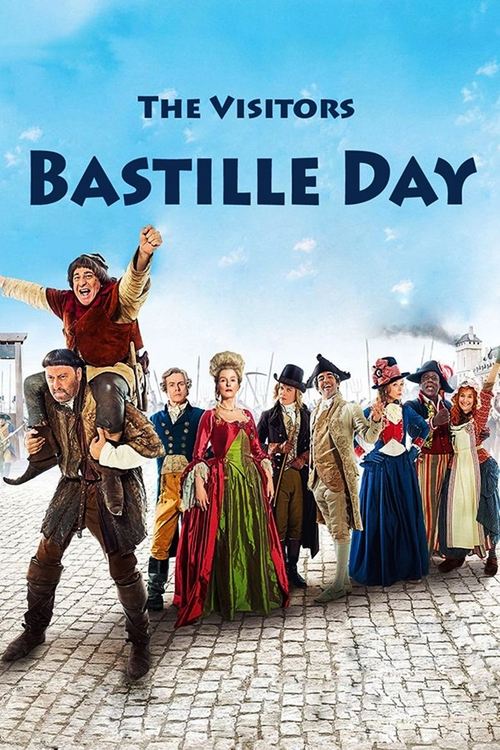
The Visitors: Bastille Day
Stuck in the corridors of time, Godefroy de Montmirail and his faithful servant Jacquouille are projected to a time of profound political and social upheavals: the French Revolution... specifically, The Terror, time of great dangers, during which the descendants of Godefroy and Jacquouille had their castle and all their property confiscated by arrogant aristocrats, fleeing and lifes hanging by a thread.
The film underperformed commercially against its mid-range budget of $25.9M, earning $18.6M globally (-28% loss). While initial box office returns were modest, the film has gained appreciation for its compelling narrative within the comedy genre.





Plot Structure
Story beats plotted across runtime


Narrative Arc
Emotional journey through the story's key moments
Story Circle
Blueprint 15-beat structure
Arcplot Score Breakdown
Weighted: Precision (70%) + Arc (15%) + Theme (15%)
The Visitors: Bastille Day (2016) showcases deliberately positioned story structure, characteristic of Jean-Marie Poiré's storytelling approach. This structural analysis examines how the film's 15-point plot structure maps to proven narrative frameworks across 1 hour and 50 minutes. With an Arcplot score of 7.4, the film balances conventional beats with creative variation.
Structural Analysis
The Status Quo at 1 minutes (1% through the runtime) establishes Godefroy and Jacquouille are stuck in the present day (1990s), desperate to return to their medieval timeline and restore their proper lives.. Structural examination shows that this early placement immediately immerses viewers in the story world.
The inciting incident occurs at 13 minutes when The time-travel spell goes catastrophically wrong. Instead of returning to 1123, Godefroy and Jacquouille are sent to 1793—the heart of the French Revolution during the Reign of Terror—where their aristocratic identities make them instant targets.. At 12% through the film, this Disruption aligns precisely with traditional story structure. This beat shifts the emotional landscape, launching the protagonist into the central conflict.
The First Threshold at 28 minutes marks the transition into Act II, occurring at 25% of the runtime. This reveals the protagonist's commitment to Godefroy makes the active choice to embrace the Revolution disguise and infiltrate revolutionary society to find the means to return home, rather than simply hiding and waiting. He commits to engaging with this dangerous new world., moving from reaction to action.
At 55 minutes, the Midpoint arrives at 50% of the runtime—precisely centered, creating perfect narrative symmetry. Significantly, this crucial beat False defeat: Godefroy discovers that the wizard who could send them home has been arrested and is scheduled for execution. Simultaneously, their true identities as aristocrats are suspected by revolutionary authorities. The stakes intensify and the fun is over., fundamentally raising what's at risk. The emotional intensity shifts, dividing the narrative into clear before-and-after phases.
The Collapse moment at 83 minutes (75% through) represents the emotional nadir. Here, Godefroy and Jacquouille are captured and sentenced to the guillotine. The wizard is executed before he can help them. Their hope of returning home dies with him, and they face literal death themselves. Everything has failed., reveals the protagonist at their lowest point. This beat's placement in the final quarter sets up the climactic reversal.
The Second Threshold at 88 minutes initiates the final act resolution at 80% of the runtime. Charlotte, moved by Godefroy's nobility and honesty, reveals she's found the wizard's spell book and hidden time-travel potion. Godefroy realizes he must combine medieval honor with revolutionary ideals of brotherhood to escape and return home. The synthesis of old and new values provides the answer., demonstrating the transformation achieved throughout the journey.
Emotional Journey
The Visitors: Bastille Day's emotional architecture traces a deliberate progression across 15 carefully calibrated beats.
Narrative Framework
This structural analysis employs a 15-point narrative structure framework that maps key story moments. By mapping The Visitors: Bastille Day against these established plot points, we can identify how Jean-Marie Poiré utilizes or subverts traditional narrative conventions. The plot point approach reveals not only adherence to structural principles but also creative choices that distinguish The Visitors: Bastille Day within the comedy genre.
Jean-Marie Poiré's Structural Approach
Among the 3 Jean-Marie Poiré films analyzed on Arcplot, the average structural score is 7.2, reflecting strong command of classical structure. The Visitors: Bastille Day represents one of the director's most structurally precise works. For comparative analysis, explore the complete Jean-Marie Poiré filmography.
Comparative Analysis
Additional comedy films include The Ministry of Ungentlemanly Warfare, The Bad Guys and Lake Placid. For more Jean-Marie Poiré analyses, see The Visitors II: The Corridors of Time, The Visitors.
Plot Points by Act
Act I
SetupStatus Quo
Godefroy and Jacquouille are stuck in the present day (1990s), desperate to return to their medieval timeline and restore their proper lives.
Theme
A character observes that 'those who don't learn from history are doomed to repeat it,' foreshadowing the chaotic time-travel consequences and the film's exploration of how the past shapes identity.
Worldbuilding
Introduction to the contemporary setting where Godefroy and Jacquouille struggle with modern life. We meet their descendants and allies, including the wizard Eusebius who might help them return home. Stakes established: Godefroy must return to marry Frénégonde and preserve his lineage.
Disruption
The time-travel spell goes catastrophically wrong. Instead of returning to 1123, Godefroy and Jacquouille are sent to 1793—the heart of the French Revolution during the Reign of Terror—where their aristocratic identities make them instant targets.
Resistance
Godefroy and Jacquouille navigate Revolutionary Paris, initially confused and endangered. They debate whether to seek another wizard, hide their identities, or try to find a way back. They discover their descendants are now revolutionaries, creating dramatic irony and danger.
Act II
ConfrontationFirst Threshold
Godefroy makes the active choice to embrace the Revolution disguise and infiltrate revolutionary society to find the means to return home, rather than simply hiding and waiting. He commits to engaging with this dangerous new world.
Mirror World
Godefroy encounters his descendant Charlotte, a revolutionary who embodies the ideals of liberty and equality—the thematic opposite of his feudal worldview. This relationship will challenge his beliefs about nobility and social hierarchy.
Premise
The 'fish out of water' comedy the audience came for: Godefroy and Jacquouille bumble through Revolutionary Paris, creating chaos at guillotine executions, revolutionary meetings, and aristocratic hideouts. Physical comedy and anachronistic misunderstandings abound as they search for a way home.
Midpoint
False defeat: Godefroy discovers that the wizard who could send them home has been arrested and is scheduled for execution. Simultaneously, their true identities as aristocrats are suspected by revolutionary authorities. The stakes intensify and the fun is over.
Opposition
Revolutionary forces close in on Godefroy and Jacquouille. Their attempts to rescue the wizard fail repeatedly. Godefroy's aristocratic instincts keep betraying him, creating more danger. Charlotte begins to suspect their true nature. Trust erodes and dangers multiply.
Collapse
Godefroy and Jacquouille are captured and sentenced to the guillotine. The wizard is executed before he can help them. Their hope of returning home dies with him, and they face literal death themselves. Everything has failed.
Crisis
In prison awaiting execution, Godefroy processes his impending doom and reflects on what he's learned. Jacquouille despairs. The emotional darkness of their failure settles in as they contemplate dying in the wrong century, their mission incomplete.
Act III
ResolutionSecond Threshold
Charlotte, moved by Godefroy's nobility and honesty, reveals she's found the wizard's spell book and hidden time-travel potion. Godefroy realizes he must combine medieval honor with revolutionary ideals of brotherhood to escape and return home. The synthesis of old and new values provides the answer.
Synthesis
Daring escape from prison using both medieval combat skills and revolutionary disguises. Final confrontation with revolutionary authorities. Godefroy and Jacquouille must help save their descendants before using the potion. Chaotic finale blending action, comedy, and time-travel resolution as they finally activate the spell to return home.
Transformation
Back in their own time, Godefroy demonstrates newfound respect for common people, treating Jacquouille with more equality. The medieval knight has been transformed by experiencing revolution, understanding that nobility comes from character, not birthright—mirroring his opening rigid class worldview but now enlightened.