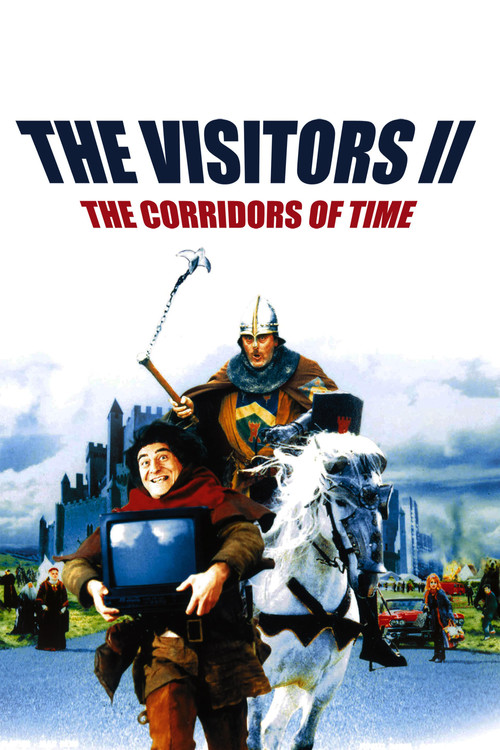
The Visitors II: The Corridors of Time
The sequel to The Visitors reunites us with those lovable ruffians from the French Medieval ages who - through magic - are transported into the present, with often drastic consequences. Godefroy de Montmirail travels to today to recover the missing family jewels and a sacred relic, guarantor of his wife-to-be's fertility. The confrontation between Godefroy's repellent servant Jack the Crack and his descendent, the effete Jacquart, present-day owner of the chateau, further complicates the matter.
Despite a mid-range budget of $23.0M, The Visitors II: The Corridors of Time became a financial success, earning $66.0M worldwide—a 187% return.





Plot Structure
Story beats plotted across runtime


Narrative Arc
Emotional journey through the story's key moments
Story Circle
Blueprint 15-beat structure
Arcplot Score Breakdown
Weighted: Precision (70%) + Arc (15%) + Theme (15%)
The Visitors II: The Corridors of Time (1998) demonstrates precise story structure, characteristic of Jean-Marie Poiré's storytelling approach. This structural analysis examines how the film's 15-point plot structure maps to proven narrative frameworks across 1 hour and 58 minutes. With an Arcplot score of 6.7, the film balances conventional beats with creative variation.
Structural Analysis
The Status Quo at 1 minutes (1% through the runtime) establishes Comte Godefroy and Jacquouille are still stuck in modern times (1990s), trying to adapt to contemporary life while desperately seeking a way back to their medieval era.. Of particular interest, this early placement immediately immerses viewers in the story world.
The inciting incident occurs at 14 minutes when Discovery that the sacred relic containing the time-travel formula has been lost or is in the wrong time period, threatening Godefroy's ability to return to the past and fulfill his destiny. The stakes intensify as the timeline corruption worsens.. At 12% through the film, this Disruption aligns precisely with traditional story structure. This beat shifts the emotional landscape, launching the protagonist into the central conflict.
The First Threshold at 30 minutes marks the transition into Act II, occurring at 25% of the runtime. This reveals the protagonist's commitment to Godefroy makes the active choice to pursue time travel again, this time traveling to a different era or attempting to retrieve the lost formula through temporal corridors. He commits to the perilous journey despite the risks., moving from reaction to action.
At 59 minutes, the Midpoint arrives at 50% of the runtime—precisely centered, creating perfect narrative symmetry. Of particular interest, this crucial beat False victory: Godefroy appears to have found the formula or the means to return home. The solution seems within grasp, but this success raises the stakes - now he must choose between returning to his time and the connections he's made., fundamentally raising what's at risk. The emotional intensity shifts, dividing the narrative into clear before-and-after phases.
The Collapse moment at 89 minutes (75% through) represents the emotional nadir. Here, All is lost: the time-travel attempt catastrophically fails, scattering the characters across time, or Godefroy realizes that returning home means losing everything he values in the present. A symbolic "death" of hope or identity occurs., reveals the protagonist at their lowest point. This beat's placement in the final quarter sets up the climactic reversal.
The Second Threshold at 94 minutes initiates the final act resolution at 80% of the runtime. Breakthrough: Godefroy synthesizes his medieval honor with modern knowledge, or discovers the true secret to navigating time. A revelation about family, destiny, or the nature of the corridors of time provides the key to resolution., demonstrating the transformation achieved throughout the journey.
Emotional Journey
The Visitors II: The Corridors of Time's emotional architecture traces a deliberate progression across 15 carefully calibrated beats.
Narrative Framework
This structural analysis employs systematic plot point analysis that identifies crucial turning points. By mapping The Visitors II: The Corridors of Time against these established plot points, we can identify how Jean-Marie Poiré utilizes or subverts traditional narrative conventions. The plot point approach reveals not only adherence to structural principles but also creative choices that distinguish The Visitors II: The Corridors of Time within the comedy genre.
Jean-Marie Poiré's Structural Approach
Among the 3 Jean-Marie Poiré films analyzed on Arcplot, the average structural score is 7.2, reflecting strong command of classical structure. The Visitors II: The Corridors of Time takes a more unconventional approach compared to the director's typical style. For comparative analysis, explore the complete Jean-Marie Poiré filmography.
Comparative Analysis
Additional comedy films include The Ministry of Ungentlemanly Warfare, The Bad Guys and Lake Placid. For more Jean-Marie Poiré analyses, see The Visitors: Bastille Day, The Visitors.
Plot Points by Act
Act I
SetupStatus Quo
Comte Godefroy and Jacquouille are still stuck in modern times (1990s), trying to adapt to contemporary life while desperately seeking a way back to their medieval era.
Theme
A character reflects on how the past and present are intertwined, suggesting that one cannot escape their true destiny and heritage - foreshadowing the film's exploration of time, identity, and belonging.
Worldbuilding
Establishment of the time-displaced characters' predicament: Godefroy struggling with modern society, Jacquouille enjoying his newfound wealth as a descendant, and Béatrice (Godefroy's descendant) dealing with the chaos they've caused. The search for the wizard Eusebius and the time-travel potion formula becomes urgent.
Disruption
Discovery that the sacred relic containing the time-travel formula has been lost or is in the wrong time period, threatening Godefroy's ability to return to the past and fulfill his destiny. The stakes intensify as the timeline corruption worsens.
Resistance
Godefroy and Jacquouille debate and plan how to recover the formula. They must navigate modern obstacles, consult historical documents, and deal with skeptical descendants. Resistance to fully committing to a dangerous time-travel attempt.
Act II
ConfrontationFirst Threshold
Godefroy makes the active choice to pursue time travel again, this time traveling to a different era or attempting to retrieve the lost formula through temporal corridors. He commits to the perilous journey despite the risks.
Mirror World
Introduction or deepening of Godefroy's relationship with Béatrice or another character who represents the connection between past and present, embodying the theme that honor and nobility transcend time.
Premise
The "fun and games" of time-travel chaos: fish-out-of-water comedy as medieval knights navigate different time periods, creating anachronistic mayhem, encountering historical figures, and pursuing the formula through the corridors of time.
Midpoint
False victory: Godefroy appears to have found the formula or the means to return home. The solution seems within grasp, but this success raises the stakes - now he must choose between returning to his time and the connections he's made.
Opposition
Complications multiply: the time-travel formula has unexpected side effects, enemies from different eras converge, Jacquouille's schemes backfire, and the temporal paradoxes threaten to erase Godefroy's lineage entirely. Everything becomes harder.
Collapse
All is lost: the time-travel attempt catastrophically fails, scattering the characters across time, or Godefroy realizes that returning home means losing everything he values in the present. A symbolic "death" of hope or identity occurs.
Crisis
Dark night: Godefroy contemplates his fate, processing the loss and questioning whether he belongs in any time period. Emotional reckoning with the consequences of his actions across the timeline.
Act III
ResolutionSecond Threshold
Breakthrough: Godefroy synthesizes his medieval honor with modern knowledge, or discovers the true secret to navigating time. A revelation about family, destiny, or the nature of the corridors of time provides the key to resolution.
Synthesis
The finale: Godefroy and allies execute a climactic plan to restore the timeline, confront antagonists across multiple eras, and resolve the temporal chaos. Action set-pieces through the corridors of time lead to final confrontation.
Transformation
Final image: Godefroy and Jacquouille finally return to their proper time, or find peace in the present. The closing mirrors the opening but shows transformation - they now understand their place in history's grand tapestry.