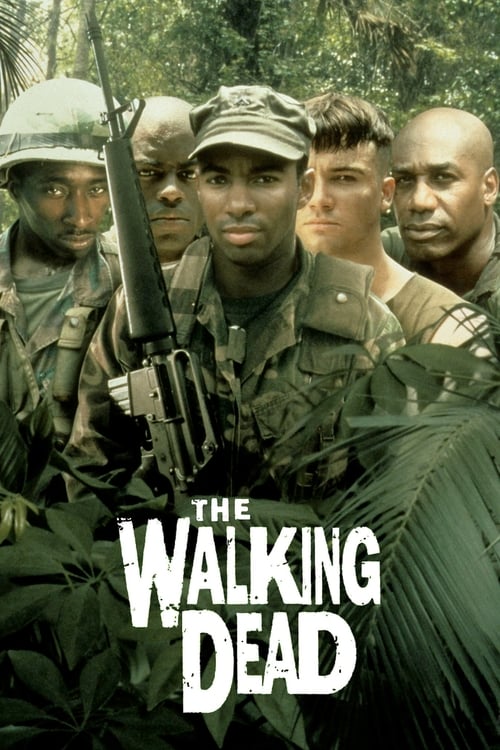
The Walking Dead
Five young marines on a suicide mission in Vietnam, struggle for survival in a jungle minefield. The mean streets of home did not prepare them for this.
The film earned $6.0M at the global box office.
Plot Structure
Story beats plotted across runtime


Narrative Arc
Emotional journey through the story's key moments
Story Circle
Blueprint 15-beat structure
Arcplot Score Breakdown
Weighted: Precision (70%) + Arc (15%) + Theme (15%)
The Walking Dead (1995) demonstrates precise narrative architecture, characteristic of Preston A. Whitmore II's storytelling approach. This structural analysis examines how the film's 15-point plot structure maps to proven narrative frameworks across 1 hour and 28 minutes. With an Arcplot score of 7.5, the film showcases strong structural fundamentals.
Characters
Cast & narrative archetypes

Johnny Harris
John Harris Sr.
Dae
Lea
Randall
Main Cast & Characters
Johnny Harris
Played by Allen Payne
A Gulf War Marine veteran who returns home to find his community plagued by gang violence and must navigate between military discipline and street survival.
John Harris Sr.
Played by Joe Morton
Johnny's father, a wise and concerned parent trying to guide his son away from the dangerous path of gang involvement.
Dae
Played by Eddie Griffin
A friend from the neighborhood caught up in gang life, representing the pull of street culture.
Lea
Played by Vonte Sweet
Johnny's love interest who represents hope for a better future beyond gang violence.
Randall
Played by Roger Guenveur Smith
A gang member representing the antagonistic forces pulling Johnny toward violence.
Structural Analysis
The Status Quo at 1 minutes (1% through the runtime) establishes Five young Marines from different backgrounds arrive in boot camp, representing diverse American experiences before they are forged into a unit.. Structural examination shows that this early placement immediately immerses viewers in the story world.
The inciting incident occurs at 11 minutes when The platoon receives orders that they're being shipped to Vietnam. The reality of war transforms training from challenging to potentially lethal, and abstract duty becomes concrete danger.. At 13% through the film, this Disruption is delayed, allowing extended setup of the story world. This beat shifts the emotional landscape, launching the protagonist into the central conflict.
The First Threshold at 22 minutes marks the transition into Act II, occurring at 25% of the runtime. This illustrates the protagonist's commitment to The platoon boards the transport to Vietnam, crossing the threshold from training to war. This is their active choice to honor their commitment despite their fears, leaving American soil behind., moving from reaction to action.
At 45 minutes, the Midpoint arrives at 51% of the runtime—precisely centered, creating perfect narrative symmetry. Of particular interest, this crucial beat A major battle or devastating ambush occurs where the platoon suffers significant casualties. The war becomes personal and brutal, shattering any remaining illusions about glory or heroism., fundamentally raising what's at risk. The emotional intensity shifts, dividing the narrative into clear before-and-after phases.
The Collapse moment at 66 minutes (75% through) represents the emotional nadir. Here, A close friend or key member of the platoon is killed in devastating circumstances, or the unit suffers a catastrophic loss. The "whiff of death" is literal, and hope seems extinguished., shows the protagonist at their lowest point. This beat's placement in the final quarter sets up the climactic reversal.
The Second Threshold at 71 minutes initiates the final act resolution at 80% of the runtime. The platoon chooses to honor their fallen brothers by completing their mission. They synthesize their training with their hard-won combat experience and renewed commitment to each other., demonstrating the transformation achieved throughout the journey.
Emotional Journey
The Walking Dead's emotional architecture traces a deliberate progression across 15 carefully calibrated beats.
Narrative Framework
This structural analysis employs structural analysis methodology used to understand storytelling architecture. By mapping The Walking Dead against these established plot points, we can identify how Preston A. Whitmore II utilizes or subverts traditional narrative conventions. The plot point approach reveals not only adherence to structural principles but also creative choices that distinguish The Walking Dead within the drama genre.
Preston A. Whitmore II's Structural Approach
Among the 2 Preston A. Whitmore II films analyzed on Arcplot, the average structural score is 7.5, reflecting strong command of classical structure. The Walking Dead represents one of the director's most structurally precise works. For comparative analysis, explore the complete Preston A. Whitmore II filmography.
Comparative Analysis
Additional drama films include After Thomas, South Pacific and Dirty Dancing: Havana Nights. For more Preston A. Whitmore II analyses, see Crossover.
Plot Points by Act
Act I
SetupStatus Quo
Five young Marines from different backgrounds arrive in boot camp, representing diverse American experiences before they are forged into a unit.
Theme
A drill instructor states the core principle: "You survive together or you die alone" - establishing the theme of brotherhood transcending individual identity and background.
Worldbuilding
The brutal world of Marine Corps training is established, introducing the main characters - their personalities, conflicts, and the harsh regimentation that will break them down to build them up.
Disruption
The platoon receives orders that they're being shipped to Vietnam. The reality of war transforms training from challenging to potentially lethal, and abstract duty becomes concrete danger.
Resistance
The Marines complete their training with new urgency and gravity. They debate survival, morality, and what it means to serve. Bonds deepen as they prepare for combat, some eager, others terrified.
Act II
ConfrontationFirst Threshold
The platoon boards the transport to Vietnam, crossing the threshold from training to war. This is their active choice to honor their commitment despite their fears, leaving American soil behind.
Mirror World
In Vietnam, the platoon encounters seasoned soldiers and war-weary veterans who represent what they will become - men who have sacrificed their innocence and reflect the human cost of combat.
Premise
The Marines experience combat patrols, ambushes, and the chaos of jungle warfare. They learn to function as a unit, face fear, witness death, and discover what they're truly capable of under fire.
Midpoint
A major battle or devastating ambush occurs where the platoon suffers significant casualties. The war becomes personal and brutal, shattering any remaining illusions about glory or heroism.
Opposition
The platoon faces increasingly dangerous missions as paranoia, exhaustion, and moral ambiguity close in. Trust erodes, the enemy seems everywhere, and the men question their purpose and survival odds.
Collapse
A close friend or key member of the platoon is killed in devastating circumstances, or the unit suffers a catastrophic loss. The "whiff of death" is literal, and hope seems extinguished.
Crisis
The surviving Marines process their grief and trauma. They confront their darkest fears and the possibility that they won't make it home, questioning whether anything they've done matters.
Act III
ResolutionSecond Threshold
The platoon chooses to honor their fallen brothers by completing their mission. They synthesize their training with their hard-won combat experience and renewed commitment to each other.
Synthesis
The final mission unfolds as the Marines execute their plan with precision and courage. They face the ultimate test of their brotherhood, fighting not for politics but for each other's survival.
Transformation
The survivors return changed - no longer the naive young men from the opening, but hardened veterans carrying the weight of loss and the unbreakable bonds forged in combat. The cost of war is written on their faces.