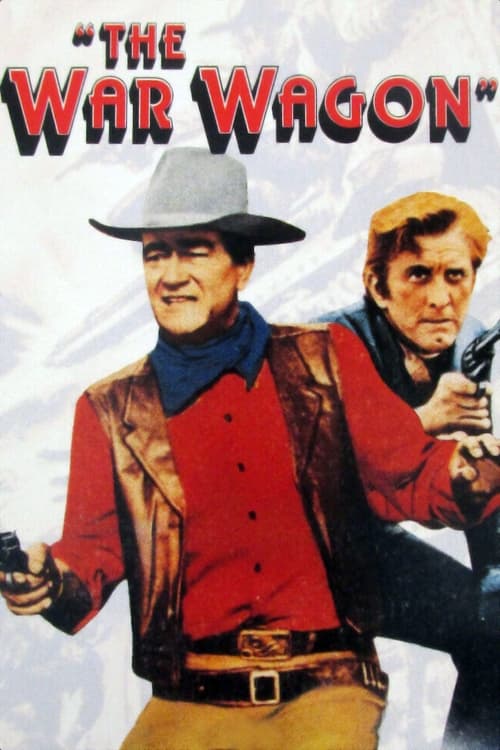
The War Wagon
An ex-con seeks revenge on the man who put him in prison by planning a robbery of the latter's stagecoach, which is transporting gold. He enlists the help of a partner, who could be working for his nemesis.
The film earned $6.0M at the global box office.


Plot Structure
Story beats plotted across runtime


Narrative Arc
Emotional journey through the story's key moments
Story Circle
Blueprint 15-beat structure
Arcplot Score Breakdown
Weighted: Precision (70%) + Arc (15%) + Theme (15%)
The War Wagon (1967) demonstrates meticulously timed story structure, characteristic of Burt Kennedy's storytelling approach. This structural analysis examines how the film's 15-point plot structure maps to proven narrative frameworks across 1 hour and 41 minutes. With an Arcplot score of 6.6, the film balances conventional beats with creative variation.
Characters
Cast & narrative archetypes

Taw Jackson
Lomax
Frank Pierce
Levi Walking Bear
Billy Hyatt
Lola
Main Cast & Characters
Taw Jackson
Played by John Wayne
A rancher who was framed and imprisoned, now seeking revenge against the man who stole his land and gold mine.
Lomax
Played by Kirk Douglas
A smooth-talking gunslinger hired to kill Taw, who instead joins forces with him to rob the armored war wagon.
Frank Pierce
Played by Bruce Cabot
The ruthless mine owner and antagonist who framed Taw and now controls his land and gold mine.
Levi Walking Bear
Played by Howard Keel
A Native American explosives expert and Taw's loyal friend who helps plan the heist.
Billy Hyatt
Played by Robert Walker Jr.
A young, drunk sharpshooter recruited by Taw for his expert marksmanship skills.
Lola
Played by Keenan Wynn
A saloon girl and former romantic interest of Taw who provides inside information about Pierce.
Structural Analysis
The Status Quo at 1 minutes (1% through the runtime) establishes Taw Jackson rides alone through harsh terrain, a man stripped of everything - his land stolen by corrupt businessman Frank Pierce who framed him and sent him to prison.. Significantly, this early placement immediately immerses viewers in the story world.
The inciting incident occurs at 12 minutes when Taw confronts Lomax directly and offers him $12,000 to join him instead of kill him - turning his would-be assassin into a partner for the impossible heist.. At 12% through the film, this Disruption aligns precisely with traditional story structure. This beat shifts the emotional landscape, launching the protagonist into the central conflict.
The First Threshold at 26 minutes marks the transition into Act II, occurring at 26% of the runtime. This indicates the protagonist's commitment to The crew commits to the plan and begins active preparation - Taw chooses to trust his enemies and misfits, crossing into the world of the heist with no turning back., moving from reaction to action.
At 52 minutes, the Midpoint arrives at 51% of the runtime—precisely centered, creating perfect narrative symmetry. The analysis reveals that this crucial beat A false defeat: Pierce discovers someone is planning to rob the war wagon and increases security dramatically, adding more guards and changing the route. The plan seems impossible now., fundamentally raising what's at risk. The emotional intensity shifts, dividing the narrative into clear before-and-after phases.
The Collapse moment at 77 minutes (77% through) represents the emotional nadir. Here, Billy Hyatt is killed during the heist when the explosives detonate prematurely - a literal death that nearly destroys the plan and the crew's morale at the darkest moment., demonstrates the protagonist at their lowest point. This beat's placement in the final quarter sets up the climactic reversal.
The Second Threshold at 82 minutes initiates the final act resolution at 82% of the runtime. Taw and Lomax synthesize their skills and newfound trust - combining Taw's determination with Lomax's cunning and the Kiowa warriors' tactics to salvage the heist and confront Pierce directly., demonstrating the transformation achieved throughout the journey.
Emotional Journey
The War Wagon's emotional architecture traces a deliberate progression across 15 carefully calibrated beats.
Narrative Framework
This structural analysis employs structural analysis methodology used to understand storytelling architecture. By mapping The War Wagon against these established plot points, we can identify how Burt Kennedy utilizes or subverts traditional narrative conventions. The plot point approach reveals not only adherence to structural principles but also creative choices that distinguish The War Wagon within the western genre.
Burt Kennedy's Structural Approach
Among the 3 Burt Kennedy films analyzed on Arcplot, the average structural score is 6.6, demonstrating varied approaches to story architecture. The War Wagon takes a more unconventional approach compared to the director's typical style. For comparative analysis, explore the complete Burt Kennedy filmography.
Comparative Analysis
Additional western films include All the Pretty Horses, Shenandoah and Lone Star. For more Burt Kennedy analyses, see Suburban Commando, Return of the Seven.
Plot Points by Act
Act I
SetupStatus Quo
Taw Jackson rides alone through harsh terrain, a man stripped of everything - his land stolen by corrupt businessman Frank Pierce who framed him and sent him to prison.
Theme
Levi Walking Bear tells Taw, "A man alone ain't got no chance," establishing the theme that revenge and justice require partnership and trust among unlikely allies.
Worldbuilding
Taw discovers Pierce has built a gold mining empire on his stolen land. The "war wagon" - an armored stagecoach - transports $500,000 in gold with heavy protection. Taw survives an assassination attempt by gunslinger Lomax.
Disruption
Taw confronts Lomax directly and offers him $12,000 to join him instead of kill him - turning his would-be assassin into a partner for the impossible heist.
Resistance
Taw assembles his crew: Lomax the gunfighter, Levi Walking Bear and his Kiowa warriors, explosives expert Billy Hyatt, and Pierce's alcoholic wife Lola. Each debates whether this suicide mission is worth the risk.
Act II
ConfrontationFirst Threshold
The crew commits to the plan and begins active preparation - Taw chooses to trust his enemies and misfits, crossing into the world of the heist with no turning back.
Mirror World
Lomax and Taw's growing partnership represents the thematic heart - two former enemies learning to trust each other, mirroring the film's message about unlikely alliances.
Premise
The promise of the premise delivers: planning the intricate heist, testing explosives, studying the war wagon's route and defenses, and watching the uneasy crew learn to work together despite mutual suspicion.
Midpoint
A false defeat: Pierce discovers someone is planning to rob the war wagon and increases security dramatically, adding more guards and changing the route. The plan seems impossible now.
Opposition
Pressure intensifies as Pierce tightens his grip, trust within the crew fractures, Lola's loyalty wavers, and the team must adapt their plan on the fly while Pierce's men close in.
Collapse
Billy Hyatt is killed during the heist when the explosives detonate prematurely - a literal death that nearly destroys the plan and the crew's morale at the darkest moment.
Crisis
With Billy dead and the war wagon breach failing, Taw and Lomax face their dark night - questioning whether revenge is worth these lives, processing loss while guards close in.
Act III
ResolutionSecond Threshold
Taw and Lomax synthesize their skills and newfound trust - combining Taw's determination with Lomax's cunning and the Kiowa warriors' tactics to salvage the heist and confront Pierce directly.
Synthesis
The finale: they successfully steal the gold, defeat Pierce's men in a climactic battle, and Taw confronts Pierce. Justice is served as the corrupt businessman loses everything he stole.
Transformation
Taw and Lomax ride off together as partners, splitting the gold. The lone wolf from the opening has learned to trust and built genuine friendship - transformed from vengeful victim to man with allies.