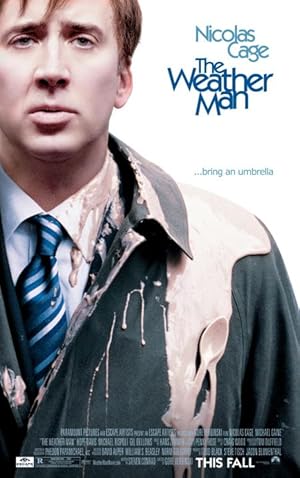
The Weather Man
Dave Spritz is a local weatherman in his home town of Chicago, where his career is going well, while his personal life, his relationship with his perfectionist writer father, his neurotic ex-wife, and his now-separated children, is spiralling downward. Despite being loathed and loved by the local masses, Dave is a guy who doesn't seem to have it all together, and in this movie, he begins to feel it. An attractive job offer presents Dave with a major question: to pursue his career in New York City, or to remain at home with his family.
The film disappointed at the box office against its mid-range budget of $20.0M, earning $12.5M globally (-38% loss). While initial box office returns were modest, the film has gained appreciation for its unconventional structure within the comedy genre.


Plot Structure
Story beats plotted across runtime


Narrative Arc
Emotional journey through the story's key moments
Story Circle
Blueprint 15-beat structure
Arcplot Score Breakdown
Weighted: Precision (70%) + Arc (15%) + Theme (15%)
The Weather Man (2005) exemplifies deliberately positioned dramatic framework, characteristic of Gore Verbinski's storytelling approach. This structural analysis examines how the film's 15-point plot structure maps to proven narrative frameworks across 1 hour and 41 minutes. With an Arcplot score of 7.6, the film showcases strong structural fundamentals.
Characters
Cast & narrative archetypes

David Spritz
Robert Spritzel
Noreen
Mike Spritz
Shelly Spritz
Russ
Main Cast & Characters
David Spritz
Played by Nicolas Cage
A Chicago weatherman struggling with career success while his personal life crumbles, searching for respect and meaning amid public mockery and family dysfunction.
Robert Spritzel
Played by Michael Caine
David's father, a Pulitzer Prize-winning author battling lymphoma who represents the intellectual achievement and respect David desperately craves.
Noreen
Played by Hope Davis
David's ex-wife and mother of his children, now remarried to a successful counselor, representing the stable life David lost.
Mike Spritz
Played by Nicholas Hoult
David's teenage son struggling with drug addiction and inappropriate attention from a counselor, highlighting David's failure as a protector.
Shelly Spritz
Played by Gemmenne de la Peña
David's overweight daughter dealing with adolescent struggles and her parents' divorce, feeling neglected and misunderstood.
Russ
Played by Michael Rispoli
Noreen's new husband, a successful counselor who represents everything David is not: stable, educated, and professionally respected.
Structural Analysis
The Status Quo at 1 minutes (1% through the runtime) establishes David Spritz stands in Chicago's cold streets, getting pelted with fast food by strangers - a recurring humiliation that defines his current life as a local TV weatherman.. Notably, this early placement immediately immerses viewers in the story world.
The inciting incident occurs at 12 minutes when David learns about a potential job opportunity with Bryant Gumbel's national morning show in New York - a chance to escape Chicago and reinvent himself, but it threatens to separate him further from his children.. At 12% through the film, this Disruption aligns precisely with traditional story structure. This beat shifts the emotional landscape, launching the protagonist into the central conflict.
The First Threshold at 26 minutes marks the transition into Act II, occurring at 26% of the runtime. This shows the protagonist's commitment to David actively commits to pursuing the Bryant Gumbel job and decides to simultaneously fight for his family, believing he can have both - launching him into the complications of Act 2., moving from reaction to action.
At 51 minutes, the Midpoint arrives at 50% of the runtime—precisely centered, creating perfect narrative symmetry. The analysis reveals that this crucial beat False defeat: David discovers his son Mike's drug counselor Don is a pedophile. Simultaneously, his attempts to bond with his children backfire, and the New York job seems increasingly complicated by family obligations. The stakes raise dramatically., fundamentally raising what's at risk. The emotional intensity shifts, dividing the narrative into clear before-and-after phases.
The Collapse moment at 76 minutes (76% through) represents the emotional nadir. Here, Robert Spritzel, David's father and moral compass, dies from cancer. The "whiff of death" is literal - David loses the one person whose respect he truly wanted and who represented authentic achievement and integrity., demonstrates the protagonist at their lowest point. This beat's placement in the final quarter sets up the climactic reversal.
The Second Threshold at 82 minutes initiates the final act resolution at 82% of the runtime. David has a breakthrough realization: he must stop running from difficulty and make the hard choice. He decides to turn down the New York job and stay in Chicago to truly be present for his children, honoring his father's lesson., demonstrating the transformation achieved throughout the journey.
Emotional Journey
The Weather Man's emotional architecture traces a deliberate progression across 15 carefully calibrated beats.
Narrative Framework
This structural analysis employs structural analysis methodology used to understand storytelling architecture. By mapping The Weather Man against these established plot points, we can identify how Gore Verbinski utilizes or subverts traditional narrative conventions. The plot point approach reveals not only adherence to structural principles but also creative choices that distinguish The Weather Man within the comedy genre.
Gore Verbinski's Structural Approach
Among the 9 Gore Verbinski films analyzed on Arcplot, the average structural score is 7.1, reflecting strong command of classical structure. The Weather Man represents one of the director's most structurally precise works. For comparative analysis, explore the complete Gore Verbinski filmography.
Comparative Analysis
Additional comedy films include The Bad Guys, Ella Enchanted and The Evening Star. For more Gore Verbinski analyses, see MouseHunt, Pirates of the Caribbean: The Curse of the Black Pearl and A Cure for Wellness.
Plot Points by Act
Act I
SetupStatus Quo
David Spritz stands in Chicago's cold streets, getting pelted with fast food by strangers - a recurring humiliation that defines his current life as a local TV weatherman.
Theme
David's father Robert, a Pulitzer Prize-winning novelist, observes: "Do you know that the harder thing to do and the right thing to do are usually the same thing?" This encapsulates the film's central theme about taking responsibility and doing difficult work.
Worldbuilding
Establishing David's fractured life: divorced from Noreen, distant from his children (Shelly struggles with weight, Mike faces drug counseling issues), professionally successful but personally unfulfilled, living in his father's shadow, earning $240,000 but feeling empty.
Disruption
David learns about a potential job opportunity with Bryant Gumbel's national morning show in New York - a chance to escape Chicago and reinvent himself, but it threatens to separate him further from his children.
Resistance
David debates whether to pursue the New York opportunity. He seeks guidance from his father, attempts to reconnect with his children, and struggles with the decision to leave or stay and fight for his family.
Act II
ConfrontationFirst Threshold
David actively commits to pursuing the Bryant Gumbel job and decides to simultaneously fight for his family, believing he can have both - launching him into the complications of Act 2.
Mirror World
David's relationship with his father Robert deepens as Robert battles cancer. Robert becomes the thematic mirror - a man who achieved greatness through discipline and hard work, showing David what meaningful success actually looks like.
Premise
David navigates his "new world" of trying harder - attempting archery as a focused discipline, pursuing the national job, trying to be a better father, dealing with his son's counselor Don who may be inappropriate, and managing his father's declining health.
Midpoint
False defeat: David discovers his son Mike's drug counselor Don is a pedophile. Simultaneously, his attempts to bond with his children backfire, and the New York job seems increasingly complicated by family obligations. The stakes raise dramatically.
Opposition
Everything closes in: David confronts and attacks Don with his archery bow, his daughter Shelly's self-esteem issues worsen, his ex-wife Noreen plans to move to a new relationship, his father's cancer progresses, and the pressure of maintaining his public persona while his private life crumbles intensifies.
Collapse
Robert Spritzel, David's father and moral compass, dies from cancer. The "whiff of death" is literal - David loses the one person whose respect he truly wanted and who represented authentic achievement and integrity.
Crisis
David processes his father's death, reflecting on his own failures and what his father tried to teach him. He faces the dark question: will he continue seeking easy validation or embrace the harder path of genuine responsibility?
Act III
ResolutionSecond Threshold
David has a breakthrough realization: he must stop running from difficulty and make the hard choice. He decides to turn down the New York job and stay in Chicago to truly be present for his children, honoring his father's lesson.
Synthesis
David executes his decision: rejects the Bryant Gumbel offer, commits to staying in Chicago, focuses on being a real father, continues his archery practice (discipline for its own sake), and accepts his imperfect life with new maturity and purpose.
Transformation
Final image mirrors opening: David stands in Chicago's cold again, but now centered and purposeful. When someone throws food at him, he doesn't internalize it as before - he's accepted himself and chosen the harder, right thing. He's become his father's son.