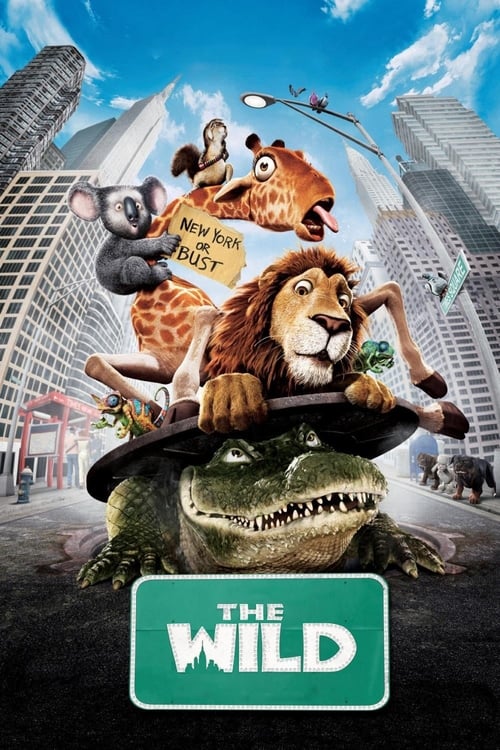
The Wild
An adolescent lion is accidentally shipped from the New York Zoo to Africa. Now running free, his zoo pals must put aside their differences to help bring him back.
Working with a significant budget of $80.0M, the film achieved a modest success with $102.3M in global revenue (+28% profit margin).


Plot Structure
Story beats plotted across runtime


Narrative Arc
Emotional journey through the story's key moments
Story Circle
Blueprint 15-beat structure
Arcplot Score Breakdown
Weighted: Precision (70%) + Arc (15%) + Theme (15%)
The Wild (2006) reveals deliberately positioned narrative design, characteristic of Steve Williams's storytelling approach. This structural analysis examines how the film's 15-point plot structure maps to proven narrative frameworks across 1 hour and 22 minutes. With an Arcplot score of 7.3, the film balances conventional beats with creative variation.
Characters
Cast & narrative archetypes

Samson
Ryan
Benny
Bridget
Nigel
Larry
Kazar
Main Cast & Characters
Samson
Played by Kiefer Sutherland
A lion living in the New York Zoo who must rescue his son Ryan from the wild, struggling with the burden of his fabricated heroic past.
Ryan
Played by Greg Cipes
Samson's teenage son who yearns to be wild like his father's stories, accidentally gets shipped to Africa.
Benny
Played by James Belushi
A street-smart squirrel with big dreams and a desire to prove himself despite his small size.
Bridget
Played by Janeane Garofalo
A neurotic giraffe with anxiety issues who joins the rescue mission to find Ryan.
Nigel
Played by Eddie Izzard
A proper British koala who provides comic relief and cultural commentary throughout the journey.
Larry
Played by Richard Kind
A dimwitted but good-natured anaconda who accompanies the group on their adventure.
Kazar
Played by William Shatner
A deranged wildebeest cult leader who believes predators must eat prey, seeking to reverse the natural order.
Structural Analysis
The Status Quo at 1 minutes (1% through the runtime) establishes Samson the lion lives comfortably in the New York Zoo, respected as the "king" but secretly ashamed he was born in captivity and has never experienced the wild, unlike his stories suggest to his son Ryan.. Notably, this early placement immediately immerses viewers in the story world.
The inciting incident occurs at 10 minutes when After Samson publicly embarrasses Ryan by revealing he can't roar properly, Ryan sneaks into a cargo truck heading to "The Wild" to prove himself. The truck departs with Ryan trapped inside, heading to Africa.. At 12% through the film, this Disruption aligns precisely with traditional story structure. This beat shifts the emotional landscape, launching the protagonist into the central conflict.
The First Threshold at 20 minutes marks the transition into Act II, occurring at 25% of the runtime. This reveals the protagonist's commitment to Samson makes the active choice to leave the safety of the zoo and venture into the real world. He and his friends escape the zoo and board a ship to Africa to rescue Ryan., moving from reaction to action.
At 40 minutes, the Midpoint arrives at 49% of the runtime—precisely centered, creating perfect narrative symmetry. Structural examination shows that this crucial beat The group discovers that Ryan is being held by a cult of wildebeests led by Kazar, who plans to change the food chain by eating lions. The stakes raise dramatically: it's not just about finding Ryan, but saving him from being killed., fundamentally raising what's at risk. The emotional intensity shifts, dividing the narrative into clear before-and-after phases.
The Collapse moment at 61 minutes (74% through) represents the emotional nadir. Here, Samson is forced to confess the truth to everyone: he was never from the wild, never the legendary lion he claimed to be. He was born in a zoo circus. Ryan, captured and awaiting his fate, overhears this and feels utterly betrayed. Samson's identity "dies."., illustrates the protagonist at their lowest point. This beat's placement in the final quarter sets up the climactic reversal.
The Second Threshold at 65 minutes initiates the final act resolution at 79% of the runtime. Benny reminds Samson of the real theme: "You don't have to roar the loudest to be brave." Samson realizes that true courage isn't about being the fiercest wild lion—it's about facing your fears for those you love. He chooses to face Kazar despite his terror., demonstrating the transformation achieved throughout the journey.
Emotional Journey
The Wild's emotional architecture traces a deliberate progression across 15 carefully calibrated beats.
Narrative Framework
This structural analysis employs systematic plot point analysis that identifies crucial turning points. By mapping The Wild against these established plot points, we can identify how Steve Williams utilizes or subverts traditional narrative conventions. The plot point approach reveals not only adherence to structural principles but also creative choices that distinguish The Wild within the family genre.
Comparative Analysis
Additional family films include The Black Stallion, The Bad Guys and Ella Enchanted.
Plot Points by Act
Act I
SetupStatus Quo
Samson the lion lives comfortably in the New York Zoo, respected as the "king" but secretly ashamed he was born in captivity and has never experienced the wild, unlike his stories suggest to his son Ryan.
Theme
Benny the squirrel tells Ryan, "You don't have to roar the loudest to be brave." The film explores what true courage means: being honest about who you are rather than living up to false legends.
Worldbuilding
We meet the zoo community: Ryan struggling to roar like his father, the quirky animal friends (Benny, Bridget, Nigel, Larry), and the dynamic between Samson's fabricated wild stories and Ryan's desire to prove himself worthy of his father's legacy.
Disruption
After Samson publicly embarrasses Ryan by revealing he can't roar properly, Ryan sneaks into a cargo truck heading to "The Wild" to prove himself. The truck departs with Ryan trapped inside, heading to Africa.
Resistance
Samson grapples with guilt and fear, debating whether he can survive outside the zoo. His friends convince him they must rescue Ryan. Samson resists, knowing he's never actually been in the wild despite his stories.
Act II
ConfrontationFirst Threshold
Samson makes the active choice to leave the safety of the zoo and venture into the real world. He and his friends escape the zoo and board a ship to Africa to rescue Ryan.
Mirror World
The group arrives in Africa and encounters the truly wild animals. Samson begins forming a bond with the landscape of his birth, though he's terrified. His friends look to him as their guide, not knowing he's as lost as they are.
Premise
The adventure through the wild: navigating the African landscape, encountering various wildlife, comic misadventures with the group's fish-out-of-water status, and Samson desperately trying to maintain his façade while searching for Ryan.
Midpoint
The group discovers that Ryan is being held by a cult of wildebeests led by Kazar, who plans to change the food chain by eating lions. The stakes raise dramatically: it's not just about finding Ryan, but saving him from being killed.
Opposition
The journey becomes more dangerous as they pursue Kazar's herd. Samson's lies begin to unravel. The wild animals see through his pretense. The group faces increasing peril, and Samson's leadership is questioned as his inexperience shows.
Collapse
Samson is forced to confess the truth to everyone: he was never from the wild, never the legendary lion he claimed to be. He was born in a zoo circus. Ryan, captured and awaiting his fate, overhears this and feels utterly betrayed. Samson's identity "dies."
Crisis
Samson sits in despair, having lost his son's respect and his friends' trust. He reflects on his cowardice and the damage his lies have caused. His friends, though disappointed, gradually realize that Samson's love for Ryan is genuine, even if his stories weren't.
Act III
ResolutionSecond Threshold
Benny reminds Samson of the real theme: "You don't have to roar the loudest to be brave." Samson realizes that true courage isn't about being the fiercest wild lion—it's about facing your fears for those you love. He chooses to face Kazar despite his terror.
Synthesis
The finale: Samson and friends launch a rescue mission. Samson confronts Kazar and the wildebeest cult, using not legendary wild skills but his genuine love and determination. Ryan learns to roar, father and son reconcile, and they defeat Kazar together as a team.
Transformation
Back at the zoo, Samson no longer tells false stories of wild adventures. Instead, he shares the true story of their rescue mission—a tale of genuine courage. Ryan roars with confidence, having learned that being yourself is what matters, mirroring the opening but transformed.