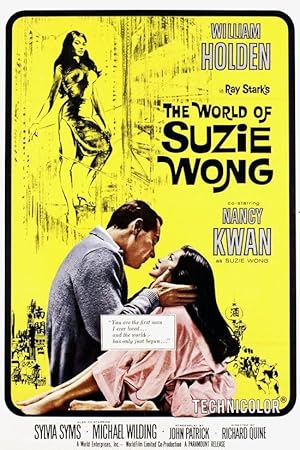
The World of Suzie Wong
Robert Lomax, tired of working in an office, wants to be an artist. So he moves to Hong Kong to try his hand at painting. Finding a cheap hotel, he checks in, only to find it's used by prostitutes and their "dates" they meet in the bar downstairs. Since he never picks up any of the ladies, they all want to know more about him. Eventually, he does hire one to model for him... and soon falls in love. However, since he's on a limited budget, he can't afford her exclusively, but doesn't want to "share" her with anyone else.
Despite its modest budget of $2.0M, The World of Suzie Wong became a solid performer, earning $7.3M worldwide—a 265% return. The film's unconventional structure found its audience, confirming that strong storytelling can transcend budget limitations.


Plot Structure
Story beats plotted across runtime


Narrative Arc
Emotional journey through the story's key moments
Story Circle
Blueprint 15-beat structure
Arcplot Score Breakdown
Weighted: Precision (70%) + Arc (15%) + Theme (15%)
The World of Suzie Wong (1960) reveals carefully calibrated dramatic framework, characteristic of Richard Quine's storytelling approach. This structural analysis examines how the film's 15-point plot structure maps to proven narrative frameworks across 2 hours and 6 minutes. With an Arcplot score of 7.4, the film balances conventional beats with creative variation.
Characters
Cast & narrative archetypes

Robert Lomax
Suzie Wong
Kay O'Neill
Ben Jeffcoat
Main Cast & Characters
Robert Lomax
Played by William Holden
An American architect who abandons his career to pursue painting in Hong Kong, where he falls in love with a bar girl.
Suzie Wong
Played by Nancy Kwan
A spirited and resilient bar girl who forms a deep connection with Robert while navigating survival and dreams of a better life.
Kay O'Neill
Played by Sylvia Syms
A wealthy British socialite who represents Robert's conventional romantic option and previous social world.
Ben Jeffcoat
Played by Laurence Naismith
An older expatriate sailor and cynic who befriends Robert and provides worldly perspective on Hong Kong life.
Structural Analysis
The Status Quo at 2 minutes (1% through the runtime) establishes Robert Lomax arrives in Hong Kong harbor by ferry, an American architect abandoning his career to become a painter. His ordinary world is one of restless searching and unfulfilled artistic ambition.. Of particular interest, this early placement immediately immerses viewers in the story world.
The inciting incident occurs at 14 minutes when Robert encounters Suzie Wong, initially mistaking her for a proper young woman on the ferry. Her beauty and apparent innocence disrupt his assumptions about the women in the bar when he discovers she's a prostitute.. At 11% through the film, this Disruption aligns precisely with traditional story structure. This beat shifts the emotional landscape, launching the protagonist into the central conflict.
The First Threshold at 31 minutes marks the transition into Act II, occurring at 24% of the runtime. This illustrates the protagonist's commitment to Robert makes the active choice to keep Suzie as his exclusive model and develop a genuine relationship with her, moving beyond tourist detachment into emotional investment despite their different worlds., moving from reaction to action.
At 64 minutes, the Midpoint arrives at 50% of the runtime—precisely centered, creating perfect narrative symmetry. Notably, this crucial beat False victory: Robert and Suzie openly declare their love and commit to a life together. He has a successful art showing, and they seem to have overcome the barriers between them. However, the stakes raise as societal pressure and reality begin to intrude., fundamentally raising what's at risk. The emotional intensity shifts, dividing the narrative into clear before-and-after phases.
The Collapse moment at 94 minutes (75% through) represents the emotional nadir. Here, Tragedy strikes: Suzie's young son dies in a mudslide. This literal death represents the death of their innocent dream of easy happiness and forces confrontation with the harsh realities of Suzie's world that Robert had romanticized., shows the protagonist at their lowest point. This beat's placement in the final quarter sets up the climactic reversal.
The Second Threshold at 101 minutes initiates the final act resolution at 80% of the runtime. Robert realizes that true love means accepting Suzie completely - her past, her pain, her world - without condescension or romanticization. He chooses her not as an exotic muse but as a full human being worthy of unconditional love., demonstrating the transformation achieved throughout the journey.
Emotional Journey
The World of Suzie Wong's emotional architecture traces a deliberate progression across 15 carefully calibrated beats.
Narrative Framework
This structural analysis employs a 15-point narrative structure framework that maps key story moments. By mapping The World of Suzie Wong against these established plot points, we can identify how Richard Quine utilizes or subverts traditional narrative conventions. The plot point approach reveals not only adherence to structural principles but also creative choices that distinguish The World of Suzie Wong within the drama genre.
Richard Quine's Structural Approach
Among the 3 Richard Quine films analyzed on Arcplot, the average structural score is 7.4, reflecting strong command of classical structure. The World of Suzie Wong represents one of the director's most structurally precise works. For comparative analysis, explore the complete Richard Quine filmography.
Comparative Analysis
Additional drama films include After Thomas, South Pacific and Dirty Dancing: Havana Nights. For more Richard Quine analyses, see The Prisoner of Zenda, How to Murder Your Wife.
Plot Points by Act
Act I
SetupStatus Quo
Robert Lomax arrives in Hong Kong harbor by ferry, an American architect abandoning his career to become a painter. His ordinary world is one of restless searching and unfulfilled artistic ambition.
Theme
A character remarks that "Love is where you find it, not where you look for it," establishing the film's central theme about authenticity versus appearance, and finding genuine connection beyond social class and preconceptions.
Worldbuilding
Robert explores Hong Kong, settles into the Nam Kok Hotel above a bar filled with prostitutes, and begins setting up his painting studio. We meet the world of Wan Chai's working girls and establish Robert's initial patronizing, romantic view of the exotic East.
Disruption
Robert encounters Suzie Wong, initially mistaking her for a proper young woman on the ferry. Her beauty and apparent innocence disrupt his assumptions about the women in the bar when he discovers she's a prostitute.
Resistance
Robert debates his attraction to Suzie while maintaining professional distance. He hires her as a model, insisting on a non-sexual relationship. Suzie spins elaborate fantasy stories about her background, and Robert navigates the tension between his Western values and this unfamiliar world.
Act II
ConfrontationFirst Threshold
Robert makes the active choice to keep Suzie as his exclusive model and develop a genuine relationship with her, moving beyond tourist detachment into emotional investment despite their different worlds.
Mirror World
Suzie reveals her real life and the truth about her child, beginning to drop her fantasy stories. Their relationship becomes the thematic vehicle exploring whether love can transcend class, profession, and cultural barriers.
Premise
The promise of the premise: Robert and Suzie's unconventional romance develops as he paints her and they navigate their growing feelings. Comic and tender moments as Robert experiences life in Wan Chai, Suzie's jealousies, and the complications of their situation. The fun of their unusual courtship.
Midpoint
False victory: Robert and Suzie openly declare their love and commit to a life together. He has a successful art showing, and they seem to have overcome the barriers between them. However, the stakes raise as societal pressure and reality begin to intrude.
Opposition
External pressures mount: a wealthy British banker offers Suzie respectability and security. Robert's Western friends question the relationship. Suzie's insecurities about being worthy of Robert intensify. Their different worlds close in on their fragile bond.
Collapse
Tragedy strikes: Suzie's young son dies in a mudslide. This literal death represents the death of their innocent dream of easy happiness and forces confrontation with the harsh realities of Suzie's world that Robert had romanticized.
Crisis
Robert processes the depth of Suzie's pain and the reality of the life she's lived. Suzie, in her grief and shame, pushes Robert away, returning to prostitution. Both face their darkest moment of separation and loss.
Act III
ResolutionSecond Threshold
Robert realizes that true love means accepting Suzie completely - her past, her pain, her world - without condescension or romanticization. He chooses her not as an exotic muse but as a full human being worthy of unconditional love.
Synthesis
Robert finds Suzie and declares his commitment without conditions or rescue fantasies. He has integrated what he learned about authentic love with his original journey to Hong Kong seeking authenticity in art. They forge a genuine partnership of equals.
Transformation
Final image mirrors the opening: Robert on the Hong Kong harbor, but now with Suzie beside him as an equal partner. He has transformed from a detached artist seeking exotic subjects into a man capable of authentic love beyond social barriers.