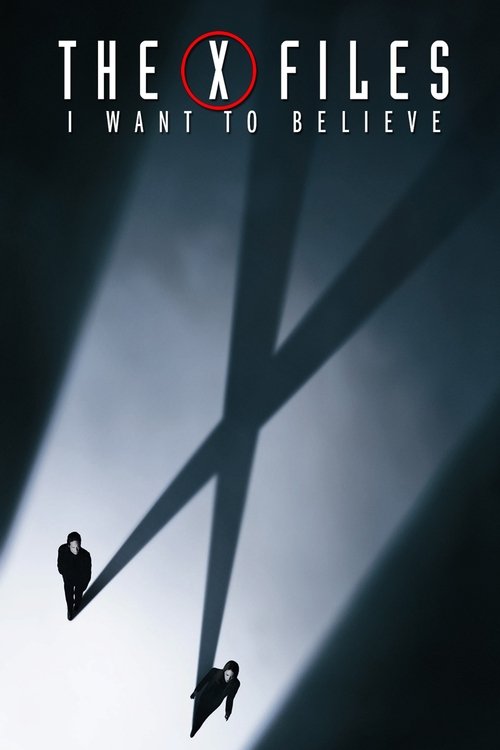
The X Files: I Want to Believe
Mulder and Scully are called back to duty by the FBI when a former priest claims to be receiving psychic visions pertaining to a kidnapped agent.
Despite a respectable budget of $30.0M, The X Files: I Want to Believe became a box office success, earning $69.4M worldwide—a 131% return.


Plot Structure
Story beats plotted across runtime


Narrative Arc
Emotional journey through the story's key moments
Story Circle
Blueprint 15-beat structure
Arcplot Score Breakdown
Weighted: Precision (70%) + Arc (15%) + Theme (15%)
The X Files: I Want to Believe (2008) reveals precise narrative design, characteristic of Chris Carter's storytelling approach. This structural analysis examines how the film's 15-point plot structure maps to proven narrative frameworks across 1 hour and 44 minutes. With an Arcplot score of 7.2, the film balances conventional beats with creative variation.
Characters
Cast & narrative archetypes

Fox Mulder
Dana Scully
Father Joe
Dakota Whitney
Alvin Kurtzweil
Christian Fearon
Janke Dacyshyn
Main Cast & Characters
Fox Mulder
Played by David Duchovny
Former FBI agent drawn back into investigating paranormal cases, searching for truth and redemption.
Dana Scully
Played by Gillian Anderson
Former FBI agent and medical doctor, now working in a hospital, torn between science and faith.
Father Joe
Played by Billy Connolly
Defrocked priest and convicted pedophile who claims psychic visions about missing FBI agents.
Dakota Whitney
Played by Amanda Peet
Young FBI agent who seeks Mulder and Scully's help in investigating the disappearance of an agent.
Alvin Kurtzweil
Played by Xzibit
FBI Assistant Director who opposes Mulder's involvement in the investigation.
Christian Fearon
Played by Fagin Woodcock
Russian doctor conducting illegal organ transplant experiments in a remote facility.
Janke Dacyshyn
Played by Callum Keith Rennie
Russian accomplice involved in the abduction and organ harvesting operation.
Structural Analysis
The Status Quo at 1 minutes (1% through the runtime) establishes Mulder and Scully live together in isolation, removed from FBI work. Scully works as a doctor at a Catholic hospital treating a terminally ill boy. Their "normal" life shows what they've lost - purpose and belief.. Notably, this early placement immediately immerses viewers in the story world.
The inciting incident occurs at 12 minutes when FBI agents Dakota Whitney and Mosley Drummy arrive at Mulder and Scully's home, asking them to return and consult on a case involving Father Joe's visions. This forces them out of their quiet retreat.. At 12% through the film, this Disruption aligns precisely with traditional story structure. This beat shifts the emotional landscape, launching the protagonist into the central conflict.
The First Threshold at 26 minutes marks the transition into Act II, occurring at 25% of the runtime. This demonstrates the protagonist's commitment to Mulder chooses to fully commit to the investigation despite Scully's skepticism. They actively decide to re-enter the world of the FBI and unexplained phenomena, crossing back into their old roles., moving from reaction to action.
At 51 minutes, the Midpoint arrives at 50% of the runtime—precisely centered, creating perfect narrative symmetry. Notably, this crucial beat They discover a severed arm in the snow where Father Joe led them - validating his vision. False victory: the proof seems real, but stakes raise as they realize the victims may still be alive and suffering. The FBI wants to shut down the investigation., fundamentally raising what's at risk. The emotional intensity shifts, dividing the narrative into clear before-and-after phases.
The Collapse moment at 77 minutes (74% through) represents the emotional nadir. Here, Agent Whitney is kidnapped by the organ harvesters. Mulder realizes he's failed to save her - his pursuit of belief has led to death. Scully tells Mulder to stop, that his faith will destroy him. They appear to give up., reveals the protagonist at their lowest point. This beat's placement in the final quarter sets up the climactic reversal.
The Second Threshold at 82 minutes initiates the final act resolution at 79% of the runtime. Scully chooses to believe - she decides to perform the risky treatment on Christian and tells Mulder "I want to believe" that Whitney can be saved. Father Joe has a final vision revealing the location. Faith and science synthesize., demonstrating the transformation achieved throughout the journey.
Emotional Journey
The X Files: I Want to Believe's emotional architecture traces a deliberate progression across 15 carefully calibrated beats.
Narrative Framework
This structural analysis employs proven narrative structure principles that track dramatic progression. By mapping The X Files: I Want to Believe against these established plot points, we can identify how Chris Carter utilizes or subverts traditional narrative conventions. The plot point approach reveals not only adherence to structural principles but also creative choices that distinguish The X Files: I Want to Believe within the mystery genre.
Comparative Analysis
Additional mystery films include Lone Star, The Wicker Man and A Soldier's Story.
Plot Points by Act
Act I
SetupStatus Quo
Mulder and Scully live together in isolation, removed from FBI work. Scully works as a doctor at a Catholic hospital treating a terminally ill boy. Their "normal" life shows what they've lost - purpose and belief.
Theme
Father Joe, the psychic priest, is introduced having visions. Agent Whitney says "I want to believe him" - stating the film's central question about faith versus proof.
Worldbuilding
Establish Mulder and Scully's domestic life, Scully's work at the hospital with young Christian, the FBI's search for a missing agent, and Father Joe's troubled past as a pedophile priest claiming psychic visions.
Disruption
FBI agents Dakota Whitney and Mosley Drummy arrive at Mulder and Scully's home, asking them to return and consult on a case involving Father Joe's visions. This forces them out of their quiet retreat.
Resistance
Scully resists involvement, skeptical of the psychic. Mulder debates returning to the world of belief and investigation. They visit the crime scene where Father Joe leads them through snow. Mulder is drawn back to his old life.
Act II
ConfrontationFirst Threshold
Mulder chooses to fully commit to the investigation despite Scully's skepticism. They actively decide to re-enter the world of the FBI and unexplained phenomena, crossing back into their old roles.
Mirror World
Father Joe becomes the thematic mirror - a disgraced priest with visions he cannot prove, asking others to believe him. His faith despite his sins reflects the central question of belief without evidence.
Premise
Mulder and Scully investigate the disappearances, following Father Joe's visions. They discover evidence of organ harvesting. Mulder believes, Scully doubts. The promise of the premise - classic X-Files investigation with their partnership dynamic.
Midpoint
They discover a severed arm in the snow where Father Joe led them - validating his vision. False victory: the proof seems real, but stakes raise as they realize the victims may still be alive and suffering. The FBI wants to shut down the investigation.
Opposition
The FBI pulls out. Scully focuses on her dying patient, facing her own crisis of faith about experimental treatment. Mulder pushes forward alone, becoming obsessed. The antagonists close in, taking another victim. Their relationship strains.
Collapse
Agent Whitney is kidnapped by the organ harvesters. Mulder realizes he's failed to save her - his pursuit of belief has led to death. Scully tells Mulder to stop, that his faith will destroy him. They appear to give up.
Crisis
Mulder contemplates abandoning the search. Scully struggles with whether to perform experimental stem cell treatment on Christian. Both face their dark night - is faith enough without proof?
Act III
ResolutionSecond Threshold
Scully chooses to believe - she decides to perform the risky treatment on Christian and tells Mulder "I want to believe" that Whitney can be saved. Father Joe has a final vision revealing the location. Faith and science synthesize.
Synthesis
Mulder and Scully raid the compound together. They find the organ harvesting operation and the victims. Action finale: Mulder fights the doctor, Scully saves Whitney. The case is solved through combined faith and investigation.
Transformation
Mulder and Scully row a boat together in peaceful sunlight, reconnected. Christian survived the treatment. They've restored their faith - not just in the paranormal, but in each other and the value of belief balanced with reason.