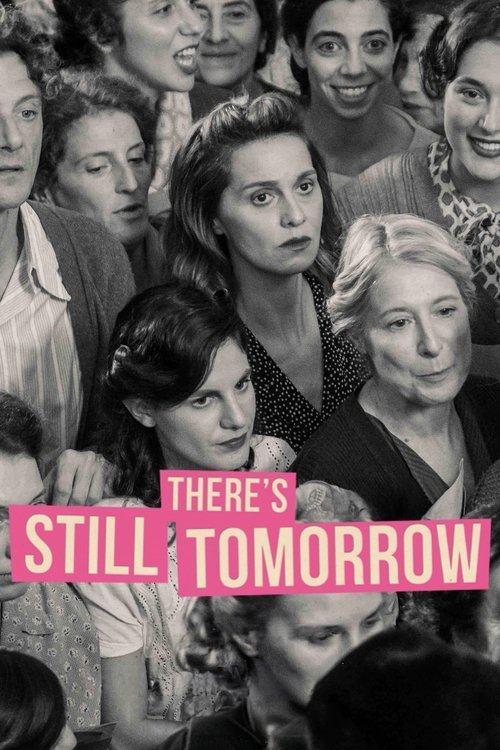
There's Still Tomorrow
In postwar Rome, a working-class woman dreams of a better future for herself and her daughter while facing abuse at the hands of her domineering husband. When a mysterious letter arrives, she discovers the courage to change the circumstances of her life.
Despite its limited budget of $9.0M, There's Still Tomorrow became a commercial success, earning $50.1M worldwide—a 457% return. The film's unique voice attracted moviegoers, showing that strong storytelling can transcend budget limitations.
27 wins & 25 nominations


Plot Structure
Story beats plotted across runtime


Narrative Arc
Emotional journey through the story's key moments
Story Circle
Blueprint 15-beat structure
Arcplot Score Breakdown
Weighted: Precision (70%) + Arc (15%) + Theme (15%)
There's Still Tomorrow (2023) exemplifies deliberately positioned narrative architecture, characteristic of Paola Cortellesi's storytelling approach. This structural analysis examines how the film's 15-point plot structure maps to proven narrative frameworks across 1 hour and 58 minutes. With an Arcplot score of 7.2, the film balances conventional beats with creative variation.
Structural Analysis
The Status Quo at 1 minutes (1% through the runtime) establishes Delia wakes before dawn in her cramped Roman apartment (post-WWII 1946). She immediately begins her grueling daily routine: emptying chamber pots, preparing breakfast, and enduring casual violence from her husband Ivano who slaps her for minor infractions. Her daughters witness this normalized abuse in silence.. Structural examination shows that this early placement immediately immerses viewers in the story world.
The inciting incident occurs at 12 minutes when Ivano announces he has arranged Marcella's engagement to Giulio, a young man from a "good family." Marcella is horrified - she doesn't love him and wants to continue her education. Delia watches her daughter face the same trapped fate she endured, a cycle about to repeat.. At 10% through the film, this Disruption aligns precisely with traditional story structure. This beat shifts the emotional landscape, launching the protagonist into the central conflict.
The First Threshold at 31 minutes marks the transition into Act II, occurring at 26% of the runtime. This reveals the protagonist's commitment to Delia makes the active choice to secretly attend a women's political meeting about voting rights. This is her first deliberate act of defiance against Ivano's control and the patriarchal system. She crosses into a new world of possibility and political awakening, hiding this from her husband., moving from reaction to action.
At 60 minutes, the Midpoint arrives at 50% of the runtime—precisely centered, creating perfect narrative symmetry. Structural examination shows that this crucial beat False defeat: Ivano discovers Delia has been hiding money and beats her savagely. He also accelerates Marcella's wedding timeline and tightens his surveillance. Delia's secret world of possibility seems crushed. The stakes are raised - physical danger is real, and time is running out to save her daughter from the same fate., fundamentally raising what's at risk. The emotional intensity shifts, dividing the narrative into clear before-and-after phases.
The Collapse moment at 87 minutes (74% through) represents the emotional nadir. Here, Marcella, in despair over the forced marriage, attempts to harm herself. Delia finds her daughter in a moment of utter hopelessness. This "whiff of death" moment forces Delia to confront the fatal cost of accepting patriarchal oppression. Her daughter's spirit is dying, just as her own has been dying for years., indicates the protagonist at their lowest point. This beat's placement in the final quarter sets up the climactic reversal.
The Second Threshold at 93 minutes initiates the final act resolution at 79% of the runtime. The revelation of the mysterious letters: they reveal Delia was educated and had her own dreams before marriage crushed them. She realizes she can use her voice - literally through voting - combined with her survival skills. The upcoming vote isn't just symbolic; it's her weapon. She formulates her final plan for the referendum day., demonstrating the transformation achieved throughout the journey.
Emotional Journey
There's Still Tomorrow's emotional architecture traces a deliberate progression across 15 carefully calibrated beats.
Narrative Framework
This structural analysis employs a 15-point narrative structure framework that maps key story moments. By mapping There's Still Tomorrow against these established plot points, we can identify how Paola Cortellesi utilizes or subverts traditional narrative conventions. The plot point approach reveals not only adherence to structural principles but also creative choices that distinguish There's Still Tomorrow within the drama genre.
Comparative Analysis
Additional drama films include After Thomas, South Pacific and Dirty Dancing: Havana Nights.
Plot Points by Act
Act I
SetupStatus Quo
Delia wakes before dawn in her cramped Roman apartment (post-WWII 1946). She immediately begins her grueling daily routine: emptying chamber pots, preparing breakfast, and enduring casual violence from her husband Ivano who slaps her for minor infractions. Her daughters witness this normalized abuse in silence.
Theme
Delia's neighbor Marisa tells her while doing laundry: "We women have to accept our fate - it's the way things have always been." This encapsulates the thematic question: Must women accept their prescribed roles, or can they choose their own tomorrow?
Worldbuilding
Establishes Delia's world in post-war Rome: her exhausting domestic labor, Ivano's tyrannical control and physical abuse, her relationship with her children (especially daughter Marcella), the poverty and bombed-out city streets, and the rigid patriarchal social structure where women have no legal rights or voting privileges.
Disruption
Ivano announces he has arranged Marcella's engagement to Giulio, a young man from a "good family." Marcella is horrified - she doesn't love him and wants to continue her education. Delia watches her daughter face the same trapped fate she endured, a cycle about to repeat.
Resistance
Delia debates internally whether to accept this fate for her daughter. She receives a mysterious letter that hints at her secret past. We see Delia navigating her world: working side jobs for hidden money, interacting with William (an American soldier who shows her respect), and observing the upcoming referendum where women will vote for the first time. She's not yet ready to act decisively.
Act II
ConfrontationFirst Threshold
Delia makes the active choice to secretly attend a women's political meeting about voting rights. This is her first deliberate act of defiance against Ivano's control and the patriarchal system. She crosses into a new world of possibility and political awakening, hiding this from her husband.
Mirror World
Delia deepens her connection with Nino, a kind neighbor who treats her with genuine respect and sees her intelligence. Their relationship represents the thematic counterpoint: a world where women are valued as equals and partners, not property. He encourages her reading and thinking.
Premise
Delia explores her new political consciousness while maintaining her domestic facade. She secretly attends more meetings, learns about women's rights, connects with other women awakening to their power. She also investigates her mysterious letters. Meanwhile, the engagement preparations proceed, and tension builds around the upcoming vote.
Midpoint
False defeat: Ivano discovers Delia has been hiding money and beats her savagely. He also accelerates Marcella's wedding timeline and tightens his surveillance. Delia's secret world of possibility seems crushed. The stakes are raised - physical danger is real, and time is running out to save her daughter from the same fate.
Opposition
Pressure intensifies from all sides: Ivano becomes more controlling and violent, Marcella grows desperate about the forced marriage, the wedding date approaches, and Delia's hidden activities become harder to conceal. Social pressure from neighbors and family reinforces that women must submit. Delia's attempts to protect her daughter seem futile against the system.
Collapse
Marcella, in despair over the forced marriage, attempts to harm herself. Delia finds her daughter in a moment of utter hopelessness. This "whiff of death" moment forces Delia to confront the fatal cost of accepting patriarchal oppression. Her daughter's spirit is dying, just as her own has been dying for years.
Crisis
Delia sits with her unconscious daughter through the night, processing the full weight of the choice before her. She reviews her life of submission and suffering. In the darkness, she confronts what she must do - not just for Marcella, but for herself and all women trapped in this system.
Act III
ResolutionSecond Threshold
The revelation of the mysterious letters: they reveal Delia was educated and had her own dreams before marriage crushed them. She realizes she can use her voice - literally through voting - combined with her survival skills. The upcoming vote isn't just symbolic; it's her weapon. She formulates her final plan for the referendum day.
Synthesis
June 2, 1946 - referendum day. Delia executes her plan: she votes for the Republic and women's rights in Italy's first universal suffrage election. She stands up to Ivano publicly, refuses to accept Marcella's forced marriage, and uses the power of collective female solidarity. The finale interweaves personal liberation with national political transformation as women cast their first votes.
Transformation
Final image mirrors the opening: Delia wakes at dawn, but now in a new Italy where women have voted and won rights. Her face shows quiet determination, not resignation. Marcella is free from the engagement. The chamber pot remains, but Delia's eyes reveal she is no longer a servant to an unjust system - she has claimed her tomorrow.