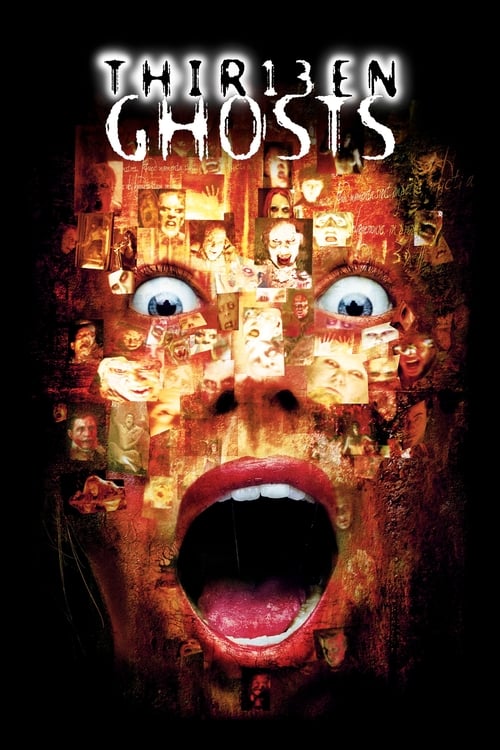
Thir13en Ghosts
Arthur and his two children inherit his uncle's estate: a glass house that serves as a prison to twelve ghosts. When the family, accompanied by a nanny and an attorney, enter the house they find themselves trapped inside an evil machine 'designed by the Devil and powered by the dead' to open the Eye of Hell. Aided by a ghost hunter and his rival, a ghost rights activist out to set the ghosts free, the group must do what they can to get out of the house alive.
Working with a respectable budget of $42.0M, the film achieved a steady performer with $68.5M in global revenue (+63% profit margin).
1 win & 4 nominations


Plot Structure
Story beats plotted across runtime


Narrative Arc
Emotional journey through the story's key moments
Story Circle
Blueprint 15-beat structure
Arcplot Score Breakdown
Weighted: Precision (70%) + Arc (15%) + Theme (15%)
Thir13en Ghosts (2001) reveals meticulously timed narrative design, characteristic of Steve Beck's storytelling approach. This structural analysis examines how the film's 15-point plot structure maps to proven narrative frameworks across 1 hour and 31 minutes. With an Arcplot score of 7.4, the film balances conventional beats with creative variation.
Characters
Cast & narrative archetypes

Arthur Kriticos
Kathy Kriticos
Bobby Kriticos
Dennis Rafkin
Kalina Oretzia
Cyrus Kriticos
Maggie Bess
Main Cast & Characters
Arthur Kriticos
Played by Tony Shalhoub
A widowed father who inherits a mysterious glass house filled with ghosts, struggling to protect his children while uncovering dark family secrets.
Kathy Kriticos
Played by Shannon Elizabeth
Arthur's teenage daughter who is skeptical and protective of her younger brother as supernatural events unfold in their inherited mansion.
Bobby Kriticos
Played by Alec Roberts
Arthur's young son who can see ghosts without special glasses, making him both vulnerable and key to understanding the supernatural threat.
Dennis Rafkin
Played by Matthew Lillard
A psychic who worked with Cyrus Kriticos capturing ghosts, now traumatized and trying to warn Arthur about the deadly nature of the house.
Kalina Oretzia
Played by Embeth Davidtz
A mysterious woman claiming to be a spirit activist who infiltrates the house, revealing hidden knowledge about the ghosts and the machine.
Cyrus Kriticos
Played by F. Murray Abraham
Arthur's deceased uncle who collected twelve ghosts to power an infernal machine hidden within the glass house, with a thirteenth ghost needed to complete his plan.
Maggie Bess
Played by Rah Digga
The Kriticos family's nanny and housekeeper who accompanies them to the mansion, providing grounded comic relief and maternal concern.
Structural Analysis
The Status Quo at 1 minutes (1% through the runtime) establishes Arthur Kriticos struggles financially as a widowed single father, living in a cramped apartment with his two children Kathy and Bobby, mourning his wife Jean who died in a house fire.. The analysis reveals that this early placement immediately immerses viewers in the story world.
The inciting incident occurs at 10 minutes when Arthur learns he has inherited a massive glass house from his eccentric uncle Cyrus Kriticos, offering an escape from poverty and a fresh start for his broken family.. At 11% through the film, this Disruption aligns precisely with traditional story structure. This beat shifts the emotional landscape, launching the protagonist into the central conflict.
The First Threshold at 22 minutes marks the transition into Act II, occurring at 25% of the runtime. This demonstrates the protagonist's commitment to The house seals itself with the family trapped inside as the ghosts are released from their containment. Arthur chooses to stay and fight for his children rather than abandon the house., moving from reaction to action.
At 45 minutes, the Midpoint arrives at 49% of the runtime—precisely centered, creating perfect narrative symmetry. Notably, this crucial beat Dennis reveals the house is actually a machine—the Ocularis Infernum—designed to open the Eye of Hell, powered by the twelve captured ghosts, with a thirteenth ghost needed to complete it., fundamentally raising what's at risk. The emotional intensity shifts, dividing the narrative into clear before-and-after phases.
The Collapse moment at 67 minutes (74% through) represents the emotional nadir. Here, Dennis is killed by the ghosts while trying to save the children, sacrificing himself. Arthur learns that Bobby is meant to be the thirteenth ghost—a sacrifice of pure love—completing Cyrus's machine., reveals the protagonist at their lowest point. This beat's placement in the final quarter sets up the climactic reversal.
The Second Threshold at 73 minutes initiates the final act resolution at 80% of the runtime. Arthur realizes that Jean's ghost is present and benevolent, giving him the strength to fight. He understands that love—not sacrifice—is the answer, and chooses to disrupt the machine rather than submit to Cyrus's plan., demonstrating the transformation achieved throughout the journey.
Emotional Journey
Thir13en Ghosts's emotional architecture traces a deliberate progression across 15 carefully calibrated beats.
Narrative Framework
This structural analysis employs a 15-point narrative structure framework that maps key story moments. By mapping Thir13en Ghosts against these established plot points, we can identify how Steve Beck utilizes or subverts traditional narrative conventions. The plot point approach reveals not only adherence to structural principles but also creative choices that distinguish Thir13en Ghosts within the horror genre.
Steve Beck's Structural Approach
Among the 2 Steve Beck films analyzed on Arcplot, the average structural score is 7.3, reflecting strong command of classical structure. Thir13en Ghosts represents one of the director's most structurally precise works. For comparative analysis, explore the complete Steve Beck filmography.
Comparative Analysis
Additional horror films include Thinner, A Nightmare on Elm Street and Mary Reilly. For more Steve Beck analyses, see Ghost Ship.
Plot Points by Act
Act I
SetupStatus Quo
Arthur Kriticos struggles financially as a widowed single father, living in a cramped apartment with his two children Kathy and Bobby, mourning his wife Jean who died in a house fire.
Theme
Lawyer Ben Moss mentions that "some inheritances come with a price" when discussing Cyrus's unusual bequest, foreshadowing the film's exploration of what we're willing to risk for security.
Worldbuilding
Establishment of Arthur's grief and financial desperation, his strained relationship with his children who are also traumatized, and the introduction of their nanny Maggie who provides stability.
Disruption
Arthur learns he has inherited a massive glass house from his eccentric uncle Cyrus Kriticos, offering an escape from poverty and a fresh start for his broken family.
Resistance
The family tours the bizarre glass mansion with lawyer Ben Moss, discovering its strange mechanisms and Latin inscriptions. Dennis Rafkin, a psychic, arrives warning them to leave, but Arthur is too invested in this opportunity.
Act II
ConfrontationFirst Threshold
The house seals itself with the family trapped inside as the ghosts are released from their containment. Arthur chooses to stay and fight for his children rather than abandon the house.
Mirror World
Dennis Rafkin becomes Arthur's reluctant guide, representing the thematic mirror—someone who worked with Cyrus and must now choose between self-preservation and helping others.
Premise
The family navigates the deadly glass maze while encountering various ghosts. Arthur searches desperately for his children, using the special glasses to see the spirits, experiencing the full horror of Cyrus's collection.
Midpoint
Dennis reveals the house is actually a machine—the Ocularis Infernum—designed to open the Eye of Hell, powered by the twelve captured ghosts, with a thirteenth ghost needed to complete it.
Opposition
The ghosts become more aggressive as the machine activates. Arthur discovers that Kalina, claiming to be a spirit liberator, is actually Cyrus's partner. The family splinters as they're hunted through the shifting glass corridors.
Collapse
Dennis is killed by the ghosts while trying to save the children, sacrificing himself. Arthur learns that Bobby is meant to be the thirteenth ghost—a sacrifice of pure love—completing Cyrus's machine.
Crisis
Arthur faces his darkest moment, believing he's failed his children just as he failed to save his wife. The revelation that Cyrus planned this all along—using family as components—devastates him.
Act III
ResolutionSecond Threshold
Arthur realizes that Jean's ghost is present and benevolent, giving him the strength to fight. He understands that love—not sacrifice—is the answer, and chooses to disrupt the machine rather than submit to Cyrus's plan.
Synthesis
Arthur battles through the ghosts to reach Bobby at the machine's center. He destroys the mechanism, breaking Cyrus's spell. The house begins to tear itself apart as the ghosts are freed and Cyrus is destroyed.
Transformation
The family escapes the collapsing house together, reunited and alive. Arthur has transformed from a passive victim of tragedy into an active protector, choosing family and love over material security.