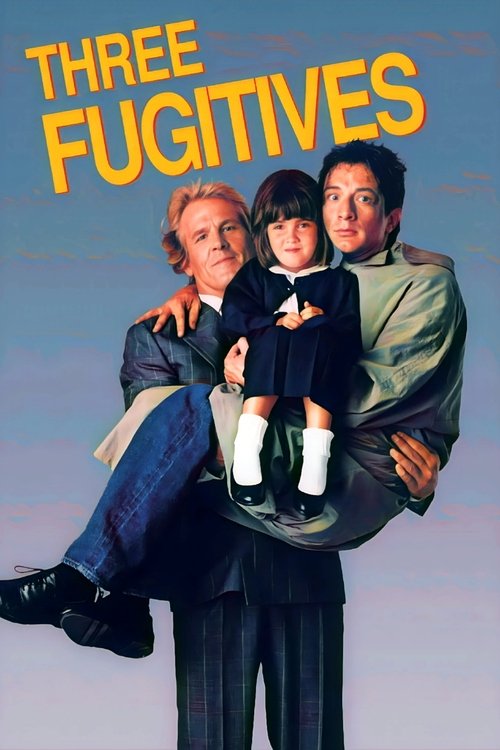
Three Fugitives
On his first day after being released from jail for 14 armed bank robberies, Lucas finds himself caught up in someone else's robbery. Perry has decided to hold up the local bank to raise money so that he can keep his daughter, Meg, and get her the treatment she needs. Dugan, a detective, assumes Lucas helped plan the robbery, and hence Lucas, Perry and Meg become three fugitives.
Despite a moderate budget of $15.0M, Three Fugitives became a solid performer, earning $40.6M worldwide—a 171% return.


Plot Structure
Story beats plotted across runtime


Narrative Arc
Emotional journey through the story's key moments
Story Circle
Blueprint 15-beat structure
Arcplot Score Breakdown
Weighted: Precision (70%) + Arc (15%) + Theme (15%)
Three Fugitives (1989) exhibits deliberately positioned story structure, characteristic of Francis Veber's storytelling approach. This structural analysis examines how the film's 15-point plot structure maps to proven narrative frameworks across 1 hour and 36 minutes. With an Arcplot score of 6.8, the film balances conventional beats with creative variation.
Characters
Cast & narrative archetypes

Lucas
Ned Perry
Meg Perry
Detective Duggan
Main Cast & Characters
Lucas
Played by Nick Nolte
Ex-con trying to go straight who gets unwillingly dragged into helping an incompetent bank robber and his mute daughter.
Ned Perry
Played by Martin Short
Desperate, bumbling father who robs a bank to get money for his daughter, inadvertently taking Lucas hostage.
Meg Perry
Played by Sarah Rowland Doroff
Ned's young mute daughter who bonds with Lucas and becomes the emotional heart of the story.
Detective Duggan
Played by James Earl Jones
Determined detective pursuing Lucas, convinced he's returned to a life of crime.
Structural Analysis
The Status Quo at 1 minutes (1% through the runtime) establishes Lucas exits prison after serving his sentence, determined to go straight and leave his criminal past behind. He's welcomed by press coverage of his release.. Structural examination shows that this early placement immediately immerses viewers in the story world.
The inciting incident occurs at 11 minutes when Ned Perry bursts into the bank where Lucas is opening an account and attempts a clumsy armed robbery. Lucas is taken hostage, instantly destroying his fresh start.. At 12% through the film, this Disruption aligns precisely with traditional story structure. This beat shifts the emotional landscape, launching the protagonist into the central conflict.
The First Threshold at 24 minutes marks the transition into Act II, occurring at 25% of the runtime. This demonstrates the protagonist's commitment to Lucas decides to stay with Ned and Meg when he realizes they're truly desperate and helpless. He actively chooses to help them evade capture rather than abandon them, making himself a fugitive., moving from reaction to action.
At 47 minutes, the Midpoint arrives at 49% of the runtime—precisely centered, creating perfect narrative symmetry. Notably, this crucial beat Meg speaks her first words to Lucas, saying "I love you." This false victory suggests they might actually escape and become a family, raising the emotional stakes dramatically., fundamentally raising what's at risk. The emotional intensity shifts, dividing the narrative into clear before-and-after phases.
The Collapse moment at 71 minutes (74% through) represents the emotional nadir. Here, Lucas is captured by police and separated from Meg and Ned. His dream of redemption and this newfound family seems destroyed. He faces returning to prison for crimes he didn't commit., demonstrates the protagonist at their lowest point. This beat's placement in the final quarter sets up the climactic reversal.
The Second Threshold at 77 minutes initiates the final act resolution at 81% of the runtime. Lucas chooses to escape custody and rescue Meg from being taken away from Ned, fully committing to this family even if it means becoming a real fugitive. He synthesizes his criminal skills with his newfound paternal love., demonstrating the transformation achieved throughout the journey.
Emotional Journey
Three Fugitives's emotional architecture traces a deliberate progression across 15 carefully calibrated beats.
Narrative Framework
This structural analysis employs systematic plot point analysis that identifies crucial turning points. By mapping Three Fugitives against these established plot points, we can identify how Francis Veber utilizes or subverts traditional narrative conventions. The plot point approach reveals not only adherence to structural principles but also creative choices that distinguish Three Fugitives within the comedy genre.
Francis Veber's Structural Approach
Among the 3 Francis Veber films analyzed on Arcplot, the average structural score is 7.1, reflecting strong command of classical structure. Three Fugitives takes a more unconventional approach compared to the director's typical style. For comparative analysis, explore the complete Francis Veber filmography.
Comparative Analysis
Additional comedy films include The Bad Guys, Ella Enchanted and The Evening Star. For more Francis Veber analyses, see The Dinner Game, The Valet.
Plot Points by Act
Act I
SetupStatus Quo
Lucas exits prison after serving his sentence, determined to go straight and leave his criminal past behind. He's welcomed by press coverage of his release.
Theme
Lucas's parole officer warns him that second chances don't come easy and that people can change if they want to badly enough.
Worldbuilding
Lucas attempts to start fresh: meeting his parole officer, going to the bank to open a legitimate account, establishing his desire for a normal life. Meanwhile, we see Ned Perry desperately preparing to rob a bank to pay for his daughter's care.
Disruption
Ned Perry bursts into the bank where Lucas is opening an account and attempts a clumsy armed robbery. Lucas is taken hostage, instantly destroying his fresh start.
Resistance
Lucas is forced into the getaway car with Ned and his mute daughter Meg. Despite trying to escape and prove his innocence, circumstances make him look like the mastermind. He debates whether to flee or turn himself in.
Act II
ConfrontationFirst Threshold
Lucas decides to stay with Ned and Meg when he realizes they're truly desperate and helpless. He actively chooses to help them evade capture rather than abandon them, making himself a fugitive.
Mirror World
Lucas begins bonding with young Meg, who hasn't spoken since her mother's death. She represents the family and connection Lucas never had, showing him what he's been missing.
Premise
Lucas uses his criminal expertise to keep the trio ahead of the law while bonding with Meg and trying to manage the incompetent Ned. Comic mishaps ensue as they evade police, hide out, and Lucas slowly becomes a reluctant father figure.
Midpoint
Meg speaks her first words to Lucas, saying "I love you." This false victory suggests they might actually escape and become a family, raising the emotional stakes dramatically.
Opposition
The police close in with increasing pressure. Ned's incompetence creates more problems. Lucas's parole officer refuses to believe in his innocence. The situation becomes increasingly desperate as every escape route closes.
Collapse
Lucas is captured by police and separated from Meg and Ned. His dream of redemption and this newfound family seems destroyed. He faces returning to prison for crimes he didn't commit.
Crisis
Lucas sits in custody, processing the loss of Meg and his chance at a real life. He realizes what truly matters isn't staying out of prison, but protecting the family he's found.
Act III
ResolutionSecond Threshold
Lucas chooses to escape custody and rescue Meg from being taken away from Ned, fully committing to this family even if it means becoming a real fugitive. He synthesizes his criminal skills with his newfound paternal love.
Synthesis
Lucas executes a plan to reunite Meg and Ned, confronts the authorities, and reveals the truth about what happened. The real story comes out, proving his innocence while showing his transformation.
Transformation
Lucas, Ned, and Meg are together as a family. The hardened ex-con who wanted only to be left alone has become a father figure, redeemed not by avoiding crime but by choosing love and connection.