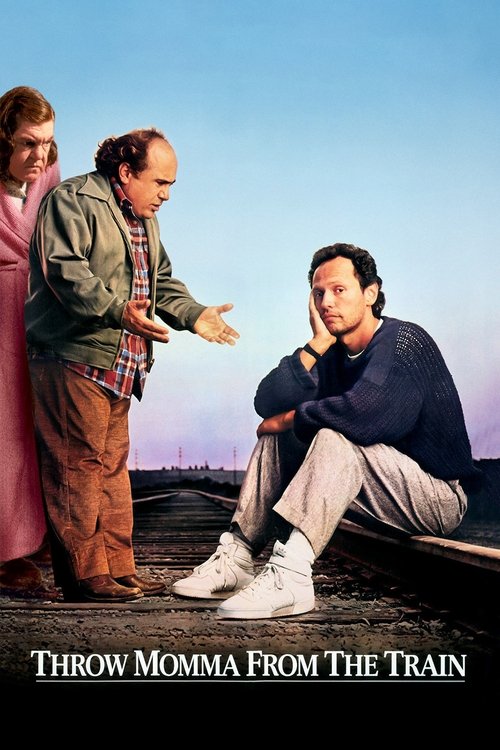
Throw Momma from the Train
Larry Donner, an author with a cruel ex-wife, teaches a writing workshop in which one of his students, Owen, is fed up with his domineering mother. When Owen watches a Hitchcock classic that seems to mirror his own life, he decides to put the movie's plot into action and offers to kill Larry's ex-wife, if Larry promises to murder his mom. Before Larry gets a chance to react to the plan, it seems that Owen has already set things in motion.
Despite its tight budget of $14.0M, Throw Momma from the Train became a box office success, earning $57.9M worldwide—a 314% return. The film's unique voice attracted moviegoers, confirming that strong storytelling can transcend budget limitations.
Nominated for 1 Oscar. 2 wins & 4 nominations


Plot Structure
Story beats plotted across runtime


Narrative Arc
Emotional journey through the story's key moments
Story Circle
Blueprint 15-beat structure
Arcplot Score Breakdown
Weighted: Precision (70%) + Arc (15%) + Theme (15%)
Throw Momma from the Train (1987) showcases meticulously timed narrative architecture, characteristic of Danny DeVito's storytelling approach. This structural analysis examines how the film's 15-point plot structure maps to proven narrative frameworks across 1 hour and 28 minutes. With an Arcplot score of 7.5, the film showcases strong structural fundamentals.
Characters
Cast & narrative archetypes

Larry Donner
Owen Lift
Momma (Mrs. Lift)
Margaret Donner
Beth Ryan
Main Cast & Characters
Larry Donner
Played by Billy Crystal
A bitter writing professor blocked by his ex-wife's plagiarism and trapped in a life of resentment. Reluctantly becomes entangled in Owen's murderous scheme.
Owen Lift
Played by Danny DeVito
A childlike, oppressed mama's boy who desperately seeks freedom from his domineering mother. Misinterprets Hitchcock's "Strangers on a Train" as instruction.
Momma (Mrs. Lift)
Played by Anne Ramsey
Owen's monstrous, abusive mother who tyrannizes her son with relentless cruelty and impossible demands. The primary antagonist of Owen's world.
Margaret Donner
Played by Kate Mulgrew
Larry's ex-wife who stole his novel and became a bestselling author. Represents everything Larry has lost and fuels his obsessive resentment.
Beth Ryan
Played by Kim Greist
A writing student and potential love interest for Larry who sees his better qualities beneath the bitterness. Provides grounding and emotional support.
Structural Analysis
The Status Quo at 1 minutes (1% through the runtime) establishes Larry Donner stares at his typewriter, paralyzed by writer's block, obsessively fixating on his ex-wife Margaret who stole his novel. His opening line "The night was..." reveals his creative constipation and consuming bitterness.. Structural examination shows that this early placement immediately immerses viewers in the story world.
The inciting incident occurs at 10 minutes when Owen approaches Larry with his idea inspired by Hitchcock's film: they should "criss-cross" - Owen will kill Larry's ex-wife Margaret if Larry kills Owen's horrible Momma. Larry dismisses this as insane.. At 12% through the film, this Disruption aligns precisely with traditional story structure. This beat shifts the emotional landscape, launching the protagonist into the central conflict.
The First Threshold at 22 minutes marks the transition into Act II, occurring at 25% of the runtime. This reveals the protagonist's commitment to Owen returns and reveals he has murdered Margaret, pushing her off a boat in Hawaii. Larry is horrified - he never agreed to this. Owen now expects Larry to fulfill "his part" of the deal by killing Momma. Larry is trapped in a nightmare., moving from reaction to action.
At 44 minutes, the Midpoint arrives at 50% of the runtime—precisely centered, creating perfect narrative symmetry. Notably, this crucial beat Larry becomes the prime suspect in Margaret's murder after his public TV rant. The police are closing in. Larry realizes he must either kill Momma to keep Owen quiet or face prosecution for a murder he didn't commit. False defeat - he's truly trapped., fundamentally raising what's at risk. The emotional intensity shifts, dividing the narrative into clear before-and-after phases.
The Collapse moment at 66 minutes (75% through) represents the emotional nadir. Here, Larry is arrested for Margaret's murder. His alibi crumbles. Owen, the real killer, remains free while Larry faces life imprisonment. Everything Larry tried to protect has been destroyed by his own hatred and inability to let go., reveals the protagonist at their lowest point. This beat's placement in the final quarter sets up the climactic reversal.
The Second Threshold at 70 minutes initiates the final act resolution at 80% of the runtime. Owen provides Larry's alibi and the truth about Margaret's death begins to emerge. Larry realizes that his freedom depends on finally letting go of his hatred and working with Owen rather than against him., demonstrating the transformation achieved throughout the journey.
Emotional Journey
Throw Momma from the Train's emotional architecture traces a deliberate progression across 15 carefully calibrated beats.
Narrative Framework
This structural analysis employs a 15-point narrative structure framework that maps key story moments. By mapping Throw Momma from the Train against these established plot points, we can identify how Danny DeVito utilizes or subverts traditional narrative conventions. The plot point approach reveals not only adherence to structural principles but also creative choices that distinguish Throw Momma from the Train within the comedy genre.
Danny DeVito's Structural Approach
Among the 4 Danny DeVito films analyzed on Arcplot, the average structural score is 7.4, reflecting strong command of classical structure. Throw Momma from the Train represents one of the director's most structurally precise works. For comparative analysis, explore the complete Danny DeVito filmography.
Comparative Analysis
Additional comedy films include The Bad Guys, Ella Enchanted and The Evening Star. For more Danny DeVito analyses, see Duplex, Death to Smoochy and Matilda.
Plot Points by Act
Act I
SetupStatus Quo
Larry Donner stares at his typewriter, paralyzed by writer's block, obsessively fixating on his ex-wife Margaret who stole his novel. His opening line "The night was..." reveals his creative constipation and consuming bitterness.
Theme
In Larry's writing class, a student reads work about letting go of the past. Larry dismisses it while clearly unable to take the advice himself, establishing that hatred and obsession poison creativity and life.
Worldbuilding
Larry's miserable existence as a community college writing teacher is established. We meet Owen Lift, an odd student living under his tyrannical mother's thumb. Owen watches "Strangers on a Train" and becomes inspired by its murder-swap premise.
Disruption
Owen approaches Larry with his idea inspired by Hitchcock's film: they should "criss-cross" - Owen will kill Larry's ex-wife Margaret if Larry kills Owen's horrible Momma. Larry dismisses this as insane.
Resistance
Owen persists in befriending Larry despite rejection. Larry vents about Margaret on TV, publicly wishing her dead. Owen interprets Larry's hatred as agreement to his plan and stalks Margaret to Hawaii, while Larry remains oblivious.
Act II
ConfrontationFirst Threshold
Owen returns and reveals he has murdered Margaret, pushing her off a boat in Hawaii. Larry is horrified - he never agreed to this. Owen now expects Larry to fulfill "his part" of the deal by killing Momma. Larry is trapped in a nightmare.
Mirror World
Larry meets Momma - a grotesque, abusive monster who torments Owen relentlessly. Through this dysfunctional relationship, Larry begins to see Owen as a victim rather than just a lunatic, and glimpses a distorted mirror of his own toxic obsessions.
Premise
Dark comedy unfolds as Owen pressures Larry to kill Momma. Larry makes bumbling attempts to fulfill the "bargain" - sneaking into Owen's house, failing spectacularly at every turn. Meanwhile, police investigation into Margaret's death intensifies.
Midpoint
Larry becomes the prime suspect in Margaret's murder after his public TV rant. The police are closing in. Larry realizes he must either kill Momma to keep Owen quiet or face prosecution for a murder he didn't commit. False defeat - he's truly trapped.
Opposition
Pressure mounts from all sides. Police detective pursues Larry relentlessly. Owen grows impatient and threatening. Larry's attempts to eliminate Momma become increasingly desperate and farcical. His life completely unravels.
Collapse
Larry is arrested for Margaret's murder. His alibi crumbles. Owen, the real killer, remains free while Larry faces life imprisonment. Everything Larry tried to protect has been destroyed by his own hatred and inability to let go.
Crisis
Larry hits rock bottom, contemplating how his obsessive hatred led him to this destruction. Owen, feeling guilty, must decide whether to let Larry take the fall or confess the truth about what he did.
Act III
ResolutionSecond Threshold
Owen provides Larry's alibi and the truth about Margaret's death begins to emerge. Larry realizes that his freedom depends on finally letting go of his hatred and working with Owen rather than against him.
Synthesis
The climactic confrontation occurs. Momma's true nature is revealed to authorities during a chaotic sequence. She accidentally falls to her death during the confrontation, freeing Owen. Larry is cleared of all charges.
Transformation
Larry, finally free of hatred, completes his novel. Owen, liberated from Momma's tyranny, has become a successful writer himself. They share genuine friendship. Larry's creative block is cured - he could only write once he stopped hating.