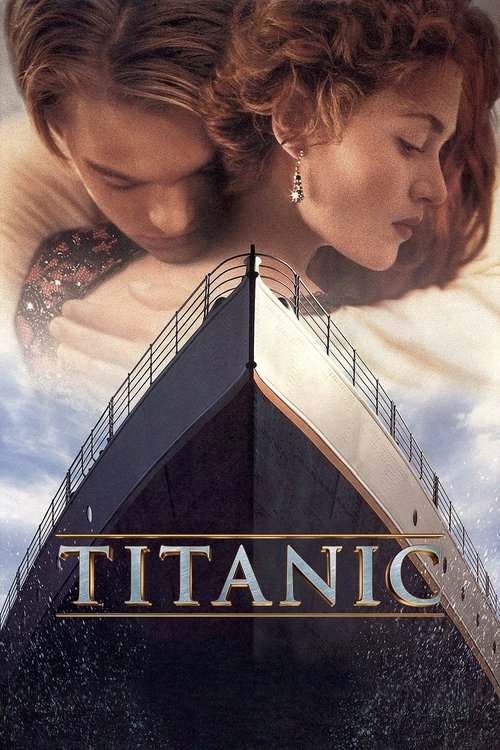
Titanic
101-year-old Rose DeWitt Bukater tells the story of her life aboard the Titanic, 84 years later. A young Rose boards the ship with her mother and fiancé. Meanwhile, Jack Dawson and Fabrizio De Rossi win third-class tickets aboard the ship. Rose tells the whole story from Titanic's departure through to its death—on its first and last voyage—on April 15, 1912.
Despite a massive budget of $200.0M, Titanic became a runaway success, earning $2264.2M worldwide—a remarkable 1032% return. This commercial performance validated the ambitious narrative scope, demonstrating that audiences embrace bold vision even at blockbuster scale.
11 Oscars. 126 wins & 84 nominations


Plot Structure
Story beats plotted across runtime


Narrative Arc
Emotional journey through the story's key moments
Story Circle
Blueprint 15-beat structure
Arcplot Score Breakdown
Weighted: Precision (70%) + Arc (15%) + Theme (15%)
Titanic (1997) exhibits precise narrative architecture, characteristic of James Cameron's storytelling approach. This structural analysis examines how the film's 15-point plot structure maps to proven narrative frameworks across 3 hours and 14 minutes. With an Arcplot score of 7.4, the film balances conventional beats with creative variation.
Characters
Cast & narrative archetypes

Jack Dawson
Rose DeWitt Bukater
Caledon Hockley
Molly Brown
Ruth DeWitt Bukater
Fabrizio
Thomas Andrews
Spicer Lovejoy
Main Cast & Characters
Jack Dawson
Played by Leonardo DiCaprio
A penniless artist who wins third-class tickets to the Titanic and falls in love with an upper-class passenger.
Rose DeWitt Bukater
Played by Kate Winslet
A young upper-class woman engaged to a wealthy man but yearning for freedom and authenticity.
Caledon Hockley
Played by Billy Zane
Rose's wealthy, controlling fiancé who represents the rigid social order of upper-class society.
Molly Brown
Played by Kathy Bates
A wealthy, unconventional socialite who befriends Jack and challenges social norms.
Ruth DeWitt Bukater
Played by Frances Fisher
Rose's mother who pressures her daughter into a loveless marriage to secure their financial future.
Fabrizio
Played by Danny Nucci
Jack's best friend and traveling companion who wins the Titanic tickets with him.
Thomas Andrews
Played by Victor Garber
The ship's builder who realizes the fatal design flaw after the iceberg collision.
Spicer Lovejoy
Played by David Warner
Cal's valet and enforcer who monitors Rose and pursues Jack.
Structural Analysis
The Status Quo at 2 minutes (1% through the runtime) establishes Present-day: Treasure hunters explore Titanic wreckage searching for the Heart of the Ocean diamond. Brock Lovett discovers a drawing of a young woman wearing the necklace, establishing the frame narrative of elderly Rose's world before her story disrupts it.. Significantly, this early placement immediately immerses viewers in the story world.
The inciting incident occurs at 23 minutes when Titanic departs Southampton. Rose is trapped—literally sailing away from freedom into a life she doesn't want. That night, she runs to the stern in despair, climbs over the railing, and prepares to jump. This suicide attempt is the catalyst that forces Jack into her life.. At 12% through the film, this Disruption aligns precisely with traditional story structure. This beat shifts the emotional landscape, launching the protagonist into the central conflict.
The First Threshold at 54 minutes marks the transition into Act II, occurring at 28% of the runtime. This illustrates the protagonist's commitment to After the first-class dinner, Rose makes her choice. She leaves her world behind, goes to the third-class party with Jack, and dances freely. She actively chooses to cross into Jack's world. "I'll be fine, really. I'll be fine." She commits to exploring this new life., moving from reaction to action.
At 98 minutes, the Midpoint arrives at 50% of the runtime—precisely centered, creating perfect narrative symmetry. Structural examination shows that this crucial beat Titanic strikes the iceberg. A false defeat—at first it seems like barely a bump, but Thomas Andrews quickly realizes the ship is doomed. The stakes completely transform: this is no longer just a love story, but a survival story. Time becomes the enemy. The party is over., fundamentally raising what's at risk. The emotional intensity shifts, dividing the narrative into clear before-and-after phases.
The Collapse moment at 146 minutes (75% through) represents the emotional nadir. Here, The ship breaks in half and sinks. Jack and Rose are plunged into the freezing North Atlantic. All seems lost—no lifeboats returning, hundreds dying in the water around them, Jack giving Rose the only floating door while he freezes in the water. The "whiff of death" is literal and everywhere., illustrates the protagonist at their lowest point. This beat's placement in the final quarter sets up the climactic reversal.
The Second Threshold at 156 minutes initiates the final act resolution at 80% of the runtime. Rose hears the whistle—a lifeboat is returning. She synthesizes what Jack taught her (never give up, make each day count) with her own will to survive. She lets go of Jack's body, swims to get a whistle from a dead officer, and calls the boat back. "Come back! Come back!" Her active choice to live., demonstrating the transformation achieved throughout the journey.
Emotional Journey
Titanic's emotional architecture traces a deliberate progression across 15 carefully calibrated beats.
Narrative Framework
This structural analysis employs structural analysis methodology used to understand storytelling architecture. By mapping Titanic against these established plot points, we can identify how James Cameron utilizes or subverts traditional narrative conventions. The plot point approach reveals not only adherence to structural principles but also creative choices that distinguish Titanic within the drama genre.
James Cameron's Structural Approach
Among the 8 James Cameron films analyzed on Arcplot, the average structural score is 5.9, showcasing experimental approaches to narrative form. Titanic represents one of the director's most structurally precise works. For comparative analysis, explore the complete James Cameron filmography.
Comparative Analysis
Additional drama films include After Thomas, South Pacific and Dirty Dancing: Havana Nights. For more James Cameron analyses, see True Lies, Avatar and Terminator 2: Judgment Day.
Plot Points by Act
Act I
SetupStatus Quo
Present-day: Treasure hunters explore Titanic wreckage searching for the Heart of the Ocean diamond. Brock Lovett discovers a drawing of a young woman wearing the necklace, establishing the frame narrative of elderly Rose's world before her story disrupts it.
Theme
Old Rose tells Lovett: "A woman's heart is a deep ocean of secrets." This encapsulates the film's themes of hidden depths, the unknowability of others' experiences, and treasures that transcend material wealth.
Worldbuilding
Establishes present-day frame with treasure hunters, then transitions to 1912. Young Rose arrives at Southampton with her controlling fiancé Cal and mother Ruth. We see Rose's gilded cage: first-class wealth masking her suffocation, her engagement to Cal driven by family debt, and the rigid class structure of Edwardian society aboard Titanic.
Disruption
Titanic departs Southampton. Rose is trapped—literally sailing away from freedom into a life she doesn't want. That night, she runs to the stern in despair, climbs over the railing, and prepares to jump. This suicide attempt is the catalyst that forces Jack into her life.
Resistance
Jack saves Rose from jumping. She debates between her two worlds: Cal offers security and social position, while Jack represents freedom but uncertainty. Cal invites Jack to dinner as a reward, creating initial contact. Rose is mentored by Jack's philosophy of living each day as if it's your last, but she's not ready to fully commit to breaking free.
Act II
ConfrontationFirst Threshold
After the first-class dinner, Rose makes her choice. She leaves her world behind, goes to the third-class party with Jack, and dances freely. She actively chooses to cross into Jack's world. "I'll be fine, really. I'll be fine." She commits to exploring this new life.
Mirror World
Rose and Jack at the bow—"I'm flying!" This is the crystallization of their love story, the B-story that carries the theme. Jack teaches Rose to truly live, to see beauty in simple things. Their relationship becomes the mirror reflecting what Rose needs: not wealth, but authentic connection and freedom.
Premise
The promise of the premise: Rose and Jack's romance flourishes. Third-class party, flying at the bow, Jack drawing Rose, making love in the car. This is the "fun and games" of their forbidden love story—everything the audience came to see. Meanwhile, Cal's jealousy grows and he plots against Jack.
Midpoint
Titanic strikes the iceberg. A false defeat—at first it seems like barely a bump, but Thomas Andrews quickly realizes the ship is doomed. The stakes completely transform: this is no longer just a love story, but a survival story. Time becomes the enemy. The party is over.
Opposition
The bad guys close in—literally, the ocean and figuratively, Cal. Cal frames Jack for stealing the diamond and has him arrested in the master-at-arms office. Rose discovers the truth but faces opposition from all sides: Cal's manipulation, her mother's pressure, class barriers preventing third-class passengers from reaching lifeboats, and the ship's inexorable sinking. Chaos intensifies.
Collapse
The ship breaks in half and sinks. Jack and Rose are plunged into the freezing North Atlantic. All seems lost—no lifeboats returning, hundreds dying in the water around them, Jack giving Rose the only floating door while he freezes in the water. The "whiff of death" is literal and everywhere.
Crisis
Rose and Jack's final moments. Jack is dying of hypothermia. Rose processes the imminent loss, their promises to each other. "You must do me this honor. Promise me you'll survive. Never let go." Jack dies. Rose experiences her dark night—alone, surrounded by death, barely alive herself.
Act III
ResolutionSecond Threshold
Rose hears the whistle—a lifeboat is returning. She synthesizes what Jack taught her (never give up, make each day count) with her own will to survive. She lets go of Jack's body, swims to get a whistle from a dead officer, and calls the boat back. "Come back! Come back!" Her active choice to live.
Synthesis
Rose is rescued by the Carpathia. She sees Cal searching for her but chooses to hide, giving her name as "Rose Dawson," assuming Jack's identity to claim her freedom. The finale resolves her arc: she rejects Cal and her old life completely, arriving in New York as a new person, fulfilling Jack's legacy by living fully.
Transformation
Old Rose finishes her story, revealing she lived an extraordinary life—acting, horseback riding, flying—everything she promised Jack. That night, she drops the Heart of the Ocean into the sea, letting go of material wealth. Final image: Rose dreams of Titanic restored, reunited with Jack and all who died, applauding her life. She became who she needed to be.