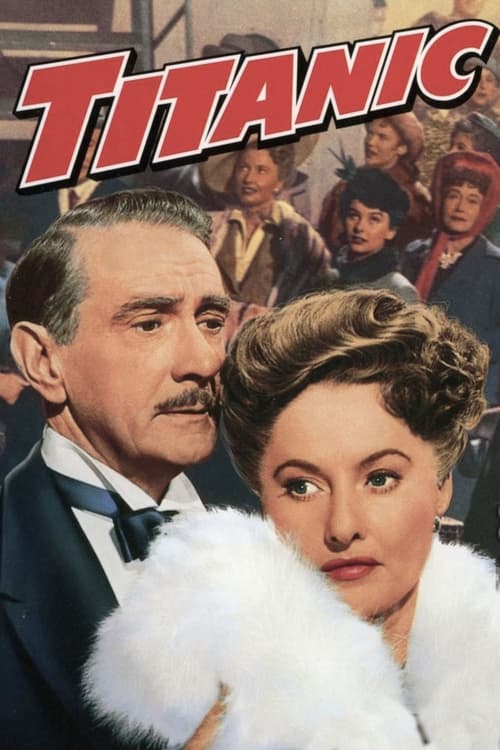
Titanic
Unhappily married, Julia Sturges decides to go to America with her two children on the Titanic. Her husband, Richard also arranges passage on the luxury liner so as to have custody of their two children. All this fades to insignificance once the ship hits an iceberg.
Despite its limited budget of $1.8M, Titanic became a solid performer, earning $4.9M worldwide—a 172% return.


Plot Structure
Story beats plotted across runtime


Narrative Arc
Emotional journey through the story's key moments
Story Circle
Blueprint 15-beat structure
Arcplot Score Breakdown
Weighted: Precision (70%) + Arc (15%) + Theme (15%)
Titanic (1953) showcases precise plot construction, characteristic of Jean Negulesco's storytelling approach. This structural analysis examines how the film's 15-point plot structure maps to proven narrative frameworks across 1 hour and 38 minutes. With an Arcplot score of 7.4, the film balances conventional beats with creative variation.
Characters
Cast & narrative archetypes

Richard Sturges
Julia Sturges
Annette Sturges
Norman Sturges
Gifford Rogers
Captain Edward Smith
Maude Young
Main Cast & Characters
Richard Sturges
Played by Clifton Webb
A young second officer aboard the Titanic who falls in love with a first-class passenger and faces moral dilemmas during the disaster.
Julia Sturges
Played by Barbara Stanwyck
Richard's estranged wife traveling with their children, determined to leave her unhappy marriage and start anew in America.
Annette Sturges
Played by Audrey Dalton
The teenage daughter of Richard and Julia, caught between her parents' marital conflict while experiencing first romance.
Norman Sturges
Played by Harper Carter
The young son of Richard and Julia, an innocent observer of his family's dissolution during the voyage.
Gifford Rogers
Played by Robert Wagner
A wealthy tennis player and Annette's romantic interest, representing the carefree upper class lifestyle.
Captain Edward Smith
Played by Brian Aherne
The commanding officer of the Titanic on its maiden voyage, facing pressure to maintain speed despite ice warnings.
Maude Young
Played by Thelma Ritter
A cynical social climber who befriends Julia and provides commentary on upper-class society.
Structural Analysis
The Status Quo at 1 minutes (1% through the runtime) establishes Julia Sturges boards Titanic with her children, fleeing her estranged husband Richard. The family appears intact but tensions simmer beneath the surface of upper-class propriety.. The analysis reveals that this early placement immediately immerses viewers in the story world.
The inciting incident occurs at 12 minutes when Richard Sturges appears on board, having secretly booked passage to prevent Julia from taking his children to America. The fragile status quo shatters as the marital conflict becomes unavoidable.. At 12% through the film, this Disruption aligns precisely with traditional story structure. This beat shifts the emotional landscape, launching the protagonist into the central conflict.
The First Threshold at 25 minutes marks the transition into Act II, occurring at 26% of the runtime. This reveals the protagonist's commitment to Richard reveals devastating information about their son's true parentage, weaponizing family secrets. Both parents cross into a new world where pretense is stripped away and painful truths must be confronted., moving from reaction to action.
At 49 minutes, the Midpoint arrives at 50% of the runtime—precisely centered, creating perfect narrative symmetry. Notably, this crucial beat The Titanic strikes the iceberg. A false sense of security (the "unsinkable" ship, the Sturges' maintained facades) is shattered. The stakes are now life and death, and all petty conflicts pale against mortality., fundamentally raising what's at risk. The emotional intensity shifts, dividing the narrative into clear before-and-after phases.
The Collapse moment at 74 minutes (76% through) represents the emotional nadir. Here, Richard gives up his seat in a lifeboat, ensuring his children's survival while accepting his own death. The ultimate sacrifice strips away all pride and pretense—a literal 'whiff of death' as he chooses to go down with the ship., indicates the protagonist at their lowest point. This beat's placement in the final quarter sets up the climactic reversal.
The Second Threshold at 79 minutes initiates the final act resolution at 81% of the runtime. Julia realizes Richard's sacrifice was an act of love, not defeat. She understands the children witnessed their father's true character in his final moments. The synthesis: love transcends pride and possession., demonstrating the transformation achieved throughout the journey.
Emotional Journey
Titanic's emotional architecture traces a deliberate progression across 15 carefully calibrated beats.
Narrative Framework
This structural analysis employs structural analysis methodology used to understand storytelling architecture. By mapping Titanic against these established plot points, we can identify how Jean Negulesco utilizes or subverts traditional narrative conventions. The plot point approach reveals not only adherence to structural principles but also creative choices that distinguish Titanic within the drama genre.
Jean Negulesco's Structural Approach
Among the 2 Jean Negulesco films analyzed on Arcplot, the average structural score is 7.3, reflecting strong command of classical structure. Titanic represents one of the director's most structurally precise works. For comparative analysis, explore the complete Jean Negulesco filmography.
Comparative Analysis
Additional drama films include After Thomas, South Pacific and Dirty Dancing: Havana Nights. For more Jean Negulesco analyses, see How to Marry a Millionaire.
Plot Points by Act
Act I
SetupStatus Quo
Julia Sturges boards Titanic with her children, fleeing her estranged husband Richard. The family appears intact but tensions simmer beneath the surface of upper-class propriety.
Theme
A fellow passenger observes that 'pride comes before a fall,' foreshadowing both the ship's fate and the Sturges family's need to abandon their prideful facades before catastrophe strikes.
Worldbuilding
Establishment of the Titanic's social hierarchy and the Sturges family dynamics. Julia reveals she's taking the children to America to escape Richard's influence. Richard unexpectedly boards, creating immediate conflict.
Disruption
Richard Sturges appears on board, having secretly booked passage to prevent Julia from taking his children to America. The fragile status quo shatters as the marital conflict becomes unavoidable.
Resistance
Richard and Julia navigate their public roles while privately battling over their children's future. Their son Annette befriends a young tennis player, while daughter Norman debates whether to side with mother or father.
Act II
ConfrontationFirst Threshold
Richard reveals devastating information about their son's true parentage, weaponizing family secrets. Both parents cross into a new world where pretense is stripped away and painful truths must be confronted.
Mirror World
The young romance between Annette and Gifford Rogers blooms, representing the genuine connection and honesty that the elder Sturges have lost. Their authentic affection mirrors what Richard and Julia once had.
Premise
The voyage continues as both couples navigate their relationships. Richard and Julia are forced into proximity, revisiting their shared history while the ship sails toward disaster. Class divisions and personal revelations intertwine.
Midpoint
The Titanic strikes the iceberg. A false sense of security (the "unsinkable" ship, the Sturges' maintained facades) is shattered. The stakes are now life and death, and all petty conflicts pale against mortality.
Opposition
Chaos erupts as passengers realize the ship is sinking. The Sturges family must navigate both physical danger and emotional reckoning. Class barriers break down as 'women and children first' becomes the desperate priority.
Collapse
Richard gives up his seat in a lifeboat, ensuring his children's survival while accepting his own death. The ultimate sacrifice strips away all pride and pretense—a literal 'whiff of death' as he chooses to go down with the ship.
Crisis
Julia and the children are in the lifeboat, watching the Titanic sink with Richard aboard. The family processes the magnitude of loss and Richard's redemptive final act, confronting what truly mattered all along.
Act III
ResolutionSecond Threshold
Julia realizes Richard's sacrifice was an act of love, not defeat. She understands the children witnessed their father's true character in his final moments. The synthesis: love transcends pride and possession.
Synthesis
The survivors are rescued. Julia holds her family together with the memory of Richard's nobility. The children inherit not their parents' bitterness but their father's final lesson: sacrifice, not selfishness, defines love.
Transformation
Julia and the children, wrapped in blankets aboard the rescue ship, are forever changed. Where once there was fractured pride, now exists unity forged through tragedy. Richard's death gave them the family they never truly had.