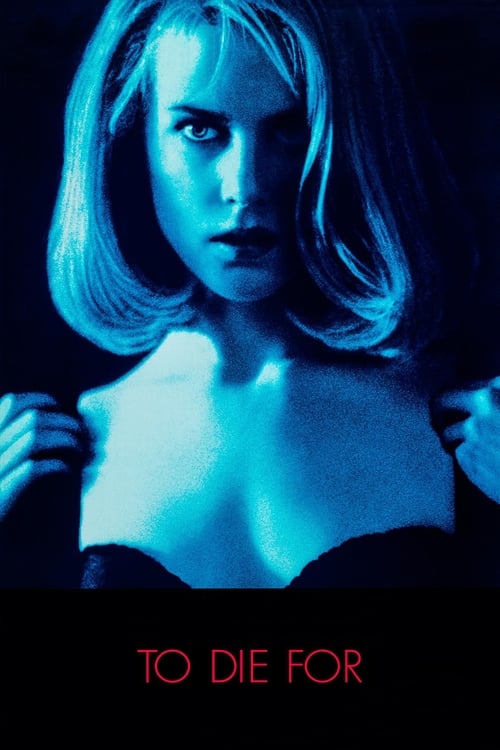
To Die For
Suzanne Stone wants to be a world-famous news anchor and she is willing to do anything to get what she wants. What she lacks in intelligence, she makes up for in cold determination and diabolical wiles. As she pursues her goal with relentless focus, she is forced to destroy anything and anyone that may stand in her way, regardless of the ultimate cost or means necessary.
Working with a mid-range budget of $20.0M, the film achieved a respectable showing with $21.3M in global revenue (+7% profit margin).
Nominated for 1 BAFTA Award7 wins & 17 nominations


Plot Structure
Story beats plotted across runtime


Narrative Arc
Emotional journey through the story's key moments
Story Circle
Blueprint 15-beat structure
Arcplot Score Breakdown
Weighted: Precision (70%) + Arc (15%) + Theme (15%)
To Die For (1995) showcases meticulously timed story structure, characteristic of Gus Van Sant's storytelling approach. This structural analysis examines how the film's 15-point plot structure maps to proven narrative frameworks across 1 hour and 46 minutes. With an Arcplot score of 6.8, the film balances conventional beats with creative variation.
Characters
Cast & narrative archetypes

Suzanne Stone Maretto
Larry Maretto
Jimmy Emmett
Lydia Mertz
Russell Hines
Janice Maretto
Joe Maretto
Angela Maretto
Main Cast & Characters
Suzanne Stone Maretto
Played by Nicole Kidman
An ambitious small-town weather girl obsessed with becoming a famous television personality, willing to do anything to achieve stardom.
Larry Maretto
Played by Matt Dillon
Suzanne's loving husband who works in his family's Italian restaurant, hoping to settle into a traditional married life.
Jimmy Emmett
Played by Joaquin Phoenix
A naive high school student who becomes infatuated with Suzanne and falls under her manipulative influence.
Lydia Mertz
Played by Alison Folland
A troubled teenage girl and Jimmy's friend who participates in Suzanne's documentary project and the conspiracy.
Russell Hines
Played by Casey Affleck
A dim-witted high school student who joins Jimmy and Lydia in the plot orchestrated by Suzanne.
Janice Maretto
Played by Illeana Douglas
Larry's sister who is suspicious of Suzanne from the beginning and becomes instrumental in seeking justice.
Joe Maretto
Played by Dan Hedaya
Larry's father who runs the family Italian restaurant and represents traditional family values.
Angela Maretto
Played by Maria Tucci
Larry's mother who initially tries to welcome Suzanne into the family despite reservations.
Structural Analysis
The Status Quo at 1 minutes (1% through the runtime) establishes Documentary-style interview footage introduces Suzanne Stone as a beautiful, ambitious small-town woman obsessed with becoming famous. She performs for the camera, establishing her superficiality and desperate need for attention.. Of particular interest, this early placement immediately immerses viewers in the story world.
The inciting incident occurs at 12 minutes when Suzanne realizes her husband Larry and his family expectations are obstacles to her television career dreams. His ordinary life goals directly conflict with her ambitions for fame.. At 12% through the film, this Disruption aligns precisely with traditional story structure. This beat shifts the emotional landscape, launching the protagonist into the central conflict.
The First Threshold at 26 minutes marks the transition into Act II, occurring at 24% of the runtime. This illustrates the protagonist's commitment to Suzanne actively chooses to seduce teenager Jimmy Emmett and manipulate him and his friends (Lydia and Russell) for her documentary project. This is her deliberate entry into moral corruption., moving from reaction to action.
At 54 minutes, the Midpoint arrives at 50% of the runtime—precisely centered, creating perfect narrative symmetry. Structural examination shows that this crucial beat False victory: Suzanne convinces Jimmy and Russell to actually murder Larry. The stakes raise enormously - she's now orchestrating actual murder. What seemed like dark comedy becomes genuinely dangerous., fundamentally raising what's at risk. The emotional intensity shifts, dividing the narrative into clear before-and-after phases.
The Collapse moment at 78 minutes (74% through) represents the emotional nadir. Here, The teenagers confess or are caught. Suzanne's entire scheme falls apart as evidence points to her involvement. Her dream of fame becomes a nightmare - she's notorious but as a murderer, not a star. "Whiff of death": her career and freedom die., indicates the protagonist at their lowest point. This beat's placement in the final quarter sets up the climactic reversal.
The Second Threshold at 84 minutes initiates the final act resolution at 80% of the runtime. Larry's family (particularly his father) realizes Suzanne will escape justice through the legal system and makes the decision to take matters into their own hands. The synthesis: they use her own tactics against her., demonstrating the transformation achieved throughout the journey.
Emotional Journey
To Die For's emotional architecture traces a deliberate progression across 15 carefully calibrated beats.
Narrative Framework
This structural analysis employs a 15-point narrative structure framework that maps key story moments. By mapping To Die For against these established plot points, we can identify how Gus Van Sant utilizes or subverts traditional narrative conventions. The plot point approach reveals not only adherence to structural principles but also creative choices that distinguish To Die For within the drama genre.
Gus Van Sant's Structural Approach
Among the 11 Gus Van Sant films analyzed on Arcplot, the average structural score is 6.8, demonstrating varied approaches to story architecture. To Die For exemplifies the director's characteristic narrative technique. For comparative analysis, explore the complete Gus Van Sant filmography.
Comparative Analysis
Additional drama films include After Thomas, South Pacific and Dirty Dancing: Havana Nights. For more Gus Van Sant analyses, see Good Will Hunting, Finding Forrester and Elephant.
Plot Points by Act
Act I
SetupStatus Quo
Documentary-style interview footage introduces Suzanne Stone as a beautiful, ambitious small-town woman obsessed with becoming famous. She performs for the camera, establishing her superficiality and desperate need for attention.
Theme
Suzanne's father figure or mentor comments: "You aren't really anybody in America if you're not on TV." This encapsulates the film's critique of celebrity culture and empty fame.
Worldbuilding
Mockumentary-style setup establishes Suzanne's marriage to Larry Maretto, her job as a small-town weather girl, and her burning ambition to become a network television star. We see her charm, manipulation, and complete self-absorption.
Disruption
Suzanne realizes her husband Larry and his family expectations are obstacles to her television career dreams. His ordinary life goals directly conflict with her ambitions for fame.
Resistance
Suzanne gets a documentary project at the local cable station, giving her a camera and some authority. She debates how to leverage this opportunity, meeting high school students including Jimmy Emmett, and beginning to formulate her plan.
Act II
ConfrontationFirst Threshold
Suzanne actively chooses to seduce teenager Jimmy Emmett and manipulate him and his friends (Lydia and Russell) for her documentary project. This is her deliberate entry into moral corruption.
Mirror World
Jimmy Emmett becomes the mirror character - an impressionable teenager who represents authentic but misguided devotion. His genuine feelings contrast with Suzanne's complete phoniness, embodying what real human connection looks like.
Premise
The "fun and games" of watching Suzanne manipulate the teenagers, seduce Jimmy, and gradually plant the idea of murdering her husband Larry. We see her calculated charm and complete moral bankruptcy on full display.
Midpoint
False victory: Suzanne convinces Jimmy and Russell to actually murder Larry. The stakes raise enormously - she's now orchestrating actual murder. What seemed like dark comedy becomes genuinely dangerous.
Opposition
Larry is murdered. Suzanne plays the grieving widow for cameras while pressure builds: the teenagers become liabilities, Larry's family grows suspicious, and the investigation intensifies. Her manipulation becomes harder to maintain.
Collapse
The teenagers confess or are caught. Suzanne's entire scheme falls apart as evidence points to her involvement. Her dream of fame becomes a nightmare - she's notorious but as a murderer, not a star. "Whiff of death": her career and freedom die.
Crisis
Suzanne attempts damage control, trying to spin the story and maintain her image even as everything crumbles. She remains in denial about the consequences, still performing for cameras.
Act III
ResolutionSecond Threshold
Larry's family (particularly his father) realizes Suzanne will escape justice through the legal system and makes the decision to take matters into their own hands. The synthesis: they use her own tactics against her.
Synthesis
The finale shows Suzanne attempting to flee and rebuild her image. Larry's family arranges her execution. The story resolves with Suzanne meeting the same fate she arranged for her husband.
Transformation
Final image: Suzanne's dead body under ice, a stark contrast to the opening image of her performing for cameras. She achieved her wish to be remembered, but as a cautionary tale. Negative arc complete.