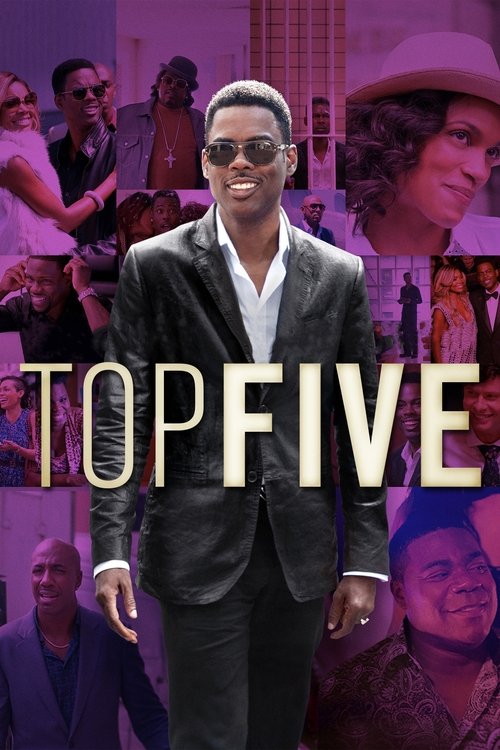
Top Five
Though he began in stand-up comedy, Andre Allen hit the big-time as the star of a trilogy of action-comedies about a talking bear but now he wants to be taken seriously. His passion project about the Haitian Revolution, a movie called Uprize, was panned by the NY Times film critic. A couple days before the wedding to his reality star fiancée, he's forced to spend the day with Chelsea Brown, a profile writer for the New York Times. Unexpectedly, he opens up to her, and as they wind their way across New York, he tries to get back in touch with his comedic roots.
Despite its tight budget of $12.0M, Top Five became a solid performer, earning $26.1M worldwide—a 118% return.
5 wins & 21 nominations


Plot Structure
Story beats plotted across runtime


Narrative Arc
Emotional journey through the story's key moments
Story Circle
Blueprint 15-beat structure
Arcplot Score Breakdown
Weighted: Precision (70%) + Arc (15%) + Theme (15%)
Top Five (2014) demonstrates carefully calibrated narrative design, characteristic of Chris Rock's storytelling approach. This structural analysis examines how the film's 15-point plot structure maps to proven narrative frameworks across 1 hour and 42 minutes. With an Arcplot score of 6.6, the film balances conventional beats with creative variation.
Characters
Cast & narrative archetypes

Andre Allen
Chelsea Brown
Erica Long
Silk
Jazzy
Brad
Main Cast & Characters
Andre Allen
Played by Chris Rock
A former comedian turned serious actor struggling with his identity and career transition while being interviewed by a journalist.
Chelsea Brown
Played by Rosario Dawson
A New York Times journalist assigned to interview Andre, who challenges him to be authentic and reflect on his life choices.
Erica Long
Played by Gabrielle Union
Andre's reality TV star fiancée who is more interested in publicity and their televised wedding than genuine connection.
Silk
Played by J.B. Smoove
Andre's best friend and manager who keeps him grounded and supports his career decisions.
Jazzy
Played by Cedric the Entertainer
Andre's tough-talking bodyguard who provides comic relief and loyal protection.
Brad
Played by Anders Holm
Chelsea's boyfriend who represents the conventional life path and becomes a source of tension.
Structural Analysis
The Status Quo at 1 minutes (1% through the runtime) establishes Andre Allen arrives at radio interview, appearing controlled and serious, promoting his dramatic film "Uprize" while trying to distance himself from his comedy past as Hammy the Bear.. The analysis reveals that this early placement immediately immerses viewers in the story world.
The inciting incident occurs at 12 minutes when Andre learns his dramatic film "Uprize" is getting terrible reviews and will likely bomb. His reinvention as a serious actor is failing publicly.. At 12% through the film, this Disruption aligns precisely with traditional story structure. This beat shifts the emotional landscape, launching the protagonist into the central conflict.
The First Threshold at 26 minutes marks the transition into Act II, occurring at 25% of the runtime. This illustrates the protagonist's commitment to Andre decides to truly engage with Chelsea's interview, beginning to open up about his real self, his past, and his struggles. He commits to an honest day of self-exploration., moving from reaction to action.
At 51 minutes, the Midpoint arrives at 50% of the runtime—precisely centered, creating perfect narrative symmetry. Notably, this crucial beat Andre and Chelsea share an intimate moment of real connection; he realizes he has genuine feelings for her and questions his upcoming wedding to Erica. False victory - he feels alive again., fundamentally raising what's at risk. The emotional intensity shifts, dividing the narrative into clear before-and-after phases.
The Collapse moment at 77 minutes (75% through) represents the emotional nadir. Here, Andre discovers Chelsea's article will expose painful truths about his life; he feels betrayed. His hope for authentic connection dies. He retreats to going through with the fake wedding., indicates the protagonist at their lowest point. This beat's placement in the final quarter sets up the climactic reversal.
The Second Threshold at 82 minutes initiates the final act resolution at 80% of the runtime. Andre realizes he must be true to himself regardless of consequences. He understands that authenticity matters more than image, comedy is his truth, and real connection (Chelsea) beats fake celebrity (Erica)., demonstrating the transformation achieved throughout the journey.
Emotional Journey
Top Five's emotional architecture traces a deliberate progression across 15 carefully calibrated beats.
Narrative Framework
This structural analysis employs a 15-point narrative structure framework that maps key story moments. By mapping Top Five against these established plot points, we can identify how Chris Rock utilizes or subverts traditional narrative conventions. The plot point approach reveals not only adherence to structural principles but also creative choices that distinguish Top Five within the drama genre.
Chris Rock's Structural Approach
Among the 3 Chris Rock films analyzed on Arcplot, the average structural score is 7.0, demonstrating varied approaches to story architecture. Top Five takes a more unconventional approach compared to the director's typical style. For comparative analysis, explore the complete Chris Rock filmography.
Comparative Analysis
Additional drama films include After Thomas, South Pacific and Dirty Dancing: Havana Nights. For more Chris Rock analyses, see Head of State, I Think I Love My Wife.
Plot Points by Act
Act I
SetupStatus Quo
Andre Allen arrives at radio interview, appearing controlled and serious, promoting his dramatic film "Uprize" while trying to distance himself from his comedy past as Hammy the Bear.
Theme
Chelsea Brown challenges Andre about authenticity: "You can't be somebody you're not." The theme of authenticity vs. image, being true to yourself vs. what others expect.
Worldbuilding
Establishing Andre's world: his failed serious film, upcoming wedding to reality star Erica, his sobriety, his struggle with identity, and the Times profile interview with Chelsea beginning.
Disruption
Andre learns his dramatic film "Uprize" is getting terrible reviews and will likely bomb. His reinvention as a serious actor is failing publicly.
Resistance
Andre and Chelsea spend the day together; he resists opening up, she pushes him to be real. They visit his old neighborhood, discuss his past, his comedy, and his attempts to be taken seriously.
Act II
ConfrontationFirst Threshold
Andre decides to truly engage with Chelsea's interview, beginning to open up about his real self, his past, and his struggles. He commits to an honest day of self-exploration.
Mirror World
Deepening connection with Chelsea, who represents authenticity and truth. She challenges him intellectually and emotionally, showing him what genuine connection looks like versus his fake celebrity life.
Premise
The "interview day" - Andre and Chelsea tour NYC, visiting his comedy roots, meeting old friends (including the hilarious bachelor party scene), exploring his authentic self while growing closer.
Midpoint
Andre and Chelsea share an intimate moment of real connection; he realizes he has genuine feelings for her and questions his upcoming wedding to Erica. False victory - he feels alive again.
Opposition
Reality closes in: wedding obligations, Erica's reality show demands, bad film reviews mounting, Andre's internal conflict between authentic self and public image intensifies.
Collapse
Andre discovers Chelsea's article will expose painful truths about his life; he feels betrayed. His hope for authentic connection dies. He retreats to going through with the fake wedding.
Crisis
Andre processes the loss, prepares for his wedding to Erica, resigned to living the inauthentic life. Dark moment of surrendering to what others expect rather than being himself.
Act III
ResolutionSecond Threshold
Andre realizes he must be true to himself regardless of consequences. He understands that authenticity matters more than image, comedy is his truth, and real connection (Chelsea) beats fake celebrity (Erica).
Synthesis
Andre calls off the wedding publicly, embraces his comedy roots, performs stand-up again, and pursues genuine connection with Chelsea. He integrates his authentic self with his public life.
Transformation
Andre performs stand-up comedy again at a small club, fully himself, laughing and authentic. Chelsea watches - real connection. He's transformed from someone hiding behind seriousness to embracing his true comedic self.