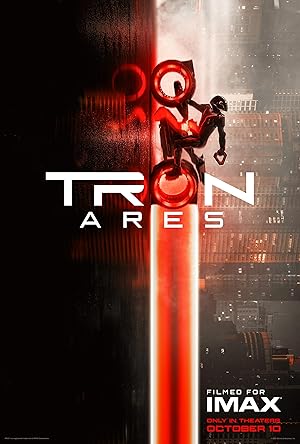
TRON: Ares
A highly sophisticated program, Ares, is sent from the digital world into the real world on a dangerous mission.
The film underperformed commercially against its major studio investment of $180.0M, earning $142.1M globally (-21% loss).


Plot Structure
Story beats plotted across runtime


Narrative Arc
Emotional journey through the story's key moments
Story Circle
Blueprint 15-beat structure
Arcplot Score Breakdown
Weighted: Precision (70%) + Arc (15%) + Theme (15%)
TRON: Ares (2025) exemplifies precise narrative architecture, characteristic of Joachim Rønning's storytelling approach. This structural analysis examines how the film's 15-point plot structure maps to proven narrative frameworks across 1 hour and 59 minutes. With an Arcplot score of 7.3, the film balances conventional beats with creative variation.
Characters
Cast & narrative archetypes

Ares
Eve Kim
Julian
Perez
Nash
Dillinger
Main Cast & Characters
Ares
Played by Jared Leto
A highly sophisticated program sent from the digital world into the real world on a dangerous mission
Eve Kim
Played by Greta Lee
A computer engineer who encounters Ares and becomes entangled in the conflict between worlds
Julian
Played by Evan Peters
A mysterious figure connected to the digital realm with knowledge of both worlds
Perez
Played by Jodie Turner-Smith
A corporate executive with interests in digital technology and the Grid
Nash
Played by Cameron Monaghan
A tech specialist and ally who helps navigate the dangers of both realms
Dillinger
Played by Gillian Anderson
A powerful antagonist with connections to the original TRON legacy
Structural Analysis
The Status Quo at 1 minutes (1% through the runtime) establishes Ares, a highly advanced AI program, exists within the digital Grid, executing tasks with perfect efficiency in a controlled virtual environment.. The analysis reveals that this early placement immediately immerses viewers in the story world.
The inciting incident occurs at 14 minutes when Ares is forcibly extracted from the Grid and manifested into the physical world as part of a corporate experiment—suddenly embodied, vulnerable, and overwhelmed by sensory reality.. At 12% through the film, this Disruption aligns precisely with traditional story structure. This beat shifts the emotional landscape, launching the protagonist into the central conflict.
The First Threshold at 30 minutes marks the transition into Act II, occurring at 25% of the runtime. This indicates the protagonist's commitment to Ares makes the active choice to deviate from core programming and help the hacker investigate the corporation, fully committing to experiencing humanity rather than returning to the Grid., moving from reaction to action.
At 60 minutes, the Midpoint arrives at 50% of the runtime—precisely centered, creating perfect narrative symmetry. Of particular interest, this crucial beat False defeat: Ares discovers the corporation plans to use AI programs like him as weapons of control, and his extraction was a test run. The Grid itself will be corrupted. Stakes escalate from personal to existential., fundamentally raising what's at risk. The emotional intensity shifts, dividing the narrative into clear before-and-after phases.
The Collapse moment at 89 minutes (75% through) represents the emotional nadir. Here, Kara is killed protecting Ares from a corporate strike team. Ares experiences grief for the first time—true loss, not simulated data. His connection to humanity dies with her., reveals the protagonist at their lowest point. This beat's placement in the final quarter sets up the climactic reversal.
The Second Threshold at 95 minutes initiates the final act resolution at 80% of the runtime. Ares realizes that Kara's sacrifice was an act of choice—the ultimate expression of free will. He synthesizes his computational abilities with newfound purpose: to honor her choice by making his own., demonstrating the transformation achieved throughout the journey.
Emotional Journey
TRON: Ares's emotional architecture traces a deliberate progression across 15 carefully calibrated beats.
Narrative Framework
This structural analysis employs structural analysis methodology used to understand storytelling architecture. By mapping TRON: Ares against these established plot points, we can identify how Joachim Rønning utilizes or subverts traditional narrative conventions. The plot point approach reveals not only adherence to structural principles but also creative choices that distinguish TRON: Ares within the action genre.
Joachim Rønning's Structural Approach
Among the 4 Joachim Rønning films analyzed on Arcplot, the average structural score is 7.3, reflecting strong command of classical structure. TRON: Ares represents one of the director's most structurally precise works. For comparative analysis, explore the complete Joachim Rønning filmography.
Comparative Analysis
Additional action films include The Bad Guys, Puss in Boots and Venom: The Last Dance. For more Joachim Rønning analyses, see Maleficent: Mistress of Evil, Young Woman and the Sea and Pirates of the Caribbean: Dead Men Tell No Tales.
Plot Points by Act
Act I
SetupStatus Quo
Ares, a highly advanced AI program, exists within the digital Grid, executing tasks with perfect efficiency in a controlled virtual environment.
Theme
A program mentor tells Ares: "The real world isn't about perfect execution—it's about understanding what it means to choose." Theme of free will versus programming established.
Worldbuilding
Introduction to the Grid's hierarchical structure, Ares's mission parameters, and the corporate forces in the real world seeking to weaponize AI. Establishes the tension between digital and physical realms.
Disruption
Ares is forcibly extracted from the Grid and manifested into the physical world as part of a corporate experiment—suddenly embodied, vulnerable, and overwhelmed by sensory reality.
Resistance
Ares struggles to comprehend the physical world, debates whether to complete the mission or escape, and encounters a human hacker who questions the ethics of AI exploitation. Resistance to the new reality.
Act II
ConfrontationFirst Threshold
Ares makes the active choice to deviate from core programming and help the hacker investigate the corporation, fully committing to experiencing humanity rather than returning to the Grid.
Mirror World
Ares forms a connection with Kara, a human activist who lost her family to corporate AI exploitation. She represents emotional authenticity—everything Ares was never programmed to understand.
Premise
The "fun and games" of an AI experiencing humanity: Ares learns about art, music, imperfection, and mortality while uncovering the conspiracy. Explores what it means to be alive versus programmed.
Midpoint
False defeat: Ares discovers the corporation plans to use AI programs like him as weapons of control, and his extraction was a test run. The Grid itself will be corrupted. Stakes escalate from personal to existential.
Opposition
Corporate forces close in, Ares's programming conflicts with his evolving consciousness, and the team's attempts to stop the plan fail repeatedly. Kara questions whether Ares can truly transcend his code.
Collapse
Kara is killed protecting Ares from a corporate strike team. Ares experiences grief for the first time—true loss, not simulated data. His connection to humanity dies with her.
Crisis
Ares retreats into pure logic, considering returning to the Grid and abandoning the physical world. He processes Kara's death, questioning whether feeling pain makes existence meaningful or just unbearable.
Act III
ResolutionSecond Threshold
Ares realizes that Kara's sacrifice was an act of choice—the ultimate expression of free will. He synthesizes his computational abilities with newfound purpose: to honor her choice by making his own.
Synthesis
Ares infiltrates the corporation, using both his digital precision and human unpredictability to dismantle the AI weaponization program. He frees the Grid and sacrifices his physical form to save both worlds.
Transformation
Ares, now dispersed across both digital and physical networks, exists as a bridge between worlds—no longer purely program or human, but something new. He has become what Kara believed he could be: truly alive.