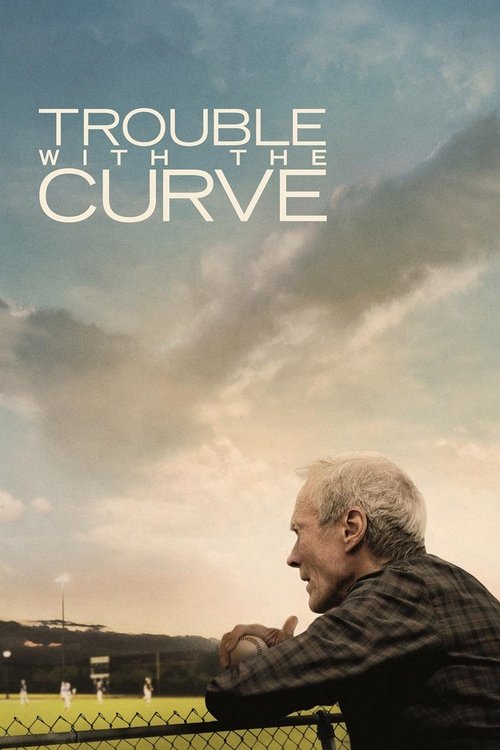
Trouble with the Curve
Slowed by age and failing eyesight, crack baseball scout Gus Lobel takes his grown daughter along as he checks out the final prospect of his career. Along the way, the two renew their bond, and she catches the eye of a young player-turned-scout.
The film underperformed commercially against its respectable budget of $60.0M, earning $49.0M globally (-18% loss).
2 wins & 1 nomination


Plot Structure
Story beats plotted across runtime


Narrative Arc
Emotional journey through the story's key moments
Story Circle
Blueprint 15-beat structure
Arcplot Score Breakdown
Weighted: Precision (70%) + Arc (15%) + Theme (15%)
Trouble with the Curve (2012) exhibits meticulously timed narrative design, characteristic of Robert Lorenz's storytelling approach. This structural analysis examines how the film's 15-point plot structure maps to proven narrative frameworks across 1 hour and 51 minutes. With an Arcplot score of 6.5, the film balances conventional beats with creative variation.
Characters
Cast & narrative archetypes

Gus Lobel
Mickey Lobel
Johnny Flanagan
Pete Klein
Max
Main Cast & Characters
Gus Lobel
Played by Clint Eastwood
Aging Atlanta Braves scout losing his eyesight, stubbornly clinging to traditional scouting methods while facing forced retirement.
Mickey Lobel
Played by Amy Adams
High-powered attorney and Gus's estranged daughter who reluctantly accompanies him on a scouting trip to reconnect.
Johnny Flanagan
Played by Justin Timberlake
Former baseball player turned scout and Gus's longtime friend who provides support and companionship.
Pete Klein
Played by Matthew Lillard
Ambitious young executive at the Braves who pushes for analytics over traditional scouting and wants Gus out.
Max
Played by Robert Patrick
Gus's loyal friend and fellow scout who understands his old-school methods and values.
Structural Analysis
The Status Quo at 1 minutes (1% through the runtime) establishes Gus Lobel, an aging Atlanta Braves scout, struggles alone in his dark house, having difficulty urinating—a physical manifestation of his declining health and stubborn isolation from others.. Of particular interest, this early placement immediately immerses viewers in the story world.
The inciting incident occurs at 13 minutes when Gus's failing eyesight is revealed when he nearly gets hit by a car he didn't see, threatening his ability to scout Bo Gentry, a top prospect whose evaluation could determine his career's future.. At 12% through the film, this Disruption aligns precisely with traditional story structure. This beat shifts the emotional landscape, launching the protagonist into the central conflict.
The First Threshold at 28 minutes marks the transition into Act II, occurring at 25% of the runtime. This shows the protagonist's commitment to Mickey arrives in North Carolina and confronts her father at the ballpark, choosing to stay and help him scout Bo Gentry despite years of emotional distance between them., moving from reaction to action.
At 56 minutes, the Midpoint arrives at 50% of the runtime—precisely centered, creating perfect narrative symmetry. Structural examination shows that this crucial beat Mickey discovers the truth about her childhood—that Gus sent her away after her mother's death not from rejection but to protect her from an abusive situation. This false defeat reframes their entire relationship but also surfaces deep pain that has festered for decades., fundamentally raising what's at risk. The emotional intensity shifts, dividing the narrative into clear before-and-after phases.
The Collapse moment at 83 minutes (75% through) represents the emotional nadir. Here, Gus is effectively fired from the Braves organization, his decades of loyal service dismissed in favor of computer analytics. His scouting career—his entire identity—appears to be over, and Mickey must return to Atlanta for her partnership decision, leaving him alone., reveals the protagonist at their lowest point. This beat's placement in the final quarter sets up the climactic reversal.
The Second Threshold at 89 minutes initiates the final act resolution at 80% of the runtime. Mickey realizes she doesn't want the law partnership—she wants baseball and connection. She makes the choice to reject the safe path and return to help her father, synthesizing her legal skills with her inherited scouting instincts., demonstrating the transformation achieved throughout the journey.
Emotional Journey
Trouble with the Curve's emotional architecture traces a deliberate progression across 15 carefully calibrated beats.
Narrative Framework
This structural analysis employs proven narrative structure principles that track dramatic progression. By mapping Trouble with the Curve against these established plot points, we can identify how Robert Lorenz utilizes or subverts traditional narrative conventions. The plot point approach reveals not only adherence to structural principles but also creative choices that distinguish Trouble with the Curve within the drama genre.
Robert Lorenz's Structural Approach
Among the 2 Robert Lorenz films analyzed on Arcplot, the average structural score is 6.6, demonstrating varied approaches to story architecture. Trouble with the Curve takes a more unconventional approach compared to the director's typical style. For comparative analysis, explore the complete Robert Lorenz filmography.
Comparative Analysis
Additional drama films include After Thomas, South Pacific and Dirty Dancing: Havana Nights. For more Robert Lorenz analyses, see The Marksman.
Plot Points by Act
Act I
SetupStatus Quo
Gus Lobel, an aging Atlanta Braves scout, struggles alone in his dark house, having difficulty urinating—a physical manifestation of his declining health and stubborn isolation from others.
Theme
Pete Klein tells Gus that he can't do everything alone and needs to let people help him, establishing the film's theme about the importance of human connection over stubborn independence.
Worldbuilding
The world of professional baseball scouting is established, showing the conflict between old-school methods and new computer-based analytics. Gus's strained relationship with daughter Mickey is introduced, as is the corporate pressure from executive Phillip Sanderson who favors statistical analysis over traditional scouting.
Disruption
Gus's failing eyesight is revealed when he nearly gets hit by a car he didn't see, threatening his ability to scout Bo Gentry, a top prospect whose evaluation could determine his career's future.
Resistance
Pete Klein urges Mickey to accompany her father on his scouting trip to North Carolina. Mickey debates whether to put her law partnership on hold, wrestling with her resentment toward Gus while recognizing he needs help. She ultimately decides to go despite her conflicted feelings.
Act II
ConfrontationFirst Threshold
Mickey arrives in North Carolina and confronts her father at the ballpark, choosing to stay and help him scout Bo Gentry despite years of emotional distance between them.
Mirror World
Johnny Flanagan, a former pitcher whose career Gus once ended with an honest assessment, reappears as a rival scout. His warm interactions with Mickey introduce a romantic subplot that will help her open up emotionally and model healthy vulnerability.
Premise
Mickey and Gus attend games together, evaluating Bo Gentry while gradually reconnecting. Mickey demonstrates her own exceptional eye for talent, inherited from her father. Her romance with Johnny develops through playful banter and shared baseball knowledge. The tension between old-school scouting and analytics plays out through Gus's conflict with Phillip Sanderson.
Midpoint
Mickey discovers the truth about her childhood—that Gus sent her away after her mother's death not from rejection but to protect her from an abusive situation. This false defeat reframes their entire relationship but also surfaces deep pain that has festered for decades.
Opposition
Gus's vision continues deteriorating, making his scouting increasingly difficult. Phillip Sanderson pushes for Bo Gentry despite Gus's reservations about the player's character. Mickey's law firm pressures her to return for her partnership vote. The father-daughter reconciliation stalls as old wounds prove difficult to heal.
Collapse
Gus is effectively fired from the Braves organization, his decades of loyal service dismissed in favor of computer analytics. His scouting career—his entire identity—appears to be over, and Mickey must return to Atlanta for her partnership decision, leaving him alone.
Crisis
Mickey returns to Atlanta conflicted, facing the partnership vote while processing her complicated feelings about her father. Gus sits alone, confronting the end of his career and the possibility that he's pushed away everyone who matters.
Act III
ResolutionSecond Threshold
Mickey realizes she doesn't want the law partnership—she wants baseball and connection. She makes the choice to reject the safe path and return to help her father, synthesizing her legal skills with her inherited scouting instincts.
Synthesis
Mickey returns to the final showcase where Bo Gentry is being evaluated. She spots Rigo Sanchez, a peanut vendor with an incredible arm, and convinces the Braves to give him a tryout. Rigo strikes out Bo Gentry, proving both that Mickey has her father's gift and that Gus was right about Bo's weakness against high heat. Phillip Sanderson is humiliated, and Gus's legacy is validated.
Transformation
Gus and Mickey embrace, their relationship healed. Mickey has found her true calling in baseball scouting, and Gus has learned to accept help and express love. Johnny and Mickey's relationship is solidified. The once-isolated old man is now surrounded by family and connection.