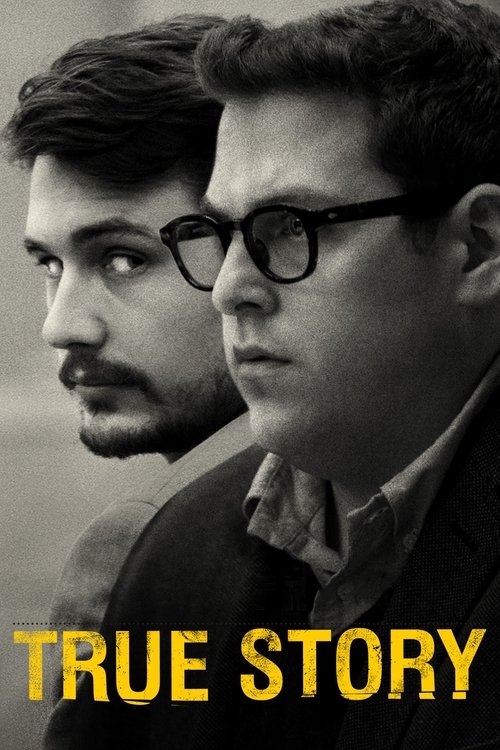
True Story
A drama centered on the relationship between journalist Michael Finkel and Christian Longo, an FBI Most Wanted List murderer who for years lived outside the U.S. under Finkel's name.
The film earned $5.3M at the global box office.


Plot Structure
Story beats plotted across runtime


Narrative Arc
Emotional journey through the story's key moments
Story Circle
Blueprint 15-beat structure
Arcplot Score Breakdown
Weighted: Precision (70%) + Arc (15%) + Theme (15%)
True Story (2015) demonstrates strategically placed plot construction, characteristic of Rupert Goold's storytelling approach. This structural analysis examines how the film's 15-point plot structure maps to proven narrative frameworks across 1 hour and 39 minutes. With an Arcplot score of 7.1, the film balances conventional beats with creative variation.
Characters
Cast & narrative archetypes

Michael Finkel
Christian Longo
Jill Barker
Main Cast & Characters
Michael Finkel
Played by Jonah Hill
Disgraced New York Times journalist who develops a complex relationship with accused murderer Christian Longo, who assumed his identity.
Christian Longo
Played by James Franco
Accused family murderer who stole Finkel's identity while on the run, intelligent and manipulative with unclear motivations.
Jill Barker
Played by Felicity Jones
Michael Finkel's supportive girlfriend who questions his obsession with Longo and the ethical boundaries he crosses.
Structural Analysis
The Status Quo at 1 minutes (1% through the runtime) establishes Michael Finkel is a successful New York Times journalist at the height of his career, traveling internationally for important stories.. Notably, this early placement immediately immerses viewers in the story world.
The inciting incident occurs at 12 minutes when Finkel receives a call from a reporter asking about Christian Longo, a man accused of murdering his family who was captured using Finkel's identity.. At 12% through the film, this Disruption aligns precisely with traditional story structure. This beat shifts the emotional landscape, launching the protagonist into the central conflict.
The First Threshold at 24 minutes marks the transition into Act II, occurring at 25% of the runtime. This shows the protagonist's commitment to Finkel actively chooses to visit Longo in prison and agrees to their arrangement: Longo will give Finkel exclusive access to his story in exchange for writing lessons., moving from reaction to action.
At 50 minutes, the Midpoint arrives at 51% of the runtime—precisely centered, creating perfect narrative symmetry. Structural examination shows that this crucial beat False defeat: Longo reveals darker details and Finkel realizes the prosecution has strong evidence. The game shifts - Finkel begins to doubt whether Longo is telling him the truth, but he's already deeply invested., fundamentally raising what's at risk. The emotional intensity shifts, dividing the narrative into clear before-and-after phases.
The Collapse moment at 74 minutes (75% through) represents the emotional nadir. Here, At trial, Longo confesses to all murders, revealing he's been lying to Finkel the entire time. Finkel's hopes for redemption through this story die as he realizes he's been completely manipulated by a murderer., reveals the protagonist at their lowest point. This beat's placement in the final quarter sets up the climactic reversal.
The Second Threshold at 79 minutes initiates the final act resolution at 80% of the runtime. Finkel realizes he must write the true story - not the one he wanted, but the one about manipulation, deception, and his own complicity. He sees clearly the parallel between his and Longo's relationship with truth., demonstrating the transformation achieved throughout the journey.
Emotional Journey
True Story's emotional architecture traces a deliberate progression across 15 carefully calibrated beats.
Narrative Framework
This structural analysis employs structural analysis methodology used to understand storytelling architecture. By mapping True Story against these established plot points, we can identify how Rupert Goold utilizes or subverts traditional narrative conventions. The plot point approach reveals not only adherence to structural principles but also creative choices that distinguish True Story within the crime genre.
Rupert Goold's Structural Approach
Among the 2 Rupert Goold films analyzed on Arcplot, the average structural score is 6.9, demonstrating varied approaches to story architecture. True Story represents one of the director's most structurally precise works. For comparative analysis, explore the complete Rupert Goold filmography.
Comparative Analysis
Additional crime films include The Bad Guys, Rustom and The Whole Ten Yards. For more Rupert Goold analyses, see Judy.
Plot Points by Act
Act I
SetupStatus Quo
Michael Finkel is a successful New York Times journalist at the height of his career, traveling internationally for important stories.
Theme
A colleague warns Finkel about the dangers of embellishment in journalism: "The truth matters." This establishes the film's central question about truth, identity, and deception.
Worldbuilding
Establishment of Finkel's world as a prestigious journalist, his relationship with his partner Jill, and the revelation that he fabricated parts of a story, leading to his firing from the Times and public disgrace.
Disruption
Finkel receives a call from a reporter asking about Christian Longo, a man accused of murdering his family who was captured using Finkel's identity.
Resistance
Finkel debates whether to contact Longo, researches the murders, and discusses with Jill. He's intrigued by why Longo used his name and sees an opportunity to rebuild his career through this story.
Act II
ConfrontationFirst Threshold
Finkel actively chooses to visit Longo in prison and agrees to their arrangement: Longo will give Finkel exclusive access to his story in exchange for writing lessons.
Mirror World
Longo becomes Finkel's dark mirror - another man who manipulated truth, someone who literally took his identity. Their relationship will force Finkel to confront his own relationship with deception.
Premise
The promise of the premise: Finkel conducts extensive interviews with Longo, becomes increasingly fascinated and manipulated, writes feverishly, and believes he's getting the true story while Longo claims partial innocence.
Midpoint
False defeat: Longo reveals darker details and Finkel realizes the prosecution has strong evidence. The game shifts - Finkel begins to doubt whether Longo is telling him the truth, but he's already deeply invested.
Opposition
Pressure intensifies as the trial approaches. Jill questions Finkel's obsession. Evidence mounts against Longo. Finkel is caught between wanting to believe Longo and facing the truth. Their relationship becomes more manipulative.
Collapse
At trial, Longo confesses to all murders, revealing he's been lying to Finkel the entire time. Finkel's hopes for redemption through this story die as he realizes he's been completely manipulated by a murderer.
Crisis
Finkel processes his betrayal and complicity. He confronts the reality that he allowed himself to be deceived because he wanted the story, paralleling his own journalistic fabrication.
Act III
ResolutionSecond Threshold
Finkel realizes he must write the true story - not the one he wanted, but the one about manipulation, deception, and his own complicity. He sees clearly the parallel between his and Longo's relationship with truth.
Synthesis
Finkel writes and publishes his book about the experience. He has one final confrontation with Longo in prison, refusing to be manipulated anymore. He faces the consequences of his choices with clear eyes.
Transformation
Finkel teaches journalism students, warning them about the importance of truth. Unlike the opening where he was cavalier about facts, he now understands the cost of deception - transformed from a man who bent truth to one who guards it.