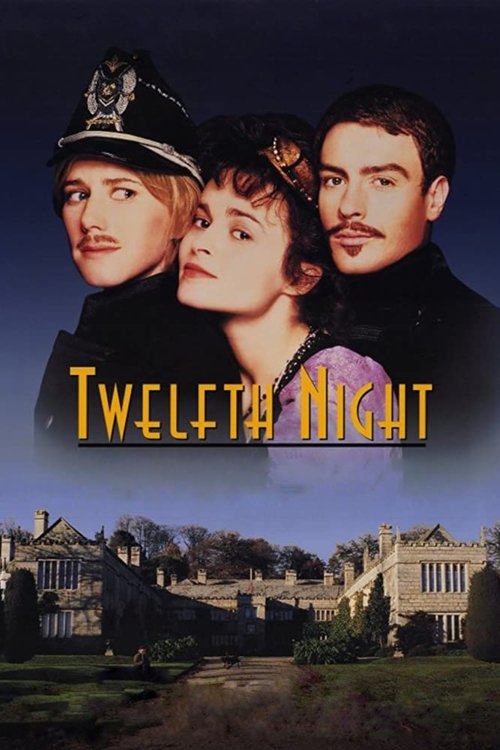
Twelfth Night
Shakespeare's comedy of gender confusion, in which a girl disguises herself as a man to be near the count she adores, only to be pursued by the woman he loves.
Despite its small-scale budget of $5.0M, Twelfth Night became a commercial juggernaut, earning $33.0M worldwide—a remarkable 560% return. The film's compelling narrative engaged audiences, demonstrating that strong storytelling can transcend budget limitations.


Plot Structure
Story beats plotted across runtime


Narrative Arc
Emotional journey through the story's key moments
Story Circle
Blueprint 15-beat structure
Arcplot Score Breakdown
Weighted: Precision (70%) + Arc (15%) + Theme (15%)
Twelfth Night (1996) exemplifies strategically placed plot construction, characteristic of Trevor Nunn's storytelling approach. This structural analysis examines how the film's 15-point plot structure maps to proven narrative frameworks across 2 hours and 14 minutes. With an Arcplot score of 6.5, the film balances conventional beats with creative variation.
Structural Analysis
The Status Quo at 1 minutes (1% through the runtime) establishes Viola and Sebastian, twins in perfect harmony, perform together on a ship before a storm strikes, establishing their close bond and the world before chaos.. Of particular interest, this early placement immediately immerses viewers in the story world.
The inciting incident occurs at 17 minutes when Viola decides to disguise herself as a boy named Cesario to serve Duke Orsino, fundamentally altering her identity and setting the comedy of errors in motion.. At 13% through the film, this Disruption is delayed, allowing extended setup of the story world. This beat shifts the emotional landscape, launching the protagonist into the central conflict.
The First Threshold at 32 minutes marks the transition into Act II, occurring at 24% of the runtime. This indicates the protagonist's commitment to Cesario meets Olivia face to face for the first time. Olivia immediately falls in love with the disguised Viola, creating an impossible love triangle that drives the rest of the story., moving from reaction to action.
At 67 minutes, the Midpoint arrives at 50% of the runtime—precisely centered, creating perfect narrative symmetry. Structural examination shows that this crucial beat Malvolio appears before Olivia in yellow stockings and cross-garters, acting on the fake letter. His humiliation is complete, raising the stakes - the pranks have gone too far and consequences loom. Meanwhile, Sebastian arrives in Illyria., fundamentally raising what's at risk. The emotional intensity shifts, dividing the narrative into clear before-and-after phases.
The Collapse moment at 101 minutes (75% through) represents the emotional nadir. Here, Olivia marries Sebastian, thinking he is Cesario. Viola's disguise has created an impossible situation - the woman she's wooing has married her brother, and she cannot reveal the truth without losing everything., illustrates the protagonist at their lowest point. This beat's placement in the final quarter sets up the climactic reversal.
The Second Threshold at 108 minutes initiates the final act resolution at 80% of the runtime. Sebastian and Viola finally encounter each other. The truth can now be revealed - both twins survived, and all the confusion can be unraveled through honest recognition., demonstrating the transformation achieved throughout the journey.
Emotional Journey
Twelfth Night's emotional architecture traces a deliberate progression across 15 carefully calibrated beats.
Narrative Framework
This structural analysis employs systematic plot point analysis that identifies crucial turning points. By mapping Twelfth Night against these established plot points, we can identify how Trevor Nunn utilizes or subverts traditional narrative conventions. The plot point approach reveals not only adherence to structural principles but also creative choices that distinguish Twelfth Night within the drama genre.
Comparative Analysis
Additional drama films include After Thomas, South Pacific and Dirty Dancing: Havana Nights.
Plot Points by Act
Act I
SetupStatus Quo
Viola and Sebastian, twins in perfect harmony, perform together on a ship before a storm strikes, establishing their close bond and the world before chaos.
Theme
The Captain tells Viola "What great ones do, the less will prattle of" - introducing the theme of identity, appearance versus reality, and how love transcends social boundaries and gender.
Worldbuilding
Establishing Illyria: Duke Orsino pines for Countess Olivia who mourns her brother; Viola survives the shipwreck, believes Sebastian drowned, and learns about this strange land of unrequited love and mourning.
Disruption
Viola decides to disguise herself as a boy named Cesario to serve Duke Orsino, fundamentally altering her identity and setting the comedy of errors in motion.
Resistance
Viola as Cesario enters Orsino's service and learns to navigate the male world; she's sent to woo Olivia on Orsino's behalf while developing her own feelings for the Duke; Sir Toby and Maria plot against Malvolio.
Act II
ConfrontationFirst Threshold
Cesario meets Olivia face to face for the first time. Olivia immediately falls in love with the disguised Viola, creating an impossible love triangle that drives the rest of the story.
Mirror World
Olivia sends Malvolio after Cesario with a ring, revealing her affection. This subplot mirrors the main theme: love cannot be controlled or directed by will alone; it strikes where it will.
Premise
The comedy of mistaken identity flourishes: Viola loves Orsino who loves Olivia who loves Cesario; Malvolio finds the forged letter; Sir Andrew courts Olivia foolishly; the confusion and romantic entanglements deepen.
Midpoint
Malvolio appears before Olivia in yellow stockings and cross-garters, acting on the fake letter. His humiliation is complete, raising the stakes - the pranks have gone too far and consequences loom. Meanwhile, Sebastian arrives in Illyria.
Opposition
Complications intensify: Malvolio is imprisoned as mad; Sebastian is mistaken for Cesario by both Sir Andrew and Olivia; Viola faces a duel with Sir Andrew; the web of confusion tightens dangerously.
Collapse
Olivia marries Sebastian, thinking he is Cesario. Viola's disguise has created an impossible situation - the woman she's wooing has married her brother, and she cannot reveal the truth without losing everything.
Crisis
The dark consequences manifest: Malvolio's suffering is revealed; Orsino feels betrayed by Cesario's apparent marriage to Olivia; Viola is trapped in her disguise, unable to declare her love or identity.
Act III
ResolutionSecond Threshold
Sebastian and Viola finally encounter each other. The truth can now be revealed - both twins survived, and all the confusion can be unraveled through honest recognition.
Synthesis
All identities are revealed and sorted: Viola unmasks herself; Orsino recognizes his love for Viola; Olivia accepts her marriage to Sebastian; the confusion resolves into harmony, though Malvolio departs unforgiven.
Transformation
Viola appears in women's clothing, restored to her true self but transformed by her journey. She and Orsino unite as equals, having found love through the freedom her disguise paradoxically allowed.