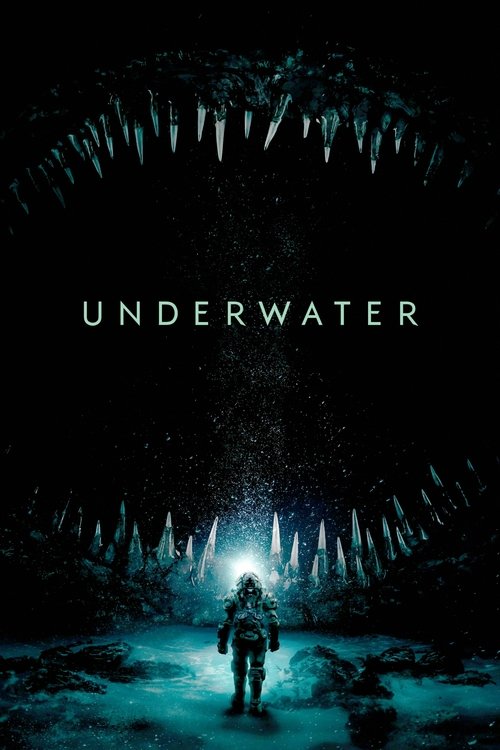
Underwater
After an earthquake destroys their underwater station, six researchers must navigate two miles along the dangerous, unknown depths of the ocean floor to make it to safety in a race against time.
The film struggled financially against its mid-range budget of $50.0M, earning $40.9M globally (-18% loss).
1 win & 4 nominations


Plot Structure
Story beats plotted across runtime


Narrative Arc
Emotional journey through the story's key moments
Story Circle
Blueprint 15-beat structure
Arcplot Score Breakdown
Weighted: Precision (70%) + Arc (15%) + Theme (15%)
Underwater (2020) showcases strategically placed dramatic framework, characteristic of William Eubank's storytelling approach. This structural analysis examines how the film's 15-point plot structure maps to proven narrative frameworks across 1 hour and 35 minutes. With an Arcplot score of 7.4, the film balances conventional beats with creative variation.
Characters
Cast & narrative archetypes

Norah Price
Captain Lucien
Paul Abel
Emily Haversham
Liam Smith
Rodrigo Nagenda
Main Cast & Characters
Norah Price
Played by Kristen Stewart
A mechanical engineer who leads the survivors through the ocean floor after a catastrophic earthquake destroys their underwater research station.
Captain Lucien
Played by Vincent Cassel
The station captain who provides guidance and leadership during the crisis, making difficult decisions to ensure crew survival.
Paul Abel
Played by T.J. Miller
A research assistant who struggles with the psychological pressure of the disaster while trying to contribute to the group's survival.
Emily Haversham
Played by Jessica Henwick
A biologist who forms a close bond with Norah and demonstrates courage despite her fear of the deep ocean environment.
Liam Smith
Played by John Gallagher Jr.
An engineer who uses his technical expertise to help the group navigate the damaged facility and operate the escape pods.
Rodrigo Nagenda
Played by Mamoudou Athie
A crew member who provides comic relief and emotional support to the team during their harrowing journey.
Structural Analysis
The Status Quo at 1 minutes (1% through the runtime) establishes Norah brushes her teeth in the bathroom of the Kepler 822 deep-sea drilling station, seven miles beneath the ocean surface. She stares at herself in the mirror, isolated and contemplative, establishing her emotional detachment and the claustrophobic underwater world.. Structural examination shows that this early placement immediately immerses viewers in the story world.
The inciting incident occurs at 11 minutes when A catastrophic breach ruptures the station walls. Water explodes through the corridors as the structure implodes around Norah. She barely escapes through closing bulkheads, watching crew members drown. The drilling operation has awakened something, and survival becomes the only imperative.. At 12% through the film, this Disruption aligns precisely with traditional story structure. This beat shifts the emotional landscape, launching the protagonist into the central conflict.
The First Threshold at 24 minutes marks the transition into Act II, occurring at 25% of the runtime. This indicates the protagonist's commitment to The group descends to the ocean floor in pressure suits, committing to the treacherous one-mile walk. They leave the relative safety of the damaged station and enter the crushing darkness of the deep ocean. There is no turning back; they must reach Roebuck or die., moving from reaction to action.
At 48 minutes, the Midpoint arrives at 50% of the runtime—precisely centered, creating perfect narrative symmetry. The analysis reveals that this crucial beat The group reaches the midway point only to discover the escape pods at Roebuck have already launched. Their plan has failed—there is no rescue waiting. Captain Lucien reveals they must continue to the drilling platform Shepard, doubling their journey through creature-infested waters., fundamentally raising what's at risk. The emotional intensity shifts, dividing the narrative into clear before-and-after phases.
The Collapse moment at 71 minutes (75% through) represents the emotional nadir. Here, Captain Lucien sacrifices himself to the creatures, allowing the others to escape. The mentor figure is torn apart before Norah's eyes. Paul is also killed when his helmet cracks. Only Norah, Emily, and Smith remain, stripped of leadership and hope, facing impossible odds., shows the protagonist at their lowest point. This beat's placement in the final quarter sets up the climactic reversal.
The Second Threshold at 76 minutes initiates the final act resolution at 80% of the runtime. Norah makes her choice: she will stay behind to overload the station's core, destroying the creatures and giving Emily and Smith time to escape. Her death wish transforms into purposeful sacrifice. She chooses to protect others rather than succumb to her isolation., demonstrating the transformation achieved throughout the journey.
Emotional Journey
Underwater's emotional architecture traces a deliberate progression across 15 carefully calibrated beats.
Narrative Framework
This structural analysis employs a 15-point narrative structure framework that maps key story moments. By mapping Underwater against these established plot points, we can identify how William Eubank utilizes or subverts traditional narrative conventions. The plot point approach reveals not only adherence to structural principles but also creative choices that distinguish Underwater within the horror genre.
William Eubank's Structural Approach
Among the 2 William Eubank films analyzed on Arcplot, the average structural score is 7.2, reflecting strong command of classical structure. Underwater represents one of the director's most structurally precise works. For comparative analysis, explore the complete William Eubank filmography.
Comparative Analysis
Additional horror films include Thinner, A Nightmare on Elm Street and Mary Reilly. For more William Eubank analyses, see Land of Bad.
Plot Points by Act
Act I
SetupStatus Quo
Norah brushes her teeth in the bathroom of the Kepler 822 deep-sea drilling station, seven miles beneath the ocean surface. She stares at herself in the mirror, isolated and contemplative, establishing her emotional detachment and the claustrophobic underwater world.
Theme
Through opening news clippings and Norah's voiceover about being underwater, the theme emerges: "We've done irreparable damage to the ocean floor, and now something has awakened." The film questions humanity's hubris in exploiting nature's depths and what terrors we unleash when we drill too deep.
Worldbuilding
The opening establishes the Kepler station as a pressure-cooker environment: industrial corridors, isolation seven miles deep, and a skeleton crew. Norah is presented as a mechanical engineer haunted by past trauma, going through the motions of existence in this artificial world.
Disruption
A catastrophic breach ruptures the station walls. Water explodes through the corridors as the structure implodes around Norah. She barely escapes through closing bulkheads, watching crew members drown. The drilling operation has awakened something, and survival becomes the only imperative.
Resistance
Norah connects with Captain Lucien, Rodrigo, Paul, Emily, and Smith in the surviving section. Lucien takes command as the guide figure, proposing they walk across the ocean floor to the Roebuck station one mile away. They debate the risks as the station continues to collapse around them.
Act II
ConfrontationFirst Threshold
The group descends to the ocean floor in pressure suits, committing to the treacherous one-mile walk. They leave the relative safety of the damaged station and enter the crushing darkness of the deep ocean. There is no turning back; they must reach Roebuck or die.
Mirror World
Paul reveals the stuffed rabbit he carries for good luck, and Emily clings to him for emotional support. Their relationship represents hope and human connection in the face of cosmic horror. This bond will push Norah to reconnect with her own capacity for emotional attachment.
Premise
The survivors traverse the dark ocean floor, discovering the creatures that destroyed their station. They encounter humanoid deep-sea monsters, navigate through a debris field of destroyed equipment, and witness the scale of destruction. Each step brings new horrors and dwindling hope.
Midpoint
The group reaches the midway point only to discover the escape pods at Roebuck have already launched. Their plan has failed—there is no rescue waiting. Captain Lucien reveals they must continue to the drilling platform Shepard, doubling their journey through creature-infested waters.
Opposition
The creatures attack with increasing ferocity. Rodrigo's suit implodes under the pressure. The survivors witness the massive Lovecraftian entity—Cthulhu itself—rising from the trench. They realize they didn't just drill into a nest; they awakened an ancient god. Numbers dwindle as hope fades.
Collapse
Captain Lucien sacrifices himself to the creatures, allowing the others to escape. The mentor figure is torn apart before Norah's eyes. Paul is also killed when his helmet cracks. Only Norah, Emily, and Smith remain, stripped of leadership and hope, facing impossible odds.
Crisis
The three survivors reach the Shepard platform but find only two working escape pods. Norah processes the deaths she's witnessed and confronts her own survivor's guilt. The creatures mass for a final assault. Someone will have to stay behind.
Act III
ResolutionSecond Threshold
Norah makes her choice: she will stay behind to overload the station's core, destroying the creatures and giving Emily and Smith time to escape. Her death wish transforms into purposeful sacrifice. She chooses to protect others rather than succumb to her isolation.
Synthesis
Norah launches Emily and Smith in the escape pods, then descends into the station's core. She faces the colossal creature directly, defiantly triggering the overload as the entity closes in. The explosion destroys the Shepard platform and the creatures surrounding it.
Transformation
Emily and Smith reach the surface, rescued by a ship. Emily clutches Paul's stuffed rabbit—the symbol of connection and hope that Norah helped preserve. Norah's sacrifice restored her humanity; the woman who was emotionally dead found meaning in giving others life.