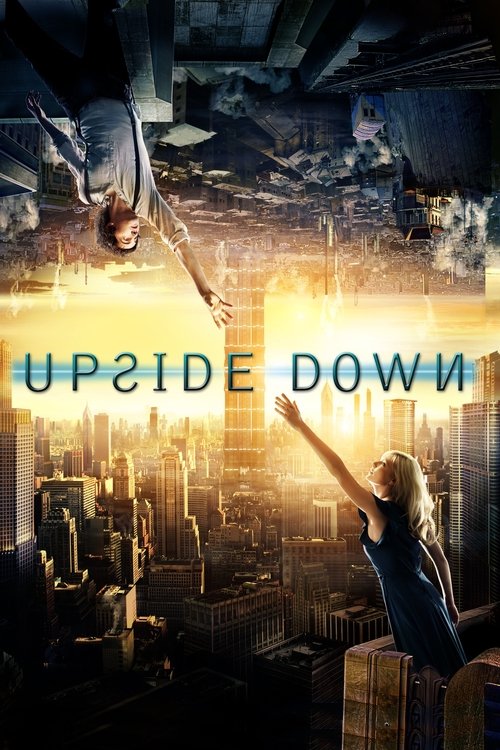
Upside Down
In an alternate universe where twinned worlds have opposite gravities, a young man battles interplanetary prejudice and the laws of physics in his quest to reunite with the long-lost girl of his dreams in this visually stunning romantic adventure that poses the question: what if love was stronger than gravity?
The film financial setback against its respectable budget of $60.0M, earning $22.2M globally (-63% loss). While initial box office returns were modest, the film has gained appreciation for its unique voice within the romance genre.


Plot Structure
Story beats plotted across runtime


Narrative Arc
Emotional journey through the story's key moments
Story Circle
Blueprint 15-beat structure
Arcplot Score Breakdown
Weighted: Precision (70%) + Arc (15%) + Theme (15%)
Upside Down (2012) exemplifies meticulously timed dramatic framework, characteristic of Juan Diego Solanas's storytelling approach. This structural analysis examines how the film's 15-point plot structure maps to proven narrative frameworks across 1 hour and 44 minutes. With an Arcplot score of 7.4, the film balances conventional beats with creative variation.
Structural Analysis
The Status Quo at 1 minutes (1% through the runtime) establishes Opening narration establishes dual-gravity worlds: Up Top (wealthy) and Down Below (poor). Adam works alone in his workshop, isolated and longing.. Significantly, this early placement immediately immerses viewers in the story world.
The inciting incident occurs at 12 minutes when Border patrol discovers Adam and Eden together. In the chaos, Eden falls back to Up Top, burning and apparently killed. Adam loses the love of his life and is left with only memories.. At 12% through the film, this Disruption aligns precisely with traditional story structure. This beat shifts the emotional landscape, launching the protagonist into the central conflict.
The First Threshold at 25 minutes marks the transition into Act II, occurring at 24% of the runtime. This reveals the protagonist's commitment to Adam chooses to enter TransWorld headquarters, using inverse matter weights to defy gravity. He crosses into the upper world, risking everything to find Eden again., moving from reaction to action.
At 52 minutes, the Midpoint arrives at 50% of the runtime—precisely centered, creating perfect narrative symmetry. Structural examination shows that this crucial beat Eden begins to remember their past. False victory: their love is rekindling. But the stakes raise—TransWorld security grows suspicious of Adam, and the inverse matter is causing him physical harm., fundamentally raising what's at risk. The emotional intensity shifts, dividing the narrative into clear before-and-after phases.
The Collapse moment at 78 minutes (75% through) represents the emotional nadir. Here, Adam is exposed and captured by TransWorld security. He's literally pulled back down to his world by gravity, separated from Eden again. His body is failing from inverse matter exposure. All seems lost—the whiff of death is literal and metaphorical., demonstrates the protagonist at their lowest point. This beat's placement in the final quarter sets up the climactic reversal.
The Second Threshold at 83 minutes initiates the final act resolution at 80% of the runtime. Eden discovers she's pregnant with Adam's child—a child that may carry both gravities. This revelation provides new hope and synthesis: their love has created something impossible that transcends both worlds., demonstrating the transformation achieved throughout the journey.
Emotional Journey
Upside Down's emotional architecture traces a deliberate progression across 15 carefully calibrated beats.
Narrative Framework
This structural analysis employs a 15-point narrative structure framework that maps key story moments. By mapping Upside Down against these established plot points, we can identify how Juan Diego Solanas utilizes or subverts traditional narrative conventions. The plot point approach reveals not only adherence to structural principles but also creative choices that distinguish Upside Down within the romance genre.
Comparative Analysis
Additional romance films include South Pacific, Dirty Dancing: Havana Nights and The Evening Star.
Plot Points by Act
Act I
SetupStatus Quo
Opening narration establishes dual-gravity worlds: Up Top (wealthy) and Down Below (poor). Adam works alone in his workshop, isolated and longing.
Theme
Adam's aunt tells him: "Love is a matter of gravity." The central theme: love transcends all barriers, even the laws of physics.
Worldbuilding
Flashback to young Adam meeting Eden on the mountain where the two worlds nearly touch. Their forbidden romance develops despite gravity literally pulling them apart. Establishes the rigid class divide and physical separation.
Disruption
Border patrol discovers Adam and Eden together. In the chaos, Eden falls back to Up Top, burning and apparently killed. Adam loses the love of his life and is left with only memories.
Resistance
Ten years later, Adam spots Eden alive on TV, working at TransWorld. He debates whether to pursue her, knowing it's forbidden. His mentor Bob Boruchowitz helps him develop anti-gravity cosmetics as a way to infiltrate TransWorld.
Act II
ConfrontationFirst Threshold
Adam chooses to enter TransWorld headquarters, using inverse matter weights to defy gravity. He crosses into the upper world, risking everything to find Eden again.
Mirror World
Adam reconnects with Eden, but she has amnesia and doesn't remember him or their love. She represents the thematic question: can love be rebuilt, reborn, when everything is against it?
Premise
The fun of the premise: Adam navigates the inverted world, secretly meeting Eden, trying to make her remember. Beautiful sequences of anti-gravity romance, forbidden dates, and the visual spectacle of two worlds colliding.
Midpoint
Eden begins to remember their past. False victory: their love is rekindling. But the stakes raise—TransWorld security grows suspicious of Adam, and the inverse matter is causing him physical harm.
Opposition
TransWorld executives close in on Adam. The inverse matter burns begin to threaten his life. Eden's memories return but societal pressure and corporate conspiracy work against them. Bob warns Adam of the dangers.
Collapse
Adam is exposed and captured by TransWorld security. He's literally pulled back down to his world by gravity, separated from Eden again. His body is failing from inverse matter exposure. All seems lost—the whiff of death is literal and metaphorical.
Crisis
Adam recuperates in Down Below, burned and defeated. He processes the impossibility of their love. Eden, now remembering everything, searches for him from above.
Act III
ResolutionSecond Threshold
Eden discovers she's pregnant with Adam's child—a child that may carry both gravities. This revelation provides new hope and synthesis: their love has created something impossible that transcends both worlds.
Synthesis
Adam and Eden reunite. Their child is born with dual gravity, able to exist in both worlds. The couple fights for their right to be together, and their child becomes proof that the two worlds can unite.
Transformation
Final image mirrors the opening: Adam narrates again, but now he's with Eden and their son. The child plays between both worlds freely. Love has literally transcended gravity. What was impossible is now their reality.