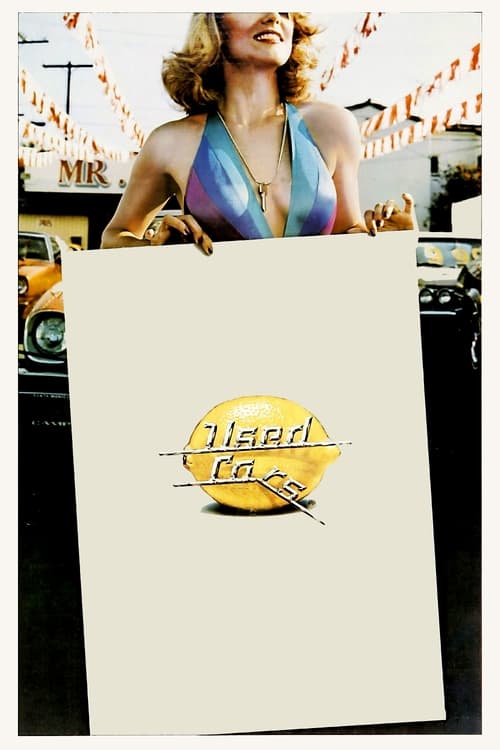
Used Cars
When the owner of a struggling used car lot is killed, it's up to the lot's hot-shot salesman to save the property from falling into the hands of the owner's ruthless brother and used-car rival.
Working with a tight budget of $8.0M, the film achieved a steady performer with $11.7M in global revenue (+46% profit margin).


Plot Structure
Story beats plotted across runtime


Narrative Arc
Emotional journey through the story's key moments
Story Circle
Blueprint 15-beat structure
Arcplot Score Breakdown
Weighted: Precision (70%) + Arc (15%) + Theme (15%)
Used Cars (1980) reveals deliberately positioned dramatic framework, characteristic of Robert Zemeckis's storytelling approach. This structural analysis examines how the film's 15-point plot structure maps to proven narrative frameworks across 1 hour and 53 minutes. With an Arcplot score of 7.0, the film balances conventional beats with creative variation.
Structural Analysis
The Status Quo at 1 minutes (1% through the runtime) establishes Rudy Russo works the lot at Luke Fuchs' struggling used car dealership in Mesa, Arizona, across the street from Roy L. Fuchs' thriving competing lot. Rudy dreams of buying his way into a state senate seat while using every trick in the book to sell cars.. Of particular interest, this early placement immediately immerses viewers in the story world.
The inciting incident occurs at 14 minutes when Roy sabotages Luke by sending a fake buyer who causes Luke extreme stress. Luke suffers a fatal heart attack on the lot. His death threatens to hand the entire property to Roy, as Luke's daughter Barbara hasn't been in contact for years.. At 12% through the film, this Disruption aligns precisely with traditional story structure. This beat shifts the emotional landscape, launching the protagonist into the central conflict.
The First Threshold at 28 minutes marks the transition into Act II, occurring at 25% of the runtime. This illustrates the protagonist's commitment to Rudy makes the irreversible choice to bury Luke in the desert and maintain the lie that he's still alive. By concealing the death, Rudy commits fully to the con, putting everything on the line to save the lot and defeat Roy., moving from reaction to action.
At 57 minutes, the Midpoint arrives at 50% of the runtime—precisely centered, creating perfect narrative symmetry. Structural examination shows that this crucial beat The pirated TV commercial works spectacularly - customers flood the lot and sales skyrocket. It's a false victory: the success draws more attention and raises the stakes. Roy becomes more determined than ever to destroy them, and the FCC begins investigating the illegal broadcast., fundamentally raising what's at risk. The emotional intensity shifts, dividing the narrative into clear before-and-after phases.
The Collapse moment at 85 minutes (75% through) represents the emotional nadir. Here, Roy discovers that Luke is dead and moves to seize the property. Barbara learns the truth about her father's death and Rudy's deception. She feels utterly betrayed - the man she was falling for has been lying to her from the moment they met. Everything Rudy built collapses around him., demonstrates the protagonist at their lowest point. This beat's placement in the final quarter sets up the climactic reversal.
The Second Threshold at 90 minutes initiates the final act resolution at 80% of the runtime. A clause in Luke's will is discovered: Barbara inherits if she can prove the lot has more cars than Roy's at a specific time. Rudy realizes he can still fight - not through lies but through genuine action. He rallies the team for one final honest stand against Roy., demonstrating the transformation achieved throughout the journey.
Emotional Journey
Used Cars's emotional architecture traces a deliberate progression across 15 carefully calibrated beats.
Narrative Framework
This structural analysis employs systematic plot point analysis that identifies crucial turning points. By mapping Used Cars against these established plot points, we can identify how Robert Zemeckis utilizes or subverts traditional narrative conventions. The plot point approach reveals not only adherence to structural principles but also creative choices that distinguish Used Cars within the comedy genre.
Robert Zemeckis's Structural Approach
Among the 20 Robert Zemeckis films analyzed on Arcplot, the average structural score is 6.9, demonstrating varied approaches to story architecture. Used Cars represents one of the director's most structurally precise works. For comparative analysis, explore the complete Robert Zemeckis filmography.
Comparative Analysis
Additional comedy films include The Bad Guys, Ella Enchanted and The Evening Star. For more Robert Zemeckis analyses, see Who Framed Roger Rabbit, Beowulf and Welcome to Marwen.
Plot Points by Act
Act I
SetupStatus Quo
Rudy Russo works the lot at Luke Fuchs' struggling used car dealership in Mesa, Arizona, across the street from Roy L. Fuchs' thriving competing lot. Rudy dreams of buying his way into a state senate seat while using every trick in the book to sell cars.
Theme
Luke tells Rudy that the car business is about trust and reputation, not just fast talk - "You can't build anything lasting on lies." This plants the thematic seed about whether deception can ever lead to genuine success.
Worldbuilding
The world of competing used car lots is established: Luke's shabby but honest operation versus Roy's slick, predatory dealership. We meet the colorful salesmen Jeff and Jim, learn of Roy's schemes to destroy his brother, and see Rudy's political ambitions and his loyalty to aging Luke despite his ethical flexibility.
Disruption
Roy sabotages Luke by sending a fake buyer who causes Luke extreme stress. Luke suffers a fatal heart attack on the lot. His death threatens to hand the entire property to Roy, as Luke's daughter Barbara hasn't been in contact for years.
Resistance
Rudy and the salesmen debate what to do about Luke's death. They realize if Roy learns Luke is dead, he'll claim the lot immediately. The team decides to hide Luke's body and pretend he's still alive while searching for Barbara. Rudy wrestles with the ethics but his loyalty to Luke and hatred of Roy push him toward the deception.
Act II
ConfrontationFirst Threshold
Rudy makes the irreversible choice to bury Luke in the desert and maintain the lie that he's still alive. By concealing the death, Rudy commits fully to the con, putting everything on the line to save the lot and defeat Roy.
Mirror World
Barbara Fuchs arrives at the lot looking for her father. She represents genuine honesty and family loyalty - everything Rudy claims to value but compromises daily. Her presence forces Rudy to confront the gap between who he is and who he could be.
Premise
The promise of the premise delivers outrageous used car comedy: the team hijacks a live TV broadcast of a football game to air their own commercial, they paint lemons to look pristine, and engage in increasingly wild promotional schemes. Business booms as Rudy's cons escalate while he romances Barbara and keeps the truth from her.
Midpoint
The pirated TV commercial works spectacularly - customers flood the lot and sales skyrocket. It's a false victory: the success draws more attention and raises the stakes. Roy becomes more determined than ever to destroy them, and the FCC begins investigating the illegal broadcast.
Opposition
Roy intensifies his attacks: he sends fake health inspectors, hires thugs, and investigates Luke's absence. The lies become harder to maintain as Barbara grows suspicious about her father. Rudy's feelings for Barbara create internal conflict - he's falling for someone he's actively deceiving. The web of deception tightens around them.
Collapse
Roy discovers that Luke is dead and moves to seize the property. Barbara learns the truth about her father's death and Rudy's deception. She feels utterly betrayed - the man she was falling for has been lying to her from the moment they met. Everything Rudy built collapses around him.
Crisis
Rudy faces the consequences of his choices. Barbara refuses to speak to him. Roy prepares to take over both lots. The salesmen scatter as defeat seems certain. Rudy must confront that his lifelong reliance on deception has cost him everything that actually mattered.
Act III
ResolutionSecond Threshold
A clause in Luke's will is discovered: Barbara inherits if she can prove the lot has more cars than Roy's at a specific time. Rudy realizes he can still fight - not through lies but through genuine action. He rallies the team for one final honest stand against Roy.
Synthesis
Rudy orchestrates an epic finale: he calls in every favor and gathers 250 cars from across the region to overwhelm Roy's lot count. The climax becomes a spectacular demolition derby as the cars crash through Roy's dealership, destroying his empire. Rudy proves his loyalty through action rather than words.
Transformation
Barbara forgives Rudy, recognizing that beneath the con man exterior is genuine loyalty and heart. Rudy abandons his political ambitions to stay with Barbara and run the lot honestly. The man who built everything on lies finds redemption through authentic connection and earned trust.