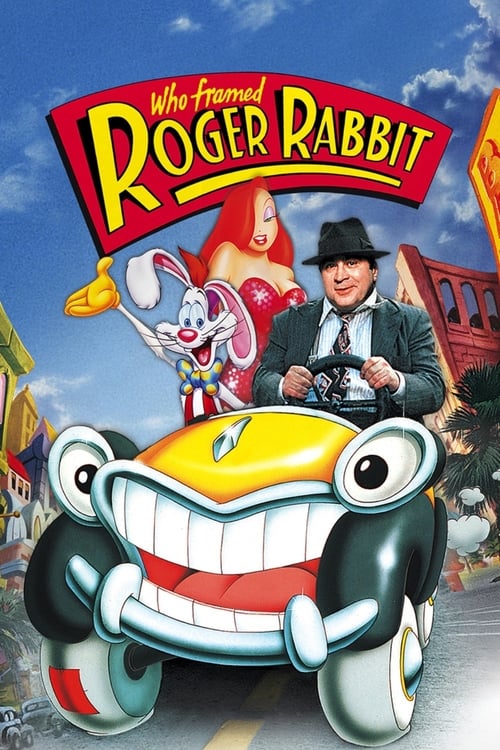
Who Framed Roger Rabbit
'Toon star Roger is worried that his wife Jessica is playing pattycake with someone else, so the studio hires detective Eddie Valiant to snoop on her. But the stakes are quickly raised when Marvin Acme is found dead and Roger is the prime suspect.
Despite a respectable budget of $70.0M, Who Framed Roger Rabbit became a solid performer, earning $329.8M worldwide—a 371% return.
3 Oscars. 25 wins & 22 nominations


Plot Structure
Story beats plotted across runtime


Narrative Arc
Emotional journey through the story's key moments
Story Circle
Blueprint 15-beat structure
Arcplot Score Breakdown
Weighted: Precision (70%) + Arc (15%) + Theme (15%)
Who Framed Roger Rabbit (1988) demonstrates meticulously timed narrative architecture, characteristic of Robert Zemeckis's storytelling approach. This structural analysis examines how the film's 15-point plot structure maps to proven narrative frameworks across 1 hour and 44 minutes. With an Arcplot score of 6.5, the film balances conventional beats with creative variation.
Structural Analysis
The Status Quo at 1 minutes (1% through the runtime) establishes The "Somethin's Cookin'" cartoon establishes Toontown as entertainment, then reveals Eddie Valiant as a bitter, alcoholic private investigator who despises Toons after his brother's death.. The analysis reveals that this early placement immediately immerses viewers in the story world.
The inciting incident occurs at 13 minutes when Marvin Acme is found murdered by a safe dropped on his head, and Roger Rabbit is framed for the crime. Eddie is drawn into the case against his will when Roger appears in his office seeking help.. At 12% through the film, this Disruption aligns precisely with traditional story structure. This beat shifts the emotional landscape, launching the protagonist into the central conflict.
The First Threshold at 27 minutes marks the transition into Act II, occurring at 26% of the runtime. This reveals the protagonist's commitment to Eddie makes the active choice to help Roger prove his innocence, agreeing to investigate despite his deep-seated hatred of Toons. He crosses into the new world of working alongside the creatures he despises., moving from reaction to action.
At 52 minutes, the Midpoint arrives at 50% of the runtime—precisely centered, creating perfect narrative symmetry. Notably, this crucial beat Eddie discovers R.K. Maroon is connected to the mysterious Cloverleaf Industries. The stakes escalate from a simple murder frame-up to a vast conspiracy. False defeat as the case becomes far more dangerous than expected., fundamentally raising what's at risk. The emotional intensity shifts, dividing the narrative into clear before-and-after phases.
The Collapse moment at 77 minutes (74% through) represents the emotional nadir. Here, R.K. Maroon is shot dead before he can reveal the full truth. Eddie and Roger are captured by Judge Doom. The villain prepares to destroy Toontown with a massive Dip machine. All seems lost - whiff of death for all Toons., shows the protagonist at their lowest point. This beat's placement in the final quarter sets up the climactic reversal.
The Second Threshold at 83 minutes initiates the final act resolution at 80% of the runtime. Eddie discovers Judge Doom's plan to spray Dip over all of Toontown. He realizes he must embrace his past as the "Toon detective" who loved working with Toons, synthesizing his old self with his new understanding to save them., demonstrating the transformation achieved throughout the journey.
Emotional Journey
Who Framed Roger Rabbit's emotional architecture traces a deliberate progression across 15 carefully calibrated beats.
Narrative Framework
This structural analysis employs a 15-point narrative structure framework that maps key story moments. By mapping Who Framed Roger Rabbit against these established plot points, we can identify how Robert Zemeckis utilizes or subverts traditional narrative conventions. The plot point approach reveals not only adherence to structural principles but also creative choices that distinguish Who Framed Roger Rabbit within the fantasy genre.
Robert Zemeckis's Structural Approach
Among the 20 Robert Zemeckis films analyzed on Arcplot, the average structural score is 6.9, demonstrating varied approaches to story architecture. Who Framed Roger Rabbit takes a more unconventional approach compared to the director's typical style. For comparative analysis, explore the complete Robert Zemeckis filmography.
Comparative Analysis
Additional fantasy films include Thinner, Ella Enchanted and Conan the Barbarian. For more Robert Zemeckis analyses, see Beowulf, Welcome to Marwen and Contact.
Plot Points by Act
Act I
SetupStatus Quo
The "Somethin's Cookin'" cartoon establishes Toontown as entertainment, then reveals Eddie Valiant as a bitter, alcoholic private investigator who despises Toons after his brother's death.
Theme
R.K. Maroon tells Eddie "You've got to understand, Toons are different" - establishing the central theme of prejudice against those perceived as "other" and Eddie's need to see past his hatred.
Worldbuilding
Setup of 1947 Los Angeles where Toons are real second-class citizens. Eddie's backstory of hating Toons since a Toon killed his brother Teddy. Introduction of Maroon Cartoon Studios, Marvin Acme, Jessica Rabbit, and Judge Doom's Toon Patrol.
Disruption
Marvin Acme is found murdered by a safe dropped on his head, and Roger Rabbit is framed for the crime. Eddie is drawn into the case against his will when Roger appears in his office seeking help.
Resistance
Eddie resists helping Roger despite mounting evidence of a frame-up. He learns about Judge Doom's "Dip" - the only thing that can kill Toons. Eddie debates whether to overcome his hatred and help, while Roger hides in his office.
Act II
ConfrontationFirst Threshold
Eddie makes the active choice to help Roger prove his innocence, agreeing to investigate despite his deep-seated hatred of Toons. He crosses into the new world of working alongside the creatures he despises.
Mirror World
Jessica Rabbit confronts Eddie, subverting the femme fatale archetype: "I'm not bad, I'm just drawn that way." She reveals genuine love for Roger, challenging Eddie's assumptions about Toons and beginning his thematic education.
Premise
The promise of the premise: Eddie investigates with Roger hiding in his office, leading to comedic Toon antics, spectacular chase sequences mixing live-action and animation, and gradually uncovering the conspiracy behind Acme's murder.
Midpoint
Eddie discovers R.K. Maroon is connected to the mysterious Cloverleaf Industries. The stakes escalate from a simple murder frame-up to a vast conspiracy. False defeat as the case becomes far more dangerous than expected.
Opposition
Judge Doom intensifies his pursuit of Roger. Eddie uncovers the freeway plot - Cloverleaf bought the Red Car trolley system to destroy it and build a freeway through Toontown. R.K. Maroon is killed. The weasels close in on Eddie and Roger.
Collapse
R.K. Maroon is shot dead before he can reveal the full truth. Eddie and Roger are captured by Judge Doom. The villain prepares to destroy Toontown with a massive Dip machine. All seems lost - whiff of death for all Toons.
Crisis
Eddie confronts his trauma about Teddy's death while facing the destruction of Toontown. He must process his hatred and choose whether to risk his life for the Toons he's blamed for his brother's murder.
Act III
ResolutionSecond Threshold
Eddie discovers Judge Doom's plan to spray Dip over all of Toontown. He realizes he must embrace his past as the "Toon detective" who loved working with Toons, synthesizing his old self with his new understanding to save them.
Synthesis
Climactic confrontation at the Acme factory. Eddie uses Toon logic and comedy - singing and dancing - to literally kill the weasels with laughter. Judge Doom is revealed as the Toon who killed Teddy. Eddie defeats Doom with his own Dip.
Transformation
Eddie laughs genuinely with the Toons, kisses his girlfriend Dolores, and walks arm-in-arm into Toontown as the Toons celebrate. He's healed from his trauma, embracing the world he once hated - transformed from bitter recluse to joyful hero.