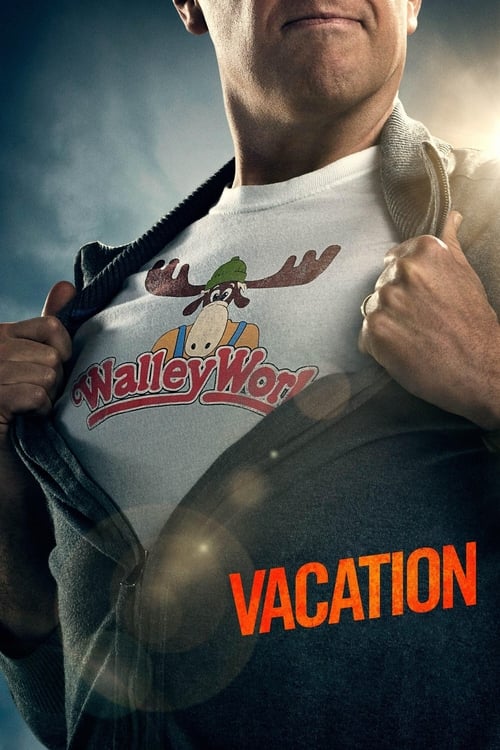
Vacation
Hoping to bring his family closer together and to recreate his childhood vacation for his own kids, a grown up Rusty Griswold takes his wife and their two sons on a cross-country road trip to the coolest theme park in America, Walley World. Needless to say, things don't go quite as planned.
Despite a mid-range budget of $31.0M, Vacation became a box office success, earning $104.4M worldwide—a 237% return.
1 win & 3 nominations


Plot Structure
Story beats plotted across runtime


Narrative Arc
Emotional journey through the story's key moments
Story Circle
Blueprint 15-beat structure
Arcplot Score Breakdown
Weighted: Precision (70%) + Arc (15%) + Theme (15%)
Vacation (2015) exemplifies deliberately positioned narrative architecture, characteristic of John Francis Daley's storytelling approach. This structural analysis examines how the film's 15-point plot structure maps to proven narrative frameworks across 1 hour and 39 minutes. With an Arcplot score of 7.6, the film showcases strong structural fundamentals.
Structural Analysis
The Status Quo at 1 minutes (1% through the runtime) establishes Rusty Griswold works as a regional pilot for a budget airline, stuck in a mundane life with his wife Debbie and two sons. His family is disconnected and unhappy despite his efforts.. Structural examination shows that this early placement immediately immerses viewers in the story world.
The inciting incident occurs at 10 minutes when Rusty is inspired by memories of his childhood trip to Walley World and decides to recreate the experience. He announces they're driving cross-country to Walley World instead of the cabin.. At 10% through the film, this Disruption aligns precisely with traditional story structure. This beat shifts the emotional landscape, launching the protagonist into the central conflict.
The First Threshold at 23 minutes marks the transition into Act II, occurring at 23% of the runtime. This reveals the protagonist's commitment to The Griswolds leave Chicago and officially begin the road trip. Rusty commits fully to the journey despite the family's reluctance, crossing into the adventure world., moving from reaction to action.
At 49 minutes, the Midpoint arrives at 49% of the runtime—precisely centered, creating perfect narrative symmetry. Structural examination shows that this crucial beat After swimming in raw sewage at a hot spring, the family confronts Rusty about the disastrous trip. Debbie reveals she knew about his past fraternity humiliation. The false victory of "fun and games" collapses into brutal honesty., fundamentally raising what's at risk. The emotional intensity shifts, dividing the narrative into clear before-and-after phases.
The Collapse moment at 71 minutes (71% through) represents the emotional nadir. Here, The family mutinies completely. Debbie announces she wants to go home and questions their entire marriage. The boys openly rebel. Rusty's dream of recreating his father's perfect vacation dies as the family fractures., indicates the protagonist at their lowest point. This beat's placement in the final quarter sets up the climactic reversal.
The Second Threshold at 79 minutes initiates the final act resolution at 80% of the runtime. Rusty has an honest conversation with his father Clark (Chevy Chase), who reveals the original vacation was also a disaster but became meaningful through perseverance. Rusty realizes it's not about perfection but about commitment., demonstrating the transformation achieved throughout the journey.
Emotional Journey
Vacation's emotional architecture traces a deliberate progression across 15 carefully calibrated beats.
Narrative Framework
This structural analysis employs a 15-point narrative structure framework that maps key story moments. By mapping Vacation against these established plot points, we can identify how John Francis Daley utilizes or subverts traditional narrative conventions. The plot point approach reveals not only adherence to structural principles but also creative choices that distinguish Vacation within the comedy genre.
John Francis Daley's Structural Approach
Among the 3 John Francis Daley films analyzed on Arcplot, the average structural score is 7.6, reflecting strong command of classical structure. Vacation represents one of the director's most structurally precise works. For comparative analysis, explore the complete John Francis Daley filmography.
Comparative Analysis
Additional comedy films include The Bad Guys, Ella Enchanted and The Evening Star. For more John Francis Daley analyses, see Dungeons & Dragons: Honor Among Thieves, Game Night.
Plot Points by Act
Act I
SetupStatus Quo
Rusty Griswold works as a regional pilot for a budget airline, stuck in a mundane life with his wife Debbie and two sons. His family is disconnected and unhappy despite his efforts.
Theme
Debbie suggests they need to try something different as a family. The theme of breaking patterns and creating authentic family connections is introduced.
Worldbuilding
Setup of the Griswold family dynamics: older son James is bullied by younger brother Kevin, Debbie feels disconnected from Rusty, and the family vacation tradition to the cabin in Cheboygan has grown stale.
Disruption
Rusty is inspired by memories of his childhood trip to Walley World and decides to recreate the experience. He announces they're driving cross-country to Walley World instead of the cabin.
Resistance
Rusty plans the road trip despite family skepticism. He rents the bizarre Albanian rental car (Prancer Tartan). The family debates whether this is a good idea, but Rusty persists with forced optimism.
Act II
ConfrontationFirst Threshold
The Griswolds leave Chicago and officially begin the road trip. Rusty commits fully to the journey despite the family's reluctance, crossing into the adventure world.
Mirror World
The family visits Rusty's sister Audrey and her wealthy, seemingly perfect husband Stone in Texas. This relationship represents the thematic contrast: authentic connection vs. superficial success.
Premise
Classic road trip disasters: the Albanian car malfunctions, they survive rafting rapids, encounter the trucker in repeated embarrassing situations, and experience escalating comedic mishaps that test but don't break the family.
Midpoint
After swimming in raw sewage at a hot spring, the family confronts Rusty about the disastrous trip. Debbie reveals she knew about his past fraternity humiliation. The false victory of "fun and games" collapses into brutal honesty.
Opposition
Family tensions escalate: Kevin bullies James more viciously, Debbie questions their marriage, and every stop becomes more catastrophic. Rusty's forced optimism increasingly rings hollow as disasters mount.
Collapse
The family mutinies completely. Debbie announces she wants to go home and questions their entire marriage. The boys openly rebel. Rusty's dream of recreating his father's perfect vacation dies as the family fractures.
Crisis
Rusty processes the failure of his vision. The family sits in painful silence. He must confront that he's been forcing an artificial experience rather than creating genuine connection.
Act III
ResolutionSecond Threshold
Rusty has an honest conversation with his father Clark (Chevy Chase), who reveals the original vacation was also a disaster but became meaningful through perseverance. Rusty realizes it's not about perfection but about commitment.
Synthesis
The family chooses to continue together. They reach Walley World and overcome final obstacles (park closed, breaking in). United through adversity rather than forced fun, they ride the Velociraptor coaster together as a genuinely connected family.
Transformation
The family flies home together on Rusty's plane, genuinely happy and connected. The closing image mirrors the opening but shows transformation: the same family, but now authentically bonded through shared struggle rather than forced cheerfulness.