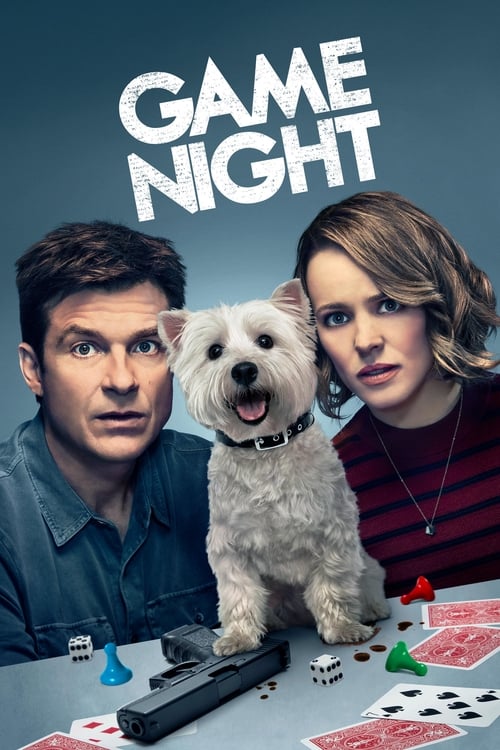
Game Night
Max and Annie's weekly game night gets kicked up a notch when Max's brother Brooks arranges a murder mystery party -- complete with fake thugs and federal agents. So when Brooks gets kidnapped, it's all supposed to be part of the game. As the competitors set out to solve the case, they start to learn that neither the game nor Brooks are what they seem to be. The friends soon find themselves in over their heads as each twist leads to another unexpected turn over the course of one chaotic night.
Despite a mid-range budget of $37.0M, Game Night became a solid performer, earning $117.5M worldwide—a 218% return.
4 wins & 22 nominations


Plot Structure
Story beats plotted across runtime


Narrative Arc
Emotional journey through the story's key moments
Story Circle
Blueprint 15-beat structure
Arcplot Score Breakdown
Weighted: Precision (70%) + Arc (15%) + Theme (15%)
Game Night (2018) showcases deliberately positioned story structure, characteristic of John Francis Daley's storytelling approach. This structural analysis examines how the film's 15-point plot structure maps to proven narrative frameworks across 1 hour and 40 minutes. With an Arcplot score of 7.6, the film showcases strong structural fundamentals.
Characters
Cast & narrative archetypes

Max Davis
Annie Davis
Brooks Davis
Gary Kingsbury
Kevin
Michelle
Ryan
Sarah
Main Cast & Characters
Max Davis
Played by Jason Bateman
Competitive game enthusiast whose insecurity about his successful brother drives him into a dangerous mystery.
Annie Davis
Played by Rachel McAdams
Max's equally competitive wife who partners with him in games and gets caught up in the real-life thriller.
Brooks Davis
Played by Kyle Chandler
Max's charismatic, successful older brother whose kidnapping mystery game becomes terrifyingly real.
Gary Kingsbury
Played by Jesse Plemons
Max and Annie's creepy, socially awkward neighbor and police officer obsessed with joining game night.
Kevin
Played by Lamorne Morris
Lovable but dim-witted friend who discovers his wife's celebrity affair during the chaos.
Michelle
Played by Kylie Bunbury
Kevin's wife who harbors a secret about a celebrity encounter that nearly destroys their marriage.
Ryan
Played by Billy Magnussen
Handsome but vapid friend who brings a different smart date each week to help him win games.
Sarah
Played by Sharon Horgan
Ryan's unexpectedly intelligent game night date who proves invaluable in solving the mystery.
Structural Analysis
The Status Quo at 1 minutes (1% through the runtime) establishes Max and Annie meet at a trivia game night, showing their competitive compatibility and love of games. They're perfect partners who turn everything into a competition.. Notably, this early placement immediately immerses viewers in the story world.
The inciting incident occurs at 11 minutes when Brooks arrives in a Corvette Stingray, immediately upstaging Max and inviting everyone to his house for a "special" game night, disrupting their routine and Max's fragile ego.. At 11% through the film, this Disruption aligns precisely with traditional story structure. This beat shifts the emotional landscape, launching the protagonist into the central conflict.
The First Threshold at 24 minutes marks the transition into Act II, occurring at 24% of the runtime. This shows the protagonist's commitment to Brooks is violently kidnapped by masked men. The group assumes it's part of the game and chooses to play along, actively deciding to pursue the "fake" kidnappers rather than call police., moving from reaction to action.
At 49 minutes, the Midpoint arrives at 49% of the runtime—precisely centered, creating perfect narrative symmetry. Of particular interest, this crucial beat False defeat: They realize this is REAL when they find actual blood and Brooks's phone. The Faberge egg they found is a real stolen artifact. The game has become deadly serious., fundamentally raising what's at risk. The emotional intensity shifts, dividing the narrative into clear before-and-after phases.
The Collapse moment at 73 minutes (73% through) represents the emotional nadir. Here, Max is captured and held at gunpoint. Annie must surrender the egg to save him. Their marriage is threatened as Max's insecurities about Brooks are fully exposed. Max faces potential death, the ultimate loss of control., illustrates the protagonist at their lowest point. This beat's placement in the final quarter sets up the climactic reversal.
The Second Threshold at 80 minutes initiates the final act resolution at 80% of the runtime. The group realizes Brooks orchestrated everything as an elaborate game - then discovers the REAL criminals hijacked Brooks's fake game. They synthesize both truths: treat it like a game to win for real., demonstrating the transformation achieved throughout the journey.
Emotional Journey
Game Night's emotional architecture traces a deliberate progression across 15 carefully calibrated beats.
Narrative Framework
This structural analysis employs proven narrative structure principles that track dramatic progression. By mapping Game Night against these established plot points, we can identify how John Francis Daley utilizes or subverts traditional narrative conventions. The plot point approach reveals not only adherence to structural principles but also creative choices that distinguish Game Night within the mystery genre.
John Francis Daley's Structural Approach
Among the 3 John Francis Daley films analyzed on Arcplot, the average structural score is 7.6, reflecting strong command of classical structure. Game Night represents one of the director's most structurally precise works. For comparative analysis, explore the complete John Francis Daley filmography.
Comparative Analysis
Additional mystery films include Lone Star, The Wicker Man and A Soldier's Story. For more John Francis Daley analyses, see Dungeons & Dragons: Honor Among Thieves, Vacation.
Plot Points by Act
Act I
SetupStatus Quo
Max and Annie meet at a trivia game night, showing their competitive compatibility and love of games. They're perfect partners who turn everything into a competition.
Theme
Discussion about having kids - "We need to figure out our lives first." The theme of control vs. chaos, and whether winning at games translates to winning at life.
Worldbuilding
Max and Annie's weekly game night with their friends. Max's insecurity about his more successful brother Brooks. Annie's desire to have kids. Their competitive marriage and friend dynamics established.
Disruption
Brooks arrives in a Corvette Stingray, immediately upstaging Max and inviting everyone to his house for a "special" game night, disrupting their routine and Max's fragile ego.
Resistance
Brooks reveals an elaborate mystery game night where one person will be "kidnapped" and the others must solve clues. Max debates whether to participate, feeling competitive with Brooks but also intimidated.
Act II
ConfrontationFirst Threshold
Brooks is violently kidnapped by masked men. The group assumes it's part of the game and chooses to play along, actively deciding to pursue the "fake" kidnappers rather than call police.
Mirror World
Ryan's date Sarah is revealed to be brilliant at solving clues, outshining everyone. She represents genuine authenticity vs. the group's game-playing personas. The couples' relationship dynamics become the B-story.
Premise
The group follows clues across the city, believing everything is staged. Comic mishaps escalate as they accidentally get involved in real crime, breaking into houses, fighting criminals, and dodging their creepy neighbor Gary.
Midpoint
False defeat: They realize this is REAL when they find actual blood and Brooks's phone. The Faberge egg they found is a real stolen artifact. The game has become deadly serious.
Opposition
Now knowing it's real, the stakes intensify. They must rescue Brooks from actual criminals. Max's jealousy of Brooks surfaces. The group makes increasingly desperate decisions, including a bullet-removal scene. Trust issues emerge between couples.
Collapse
Max is captured and held at gunpoint. Annie must surrender the egg to save him. Their marriage is threatened as Max's insecurities about Brooks are fully exposed. Max faces potential death, the ultimate loss of control.
Crisis
Imprisoned together, Max and Annie confront their relationship issues. Max admits his jealousy and inadequacy feelings. They realize winning doesn't matter - their partnership does. Dark night before the final push.
Act III
ResolutionSecond Threshold
The group realizes Brooks orchestrated everything as an elaborate game - then discovers the REAL criminals hijacked Brooks's fake game. They synthesize both truths: treat it like a game to win for real.
Synthesis
The finale: Using game-night skills and teamwork, they rescue Brooks and recover the egg. Max embraces working WITH Brooks instead of competing. Gary the neighbor helps save the day. The couples resolve their issues through authentic cooperation.
Transformation
Final image mirrors opening: Game night continues, but now with Gary included and Annie pregnant. Max has made peace with Brooks. They've learned life isn't about winning - it's about who you play with.