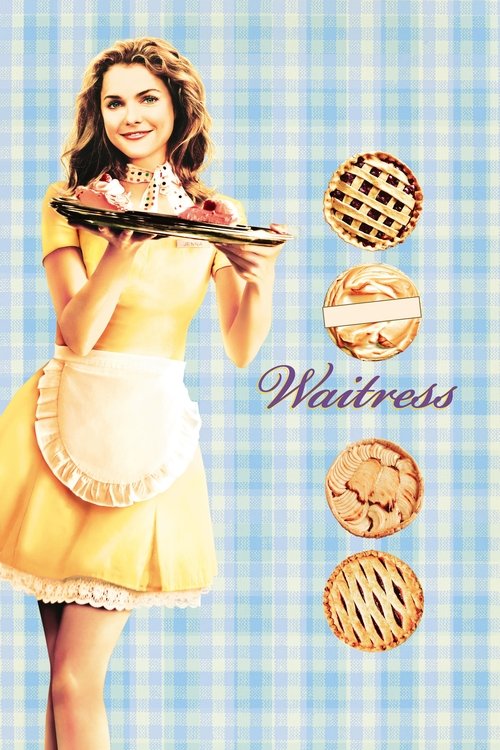
Waitress
A small town waitress stuck in a lousy marriage finds love when an exciting out-of-towner enters her life.
Despite its small-scale budget of $1.5M, Waitress became a massive hit, earning $22.2M worldwide—a remarkable 1383% return. The film's distinctive approach attracted moviegoers, proving that strong storytelling can transcend budget limitations.
6 wins & 16 nominations


Plot Structure
Story beats plotted across runtime


Narrative Arc
Emotional journey through the story's key moments
Story Circle
Blueprint 15-beat structure
Arcplot Score Breakdown
Weighted: Precision (70%) + Arc (15%) + Theme (15%)
Waitress (2007) reveals strategically placed narrative architecture, characteristic of Adrienne Shelly's storytelling approach. This structural analysis examines how the film's 15-point plot structure maps to proven narrative frameworks across 1 hour and 45 minutes. With an Arcplot score of 6.1, the film takes an unconventional approach to traditional narrative frameworks.
Structural Analysis
The Status Quo at 1 minutes (1% through the runtime) establishes Jenna stares at a pregnancy test in dread while working at Joe's Pie Diner, her voice-over revealing her loveless, controlling marriage to Earl and her only escape: creating imaginative pies.. Notably, this early placement immediately immerses viewers in the story world.
The inciting incident occurs at 13 minutes when The pregnancy test confirms Jenna is pregnant with Earl's baby. Her devastation is palpable—this child represents another chain binding her to her miserable marriage and destroying her dreams of escape.. At 12% through the film, this Disruption aligns precisely with traditional story structure. This beat shifts the emotional landscape, launching the protagonist into the central conflict.
The First Threshold at 26 minutes marks the transition into Act II, occurring at 25% of the runtime. This reveals the protagonist's commitment to Jenna and Dr. Pomatter share an impulsive, passionate kiss in his office. She chooses to cross a line she can't uncross, beginning an affair that will awaken her long-dormant sense of self-worth and desire., moving from reaction to action.
At 53 minutes, the Midpoint arrives at 50% of the runtime—precisely centered, creating perfect narrative symmetry. Structural examination shows that this crucial beat Jenna feels the baby kick for the first time while with Dr. Pomatter. This false victory moment—she's experiencing joy, connection, and hope—masks the unsustainable nature of her situation. She begins to connect with her pregnancy rather than resent it., fundamentally raising what's at risk. The emotional intensity shifts, dividing the narrative into clear before-and-after phases.
The Collapse moment at 79 minutes (75% through) represents the emotional nadir. Here, Earl discovers Jenna's hidden escape money and takes it all, destroying her only hope of freedom. She breaks off the affair with Dr. Pomatter, realizing she's been using him as an escape rather than building real independence. She feels utterly trapped—no money, no lover, no way out., indicates the protagonist at their lowest point. This beat's placement in the final quarter sets up the climactic reversal.
The Second Threshold at 84 minutes initiates the final act resolution at 80% of the runtime. Jenna gives birth and holds her daughter Lulu for the first time. In that moment of pure love, everything crystallizes—she finds the fierce, maternal strength she never knew she had. She looks at Earl and declares, "I don't want you to touch her."., demonstrating the transformation achieved throughout the journey.
Emotional Journey
Waitress's emotional architecture traces a deliberate progression across 15 carefully calibrated beats.
Narrative Framework
This structural analysis employs systematic plot point analysis that identifies crucial turning points. By mapping Waitress against these established plot points, we can identify how Adrienne Shelly utilizes or subverts traditional narrative conventions. The plot point approach reveals not only adherence to structural principles but also creative choices that distinguish Waitress within the drama genre.
Comparative Analysis
Additional drama films include After Thomas, South Pacific and Dirty Dancing: Havana Nights.
Plot Points by Act
Act I
SetupStatus Quo
Jenna stares at a pregnancy test in dread while working at Joe's Pie Diner, her voice-over revealing her loveless, controlling marriage to Earl and her only escape: creating imaginative pies.
Theme
Old Joe tells Jenna, "I'm not gonna sit here and tell you it's gonna be easy, but I will tell you that nothing good in life comes easy." This encapsulates the film's theme that freedom and happiness require courage and sacrifice.
Worldbuilding
Jenna's world is established: her abusive husband Earl who controls her money, her supportive co-workers Becky and Dawn at the diner, her creative pie-making as emotional expression, and grumpy regular customer Old Joe who sees through her forced happiness.
Disruption
The pregnancy test confirms Jenna is pregnant with Earl's baby. Her devastation is palpable—this child represents another chain binding her to her miserable marriage and destroying her dreams of escape.
Resistance
Jenna debates her options: she considers the pie contest prize money as an escape fund, visits her new OB-GYN Dr. Pomatter for the first time, and confides in Becky and Dawn about her pregnancy while hiding it from Earl. She writes letters to her unborn baby expressing her conflicted feelings.
Act II
ConfrontationFirst Threshold
Jenna and Dr. Pomatter share an impulsive, passionate kiss in his office. She chooses to cross a line she can't uncross, beginning an affair that will awaken her long-dormant sense of self-worth and desire.
Mirror World
Jenna's deepening relationship with Dr. Pomatter reveals what love and tenderness could feel like. Meanwhile, Dawn begins dating the awkward but sweet Ogie, and Becky reveals her own secret affair—each woman exploring what it means to be truly seen and valued.
Premise
Jenna experiences the "fun and games" of her affair: secret rendezvous with Dr. Pomatter, creating pies that express her emotional states ("I Hate My Husband Pie," "Falling In Love Chocolate Mousse Pie"), bonding with her friends over their romantic adventures, and growing her secret escape fund.
Midpoint
Jenna feels the baby kick for the first time while with Dr. Pomatter. This false victory moment—she's experiencing joy, connection, and hope—masks the unsustainable nature of her situation. She begins to connect with her pregnancy rather than resent it.
Opposition
Pressure mounts from all directions: Earl becomes increasingly suspicious and controlling, demanding Jenna's tip money and isolating her further. Dr. Pomatter's wife appears at the diner, bringing guilt crashing in. The affair becomes harder to sustain, and Jenna's pregnancy advances, making escape feel impossible.
Collapse
Earl discovers Jenna's hidden escape money and takes it all, destroying her only hope of freedom. She breaks off the affair with Dr. Pomatter, realizing she's been using him as an escape rather than building real independence. She feels utterly trapped—no money, no lover, no way out.
Crisis
Jenna goes into labor, emotionally and physically depleted. In the hospital, she must face Earl and the reality of bringing a child into her broken life. She feels the full weight of her circumstances with no apparent escape.
Act III
ResolutionSecond Threshold
Jenna gives birth and holds her daughter Lulu for the first time. In that moment of pure love, everything crystallizes—she finds the fierce, maternal strength she never knew she had. She looks at Earl and declares, "I don't want you to touch her."
Synthesis
Jenna orders Earl out of her life with newfound steel in her voice. She learns that Old Joe has died and left her the diner in his will, giving her financial independence. She says goodbye to Dr. Pomatter with grace, both acknowledging their affair helped her but must end.
Transformation
Years later, Jenna owns the renamed "Lulu's Pies" diner. She walks hand-in-hand with her young daughter, radiating the joy and freedom she once only dreamed of. The trapped, fearful woman from the opening has transformed into a confident, independent mother and business owner.