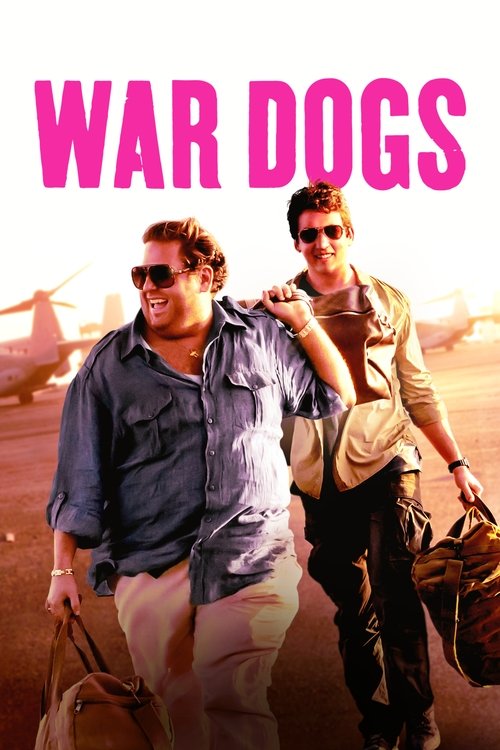
War Dogs
Based on the true story of two young men, David Packouz and Efraim Diveroli, who won a $300 million contract from the Pentagon to arm America's allies in Afghanistan.
Working with a moderate budget of $50.0M, the film achieved a respectable showing with $86.2M in global revenue (+72% profit margin).


Plot Structure
Story beats plotted across runtime


Narrative Arc
Emotional journey through the story's key moments
Story Circle
Blueprint 15-beat structure
Arcplot Score Breakdown
Weighted: Precision (70%) + Arc (15%) + Theme (15%)
War Dogs (2016) exhibits strategically placed narrative design, characteristic of Todd Phillips's storytelling approach. This structural analysis examines how the film's 15-point plot structure maps to proven narrative frameworks across 1 hour and 54 minutes. With an Arcplot score of 7.3, the film balances conventional beats with creative variation.
Structural Analysis
The Status Quo at 1 minutes (1% through the runtime) establishes David Packouz works as a massage therapist in Miami Beach, living a mundane, struggling existence while his childhood friend Efraim has disappeared from his life.. Significantly, this early placement immediately immerses viewers in the story world.
The inciting incident occurs at 14 minutes when Efraim offers David a partnership in his arms dealing company, AEY Inc., promising easy money by selling weapons to the U.S. Military during the Iraq War.. At 12% through the film, this Disruption aligns precisely with traditional story structure. This beat shifts the emotional landscape, launching the protagonist into the central conflict.
The First Threshold at 28 minutes marks the transition into Act II, occurring at 25% of the runtime. This illustrates the protagonist's commitment to David actively chooses to become Efraim's partner, lying to Iz about the nature of his work, and commits to the arms dealing business full-time., moving from reaction to action.
At 58 minutes, the Midpoint arrives at 50% of the runtime—precisely centered, creating perfect narrative symmetry. Significantly, this crucial beat AEY wins the Afghan Deal—a $300 million contract to supply ammunition to Afghan security forces—their biggest score yet. David and Efraim celebrate their false victory, believing they've made it big, but the seeds of disaster are planted., fundamentally raising what's at risk. The emotional intensity shifts, dividing the narrative into clear before-and-after phases.
The Collapse moment at 86 minutes (76% through) represents the emotional nadir. Here, Efraim betrays David by cutting him out of the Henry Girard payments, destroying their friendship. David realizes he's lost everything: his partnership, his integrity, and his family's trust as Iz leaves him., illustrates the protagonist at their lowest point. This beat's placement in the final quarter sets up the climactic reversal.
The Second Threshold at 92 minutes initiates the final act resolution at 81% of the runtime. David decides to cooperate with federal investigators, providing evidence against Efraim and taking responsibility for his actions, choosing honesty over loyalty to his corrupt partner., demonstrating the transformation achieved throughout the journey.
Emotional Journey
War Dogs's emotional architecture traces a deliberate progression across 15 carefully calibrated beats.
Narrative Framework
This structural analysis employs proven narrative structure principles that track dramatic progression. By mapping War Dogs against these established plot points, we can identify how Todd Phillips utilizes or subverts traditional narrative conventions. The plot point approach reveals not only adherence to structural principles but also creative choices that distinguish War Dogs within the comedy genre.
Todd Phillips's Structural Approach
Among the 11 Todd Phillips films analyzed on Arcplot, the average structural score is 6.9, demonstrating varied approaches to story architecture. War Dogs represents one of the director's most structurally precise works. For comparative analysis, explore the complete Todd Phillips filmography.
Comparative Analysis
Additional comedy films include The Bad Guys, Ella Enchanted and The Evening Star. For more Todd Phillips analyses, see School for Scoundrels, The Hangover Part III and Old School.
Plot Points by Act
Act I
SetupStatus Quo
David Packouz works as a massage therapist in Miami Beach, living a mundane, struggling existence while his childhood friend Efraim has disappeared from his life.
Theme
Efraim tells David: "The question is, do you want to be a man or do you want to be a sheep?" establishing the film's theme about moral compromise and the American Dream's dark side.
Worldbuilding
David's struggling life as a massage therapist is established. He reconnects with his old friend Efraim Diveroli at a funeral, learns about Efraim's arms dealing business exploiting government contracts, and is introduced to the post-9/11 world of private military contracts.
Disruption
Efraim offers David a partnership in his arms dealing company, AEY Inc., promising easy money by selling weapons to the U.S. military during the Iraq War.
Resistance
David debates whether to join Efraim, initially hesitant about the ethics and legality. His girlfriend Iz becomes pregnant, increasing financial pressure. David witnesses Efraim's operation and learns the basics of finding government contracts on FedBizOpps.
Act II
ConfrontationFirst Threshold
David actively chooses to become Efraim's partner, lying to Iz about the nature of his work, and commits to the arms dealing business full-time.
Mirror World
David's relationship with Iz deepens as she gives birth to their daughter, representing the legitimate life and moral grounding he's abandoning for the thrill and money of arms dealing.
Premise
The "fun and games" of arms dealing: David and Efraim score increasingly larger contracts, drive through the Triangle of Death in Iraq, experience wild success, make huge profits, and enjoy the dangerous, intoxicating world of international weapons trading.
Midpoint
AEY wins the Afghan Deal—a $300 million contract to supply ammunition to Afghan security forces—their biggest score yet. David and Efraim celebrate their false victory, believing they've made it big, but the seeds of disaster are planted.
Opposition
The Afghan Deal unravels: they discover the ammunition is Chinese-made (illegal to supply), must work with shady middleman Henry Girard, resort to repackaging fraud, face State Department scrutiny, and Efraim's greed and paranoia intensify. Iz discovers David's lies.
Collapse
Efraim betrays David by cutting him out of the Henry Girard payments, destroying their friendship. David realizes he's lost everything: his partnership, his integrity, and his family's trust as Iz leaves him.
Crisis
David sits in darkness, isolated and broken, processing the betrayal and the moral cost of his choices. He faces potential federal prosecution and the loss of his family.
Act III
ResolutionSecond Threshold
David decides to cooperate with federal investigators, providing evidence against Efraim and taking responsibility for his actions, choosing honesty over loyalty to his corrupt partner.
Synthesis
The legal consequences unfold: both David and Efraim are prosecuted for fraud. David receives house arrest while Efraim gets prison time. David narrates the aftermath, explaining how the bigger players in the arms industry faced no consequences.
Transformation
David is home under house arrest with Iz and their daughter, having lost his fortune but maintained his family. He's wiser, humbler, and aware of the systemic corruption he was a small part of—transformed from naive sheep to disillusioned witness.