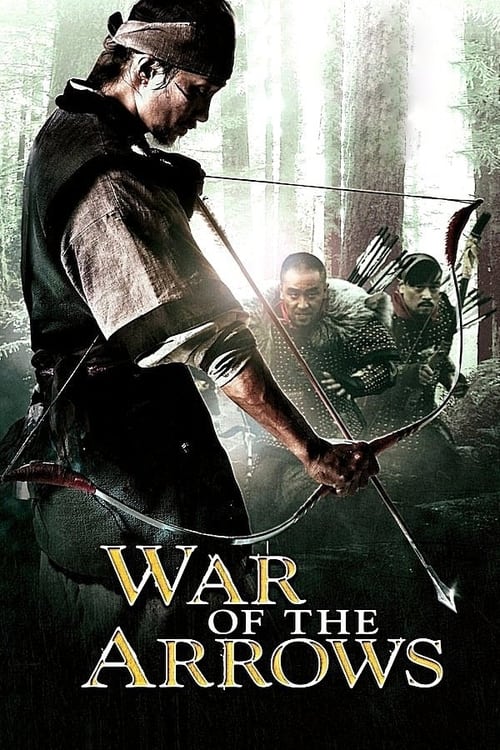
War of the Arrows
After the death of their father, two siblings are raised by their father's best friend. However, when one gets kidnapped just before her wedding, the other rises against the Manchus.
Despite its small-scale budget of $8.0M, War of the Arrows became a commercial juggernaut, earning $49.0M worldwide—a remarkable 513% return. The film's unconventional structure attracted moviegoers, proving that strong storytelling can transcend budget limitations.


Plot Structure
Story beats plotted across runtime


Narrative Arc
Emotional journey through the story's key moments
Story Circle
Blueprint 15-beat structure
Arcplot Score Breakdown
Weighted: Precision (70%) + Arc (15%) + Theme (15%)
War of the Arrows (2011) demonstrates strategically placed plot construction, characteristic of Kim Han-min's storytelling approach. This structural analysis examines how the film's 15-point plot structure maps to proven narrative frameworks across 2 hours and 2 minutes. With an Arcplot score of 6.9, the film balances conventional beats with creative variation.
Structural Analysis
The Status Quo at 1 minutes (1% through the runtime) establishes Young Nam-yi witnesses his father's execution as a traitor, establishing his world of trauma and survival with his sister Ja-in under their father's loyal servant Moo-seok.. Structural examination shows that this early placement immediately immerses viewers in the story world.
The inciting incident occurs at 15 minutes when Manchu raiders attack the wedding, killing dozens and capturing Ja-in along with other Koreans to be taken as slaves and tribute to the Qing emperor.. At 12% through the film, this Disruption aligns precisely with traditional story structure. This beat shifts the emotional landscape, launching the protagonist into the central conflict.
The First Threshold at 30 minutes marks the transition into Act II, occurring at 25% of the runtime. This shows the protagonist's commitment to Nam-yi makes the active choice to cross into Manchu-controlled territory alone, leaving behind the safety of his village to pursue the war band and rescue his sister., moving from reaction to action.
At 61 minutes, the Midpoint arrives at 50% of the runtime—precisely centered, creating perfect narrative symmetry. Structural examination shows that this crucial beat Commander Jyushinta identifies Nam-yi as the archer and sets a trap. Nam-yi is captured and beaten, appearing to have failed. False defeat: his individual skills aren't enough against organized military strategy., fundamentally raising what's at risk. The emotional intensity shifts, dividing the narrative into clear before-and-after phases.
The Collapse moment at 92 minutes (75% through) represents the emotional nadir. Here, Ja-in's husband Seo-goon is executed by Jyushinta in front of the captives. The whiff of death: Nam-yi's brother-in-law dies, and Ja-in faces imminent enslavement with no apparent hope of rescue., indicates the protagonist at their lowest point. This beat's placement in the final quarter sets up the climactic reversal.
The Second Threshold at 97 minutes initiates the final act resolution at 80% of the runtime. Nam-yi synthesizes his skills with renewed purpose: not revenge, but protection. He realizes he must use his father's techniques combined with his own guerrilla tactics to face Jyushinta directly., demonstrating the transformation achieved throughout the journey.
Emotional Journey
War of the Arrows's emotional architecture traces a deliberate progression across 15 carefully calibrated beats.
Narrative Framework
This structural analysis employs structural analysis methodology used to understand storytelling architecture. By mapping War of the Arrows against these established plot points, we can identify how Kim Han-min utilizes or subverts traditional narrative conventions. The plot point approach reveals not only adherence to structural principles but also creative choices that distinguish War of the Arrows within the drama genre.
Kim Han-min's Structural Approach
Among the 4 Kim Han-min films analyzed on Arcplot, the average structural score is 7.2, reflecting strong command of classical structure. War of the Arrows takes a more unconventional approach compared to the director's typical style. For comparative analysis, explore the complete Kim Han-min filmography.
Comparative Analysis
Additional drama films include After Thomas, South Pacific and Dirty Dancing: Havana Nights. For more Kim Han-min analyses, see The Admiral: Roaring Currents, Hansan: Rising Dragon and Paradise Murdered.
Plot Points by Act
Act I
SetupStatus Quo
Young Nam-yi witnesses his father's execution as a traitor, establishing his world of trauma and survival with his sister Ja-in under their father's loyal servant Moo-seok.
Theme
Moo-seok tells young Nam-yi that protecting family is more important than revenge or glory, foreshadowing the central thematic conflict between vengeance and duty.
Worldbuilding
Fifteen years pass. Adult Nam-yi has become a skilled hunter living in the mountains, estranged from his now-married sister Ja-in. The wedding day arrives as Manchu forces approach the border, establishing the political tensions and family dynamics.
Disruption
Manchu raiders attack the wedding, killing dozens and capturing Ja-in along with other Koreans to be taken as slaves and tribute to the Qing emperor.
Resistance
Nam-yi arrives too late to stop the abduction. He debates whether to pursue the Manchu army alone with only his bow. Other survivors discourage him, but he gathers supplies and studies the enemy's trail.
Act II
ConfrontationFirst Threshold
Nam-yi makes the active choice to cross into Manchu-controlled territory alone, leaving behind the safety of his village to pursue the war band and rescue his sister.
Mirror World
Nam-yi observes Ja-in among the captives, seeing her protect other prisoners. Her compassion and strength mirror the protective duty he abandoned, showing him what true courage looks like.
Premise
Nam-yi uses his archery skills to pick off Manchu soldiers from a distance, engaging in cat-and-mouse warfare through forests and rivers. The promise of the premise: spectacular archery action as one man takes on an army.
Midpoint
Commander Jyushinta identifies Nam-yi as the archer and sets a trap. Nam-yi is captured and beaten, appearing to have failed. False defeat: his individual skills aren't enough against organized military strategy.
Opposition
Nam-yi escapes but is severely wounded. Jyushinta executes prisoners to draw him out. The Manchus close in on their destination, and time runs out. Nam-yi's wounds slow him down as the enemy tightens their net.
Collapse
Ja-in's husband Seo-goon is executed by Jyushinta in front of the captives. The whiff of death: Nam-yi's brother-in-law dies, and Ja-in faces imminent enslavement with no apparent hope of rescue.
Crisis
Nam-yi reaches his darkest moment, wounded and exhausted, watching the Manchu camp from a distance. He contemplates his father's bow and the weight of protection versus revenge.
Act III
ResolutionSecond Threshold
Nam-yi synthesizes his skills with renewed purpose: not revenge, but protection. He realizes he must use his father's techniques combined with his own guerrilla tactics to face Jyushinta directly.
Synthesis
Nam-yi launches a final assault on the Manchu camp, using fire arrows and strategic positioning. He faces Jyushinta in an archery duel, protecting the escaping captives while engaging the commander in single combat.
Transformation
Nam-yi and Ja-in reunite safely. He has transformed from a solitary hunter driven by guilt into a protector who fulfilled his duty to family, embodying the theme Moo-seok taught him as a child.