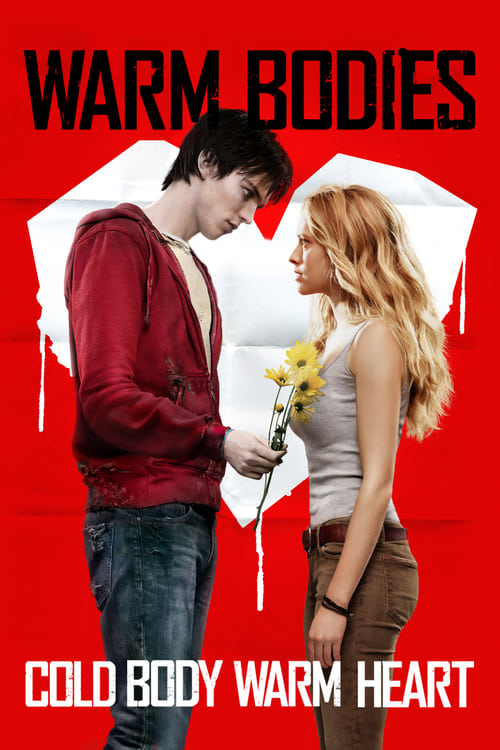
Warm Bodies
After a zombie becomes involved with the girlfriend of one of his victims, their romance sets in motion a sequence of events that might transform the entire lifeless world.
Despite a respectable budget of $35.0M, Warm Bodies became a commercial success, earning $117.0M worldwide—a 234% return.
2 wins & 10 nominations


Plot Structure
Story beats plotted across runtime


Narrative Arc
Emotional journey through the story's key moments
Story Circle
Blueprint 15-beat structure
Arcplot Score Breakdown
Weighted: Precision (70%) + Arc (15%) + Theme (15%)
Warm Bodies (2013) exhibits deliberately positioned dramatic framework, characteristic of Jonathan Levine's storytelling approach. This structural analysis examines how the film's 15-point plot structure maps to proven narrative frameworks across 1 hour and 38 minutes. With an Arcplot score of 7.7, the film showcases strong structural fundamentals.
Structural Analysis
The Status Quo at 1 minutes (1% through the runtime) establishes R narrates his zombie existence at the airport - he can't remember his full name, shuffles aimlessly, and is trapped in a dead, meaningless existence. This establishes the "before" state: R is emotionally and literally dead.. Structural examination shows that this early placement immediately immerses viewers in the story world.
The inciting incident occurs at 12 minutes when R and zombie horde attack Julie's scavenging party. R kills and eats Perry's brain, absorbing his memories and emotions. R sees Julie and feels something stir - he protects her instead of eating her. The catalyst that disrupts both their worlds.. At 12% through the film, this Disruption aligns precisely with traditional story structure. This beat shifts the emotional landscape, launching the protagonist into the central conflict.
The First Threshold at 24 minutes marks the transition into Act II, occurring at 25% of the runtime. This shows the protagonist's commitment to Julie chooses to stay with R and give him a chance. She puts on music and they share a moment of connection. R makes the active choice to try to communicate and be more human. Both cross into the new world of their relationship., moving from reaction to action.
At 48 minutes, the Midpoint arrives at 49% of the runtime—precisely centered, creating perfect narrative symmetry. The analysis reveals that this crucial beat R takes Julie home to the human enclave. False victory - they've connected and R is changing, but now they must separate. Stakes raise: Julie must convince her father that zombies can change, while R realizes the Boneys (skeletal zombies) see him as a threat., fundamentally raising what's at risk. The emotional intensity shifts, dividing the narrative into clear before-and-after phases.
The Collapse moment at 73 minutes (74% through) represents the emotional nadir. Here, The Boneys attack in force. R and the changing zombies breach the wall to warn Julie. General Grigio sees R and shoots him, refusing to see his humanity. All seems lost - the military will kill all zombies, the Boneys will kill everyone else. The dream of coexistence dies., demonstrates the protagonist at their lowest point. This beat's placement in the final quarter sets up the climactic reversal.
The Second Threshold at 79 minutes initiates the final act resolution at 81% of the runtime. R and Julie realize they must make a stand together - zombies and humans united against the Boneys. R synthesizes what he learned (connection, love, humanity) with his zombie strength. Julie convinces Nora and others to help. New information: working together is the only way., demonstrating the transformation achieved throughout the journey.
Emotional Journey
Warm Bodies's emotional architecture traces a deliberate progression across 15 carefully calibrated beats.
Narrative Framework
This structural analysis employs structural analysis methodology used to understand storytelling architecture. By mapping Warm Bodies against these established plot points, we can identify how Jonathan Levine utilizes or subverts traditional narrative conventions. The plot point approach reveals not only adherence to structural principles but also creative choices that distinguish Warm Bodies within the horror genre.
Jonathan Levine's Structural Approach
Among the 5 Jonathan Levine films analyzed on Arcplot, the average structural score is 7.3, reflecting strong command of classical structure. Warm Bodies represents one of the director's most structurally precise works. For comparative analysis, explore the complete Jonathan Levine filmography.
Comparative Analysis
Additional horror films include Thinner, A Nightmare on Elm Street and Mary Reilly. For more Jonathan Levine analyses, see 50/50, Snatched and Long Shot.
Plot Points by Act
Act I
SetupStatus Quo
R narrates his zombie existence at the airport - he can't remember his full name, shuffles aimlessly, and is trapped in a dead, meaningless existence. This establishes the "before" state: R is emotionally and literally dead.
Theme
R's internal monologue about wanting to connect: "I want to say hello, to talk about the weather... but I can't." The theme is stated - connection is what makes us human, isolation is death.
Worldbuilding
Establish the post-apocalyptic world: zombies roam freely, humans live behind walls, R collects things and has a "friend" M. Meanwhile, Julie lives in the protected human enclave where her father General Grigio leads the military effort. Setup of both worlds.
Disruption
R and zombie horde attack Julie's scavenging party. R kills and eats Perry's brain, absorbing his memories and emotions. R sees Julie and feels something stir - he protects her instead of eating her. The catalyst that disrupts both their worlds.
Resistance
R brings Julie to his airplane home, protecting her from other zombies. Julie debates whether to trust R or escape. R experiences Perry's memories of loving Julie. Both hesitate - R unsure if he can change, Julie unsure if she should stay. Tentative connection begins.
Act II
ConfrontationFirst Threshold
Julie chooses to stay with R and give him a chance. She puts on music and they share a moment of connection. R makes the active choice to try to communicate and be more human. Both cross into the new world of their relationship.
Mirror World
Julie becomes R's mirror - she represents humanity, emotion, and connection. Their developing relationship carries the theme: love and connection literally bring the dead back to life. She teaches him to be human again.
Premise
The fun and games of a zombie-human romance: R and Julie bond over music, he shows her his collections, they go on a "date" in the city. R begins changing - more verbal, more alive. Other zombies start noticing the change too. The promise of the premise delivered.
Midpoint
R takes Julie home to the human enclave. False victory - they've connected and R is changing, but now they must separate. Stakes raise: Julie must convince her father that zombies can change, while R realizes the Boneys (skeletal zombies) see him as a threat.
Opposition
Multiple forces close in: General Grigio refuses to believe zombies can change and increases patrols to kill them all. The Boneys hunt R and the changing zombies. Julie's boyfriend Nora is skeptical. The zombie transformation spreads but faces violent opposition from both sides.
Collapse
The Boneys attack in force. R and the changing zombies breach the wall to warn Julie. General Grigio sees R and shoots him, refusing to see his humanity. All seems lost - the military will kill all zombies, the Boneys will kill everyone else. The dream of coexistence dies.
Crisis
R, wounded, escapes with Julie. They face the dark reality that her father will never accept change and the Boneys will destroy everything. Moment of despair before the final push - they process what must be done.
Act III
ResolutionSecond Threshold
R and Julie realize they must make a stand together - zombies and humans united against the Boneys. R synthesizes what he learned (connection, love, humanity) with his zombie strength. Julie convinces Nora and others to help. New information: working together is the only way.
Synthesis
The finale battle: zombies and humans fight the Boneys together. R saves Julie by sacrificing himself, falling from a height into water. This ultimate act of love completes his transformation - his heart starts beating. General Grigio witnesses it and finally understands. The war ends, coexistence begins.
Transformation
R, now fully human and healed, reunites with Julie. They kiss as humans in a world where zombies and humans work together to rebuild. Mirrors the opening: R is now alive, connected, and can truly communicate. The closing image of hope and transformation.