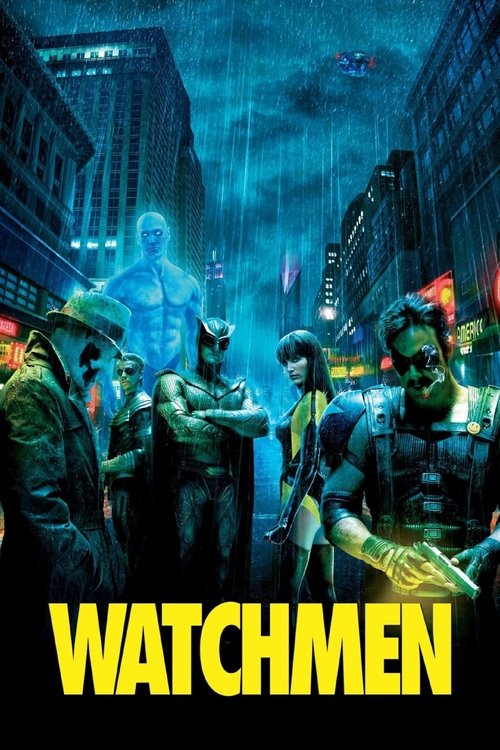
Watchmen
In a version of 1985 where superheroes exist, the murder of a colleague sends active vigilante Rorschach on the trail of a conspiracy that will change the course of history.
Working with a considerable budget of $130.0M, the film achieved a modest success with $185.3M in global revenue (+43% profit margin).
12 wins & 24 nominations


Plot Structure
Story beats plotted across runtime


Narrative Arc
Emotional journey through the story's key moments
Story Circle
Blueprint 15-beat structure
Structural Analysis
The Status Quo at 2 minutes (1% through the runtime) establishes The Comedian sits alone in his apartment watching TV as Nixon announces potential nuclear war with the Soviets. An aging, bitter hero in a world that has moved past costumed vigilantes - the Keene Act has outlawed masked heroes, and the Doomsday Clock ticks toward midnight.. Of particular interest, this early placement immediately immerses viewers in the story world.
The inciting incident occurs at 20 minutes when Rorschach visits Dan Dreiberg to warn him that someone is targeting masked heroes - "The Comedian is dead." This revelation that Edward Blake was murdered and thrown from his apartment window sets the investigation in motion and disrupts the uneasy peace of retired vigilantes.. At 12% through the film, this Disruption aligns precisely with traditional story structure. This beat shifts the emotional landscape, launching the protagonist into the central conflict.
The First Threshold at 41 minutes marks the transition into Act II, occurring at 25% of the runtime. This illustrates the protagonist's commitment to Dr. Manhattan is publicly accused of giving cancer to those close to him, forcing him into exile on Mars. This removes Earth's most powerful protector and emboldens the Soviets to advance into Afghanistan, pushing the Doomsday Clock closer to midnight. The investigation becomes urgent., moving from reaction to action.
At 82 minutes, the Midpoint arrives at 50% of the runtime—precisely centered, creating perfect narrative symmetry. Notably, this crucial beat Rorschach is framed for the murder of Moloch and captured by police. The mask killer theory seems confirmed as the conspiracy closes in. Meanwhile, Dr. Manhattan takes Laurie to Mars, revealing his growing detachment from humanity - a false defeat as the investigation stalls and the heroes are scattered., fundamentally raising what's at risk. The emotional intensity shifts, dividing the narrative into clear before-and-after phases.
The Collapse moment at 122 minutes (75% through) represents the emotional nadir. Here, Adrian Veidt reveals he is behind everything - and that his plan has already been executed. He has teleported an energy reactor mimicking Dr. Manhattan's signature to destroy major cities worldwide, killing millions to prevent nuclear war. "I'm not a comic book villain. I triggered it thirty-five minutes ago."., indicates the protagonist at their lowest point. This beat's placement in the final quarter sets up the climactic reversal.
The Second Threshold at 130 minutes initiates the final act resolution at 80% of the runtime. Dr. Manhattan, Dan, and Laurie make the impossible moral choice to keep Adrian's secret, allowing the lie to stand. Peace has been achieved through mass murder, and they must live with complicity. Only Rorschach refuses to compromise - "Not even in the face of Armageddon. Never compromise."., demonstrating the transformation achieved throughout the journey.
Emotional Journey
Watchmen's emotional architecture traces a deliberate progression across 15 carefully calibrated beats.
Narrative Framework
This structural analysis employs proven narrative structure principles that track dramatic progression. By mapping Watchmen against these established plot points, we can identify how Zack Snyder utilizes or subverts traditional narrative conventions. The plot point approach reveals not only adherence to structural principles but also creative choices that distinguish Watchmen within the action genre.
Zack Snyder's Structural Approach
Among the 12 Zack Snyder films analyzed on Arcplot, the average structural score is 7.0, demonstrating varied approaches to story architecture. Watchmen exemplifies the director's characteristic narrative technique. For comparative analysis, explore the complete Zack Snyder filmography.
Comparative Analysis
Additional action films include The Bad Guys, Puss in Boots and Venom: The Last Dance. For more Zack Snyder analyses, see Dawn of the Dead, Justice League and Army of the Dead.
Plot Points by Act
Act I
SetupStatus Quo
The Comedian sits alone in his apartment watching TV as Nixon announces potential nuclear war with the Soviets. An aging, bitter hero in a world that has moved past costumed vigilantes - the Keene Act has outlawed masked heroes, and the Doomsday Clock ticks toward midnight.
Theme
During the opening credits montage depicting the alternate history of masked heroes, the iconic question emerges through graffiti: "Who Watches the Watchmen?" This thematic statement questions the accountability of those with power to protect society.
Worldbuilding
The extended opening credits montage establishes this alternate 1985 where Nixon is still president, America won Vietnam with Dr. Manhattan's help, and former costumed heroes live in retirement or work for the government. We meet Rorschach investigating the Comedian's murder and Dan Dreiberg's mundane existence.
Disruption
Rorschach visits Dan Dreiberg to warn him that someone is targeting masked heroes - "The Comedian is dead." This revelation that Edward Blake was murdered and thrown from his apartment window sets the investigation in motion and disrupts the uneasy peace of retired vigilantes.
Resistance
Rorschach warns each former Watchmen member about his "mask killer" theory. We see Dr. Manhattan and Laurie's strained relationship at the military facility, Dan's nostalgic impotence, and Adrian Veidt's corporate empire. Each hero debates whether to take the threat seriously or dismiss Rorschach's paranoia.
Act II
ConfrontationFirst Threshold
Dr. Manhattan is publicly accused of giving cancer to those close to him, forcing him into exile on Mars. This removes Earth's most powerful protector and emboldens the Soviets to advance into Afghanistan, pushing the Doomsday Clock closer to midnight. The investigation becomes urgent.
Mirror World
Laurie, now without Dr. Manhattan, reconnects with Dan Dreiberg. Their developing relationship represents the human emotional core against the cosmic detachment of Manhattan and the brutal cynicism of Rorschach - asking whether connection and compassion can exist in a world of moral absolutes.
Premise
The heroes investigate the conspiracy while global tensions escalate. Dan and Laurie rediscover their heroic identities by donning costumes again, rescuing people from a tenement fire. Rorschach digs into the Comedian's past. Dr. Manhattan contemplates existence on Mars through flashbacks of his origin and relationship with Laurie.
Midpoint
Rorschach is framed for the murder of Moloch and captured by police. The mask killer theory seems confirmed as the conspiracy closes in. Meanwhile, Dr. Manhattan takes Laurie to Mars, revealing his growing detachment from humanity - a false defeat as the investigation stalls and the heroes are scattered.
Opposition
Rorschach survives brutal prison conditions while Dan and Laurie work to free him. On Mars, Dr. Manhattan and Laurie argue about whether humanity is worth saving. The Doomsday Clock advances as Soviet forces push forward. The conspiracy deepens when they discover Pyramid Deliveries connects to Adrian Veidt.
Collapse
Adrian Veidt reveals he is behind everything - and that his plan has already been executed. He has teleported an energy reactor mimicking Dr. Manhattan's signature to destroy major cities worldwide, killing millions to prevent nuclear war. "I'm not a comic book villain. I triggered it thirty-five minutes ago."
Crisis
The heroes witness the devastation on television screens - New York, Los Angeles, Moscow, all destroyed. Millions dead. They must confront the horrific reality that exposing the truth would restart the very war Adrian's genocide was meant to prevent. The world believes Dr. Manhattan attacked humanity.
Act III
ResolutionSecond Threshold
Dr. Manhattan, Dan, and Laurie make the impossible moral choice to keep Adrian's secret, allowing the lie to stand. Peace has been achieved through mass murder, and they must live with complicity. Only Rorschach refuses to compromise - "Not even in the face of Armageddon. Never compromise."
Synthesis
Rorschach walks into the snow, demanding Dr. Manhattan kill him rather than let him expose the truth. Manhattan obliterates him - the only truly uncompromising hero destroyed by the moral paradox. Nixon announces peace with the Soviets. Adrian asks Manhattan if he did the right thing. "Nothing ever ends."
Transformation
At the New Frontiersman newspaper office, an editor reaches toward the crank file containing Rorschach's journal - which documents the entire conspiracy. The question of "Who watches the watchmen?" remains unanswered. The fragile peace built on lies may yet unravel. Nothing ever ends.