What About Bob?
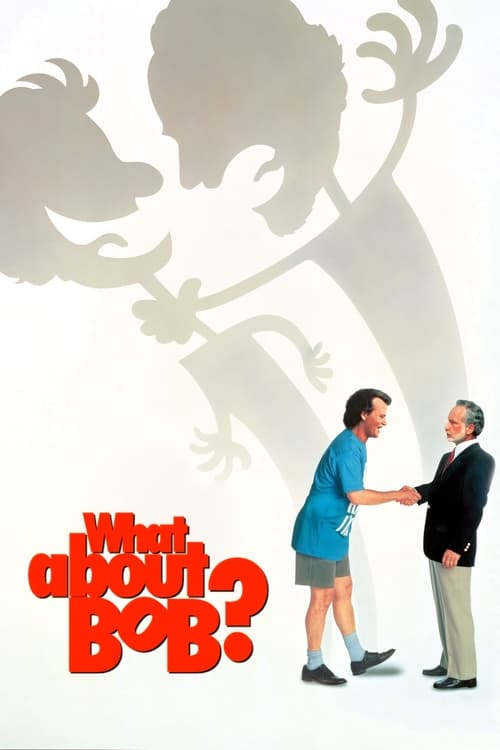
Before going on vacation, self-involved psychiatrist Dr. Leo Marvin has the misfortune of taking on a new patient: Bob Wiley. An exemplar of neediness and a compendium of phobias, Bob follows Marvin to his family's country house. Dr. Marvin tries to get him to leave; the trouble is, everyone loves Bob. As his oblivious patient makes himself at home, Dr. Marvin loses his professional composure and, before long, may be ready for the loony bin himself.
Working with a moderate budget of $35.0M, the film achieved a respectable showing with $63.7M in global revenue (+82% profit margin).
2 wins & 2 nominations


Plot Structure
Story beats plotted across runtime


Narrative Arc
Emotional journey through the story's key moments
Story Circle
Blueprint 15-beat structure
Arcplot Score Breakdown
Weighted: Precision (70%) + Arc (15%) + Theme (15%)
What About Bob? (1991) exemplifies deliberately positioned plot construction, characteristic of Frank Oz's storytelling approach. This structural analysis examines how the film's 15-point plot structure maps to proven narrative frameworks across 1 hour and 40 minutes. With an Arcplot score of 6.7, the film balances conventional beats with creative variation.
Structural Analysis
The Status Quo at 1 minutes (1% through the runtime) establishes Bob Wiley sits paralyzed in his New York apartment, overwhelmed by an endless list of phobias. He's a man trapped by his own mind, desperate for help but unable to function in the world.. Significantly, this early placement immediately immerses viewers in the story world.
The inciting incident occurs at 12 minutes when Dr. Marvin ends the session and announces he's leaving for a month-long vacation in New Hampshire, abandoning Bob after just one meeting. Bob is left alone with only a book and a phone number, his fragile progress threatened.. At 12% through the film, this Disruption aligns precisely with traditional story structure. This beat shifts the emotional landscape, launching the protagonist into the central conflict.
The First Threshold at 24 minutes marks the transition into Act II, occurring at 24% of the runtime. This shows the protagonist's commitment to Bob arrives at Lake Winnipesaukee, having conquered his fears of travel through baby steps. He actively chooses to pursue his therapy by following Leo to New Hampshire, crossing from his confined world into the open space of the vacation community., moving from reaction to action.
At 49 minutes, the Midpoint arrives at 49% of the runtime—precisely centered, creating perfect narrative symmetry. Notably, this crucial beat Bob appears on Good Morning America alongside Leo, stealing the spotlight and charming the hosts with his authentic vulnerability. This false victory for Bob marks Leo's public humiliation and the point where Leo's sanity begins to crack - the fun and games are over., fundamentally raising what's at risk. The emotional intensity shifts, dividing the narrative into clear before-and-after phases.
The Collapse moment at 75 minutes (75% through) represents the emotional nadir. Here, Leo successfully has Bob committed to a psychiatric institution, using his professional credentials to lock him away. Bob is stripped from his new family and support system - a death of the connection he's built. Leo appears to have won, but at the cost of his own humanity., reveals the protagonist at their lowest point. This beat's placement in the final quarter sets up the climactic reversal.
The Second Threshold at 80 minutes initiates the final act resolution at 80% of the runtime. Bob escapes from the psychiatric hospital and returns to the lake, refusing to be separated from his new family. His complete recovery from his phobias is evident - he's no longer the paralyzed man from New York but someone willing to fight for connection., demonstrating the transformation achieved throughout the journey.
Emotional Journey
What About Bob?'s emotional architecture traces a deliberate progression across 15 carefully calibrated beats.
Narrative Framework
This structural analysis employs structural analysis methodology used to understand storytelling architecture. By mapping What About Bob? against these established plot points, we can identify how Frank Oz utilizes or subverts traditional narrative conventions. The plot point approach reveals not only adherence to structural principles but also creative choices that distinguish What About Bob? within the comedy genre.
Frank Oz's Structural Approach
Among the 11 Frank Oz films analyzed on Arcplot, the average structural score is 7.2, reflecting strong command of classical structure. What About Bob? takes a more unconventional approach compared to the director's typical style. For comparative analysis, explore the complete Frank Oz filmography.
Comparative Analysis
Additional comedy films include The Bad Guys, Ella Enchanted and The Evening Star. For more Frank Oz analyses, see The Dark Crystal, The Indian in the Cupboard and Dirty Rotten Scoundrels.
Plot Points by Act
Act I
SetupStatus Quo
Bob Wiley sits paralyzed in his New York apartment, overwhelmed by an endless list of phobias. He's a man trapped by his own mind, desperate for help but unable to function in the world.
Theme
Dr. Leo Marvin introduces his therapeutic philosophy of "Baby Steps" to Bob during their first session. This becomes both the ironic throughline and the genuine path to Bob's healing through small acts of courage.
Worldbuilding
We meet Bob as a neurotic mess who drives away therapists, and Dr. Leo Marvin as a self-important psychiatrist promoting his new book "Baby Steps." Leo agrees to one session with Bob before his family vacation, establishing both characters' flaws and the stakes.
Disruption
Dr. Marvin ends the session and announces he's leaving for a month-long vacation in New Hampshire, abandoning Bob after just one meeting. Bob is left alone with only a book and a phone number, his fragile progress threatened.
Resistance
Bob spirals without his new doctor, calling Leo obsessively at Lake Winnipesaukee. He wrestles with his fears about traveling but begins applying "baby steps" to overcome them. Leo repeatedly tries to dismiss Bob, unknowingly pushing him toward the threshold.
Act II
ConfrontationFirst Threshold
Bob arrives at Lake Winnipesaukee, having conquered his fears of travel through baby steps. He actively chooses to pursue his therapy by following Leo to New Hampshire, crossing from his confined world into the open space of the vacation community.
Mirror World
Bob meets the Marvin family - Fay, Siggy, and Anna - and immediately connects with them. Unlike Leo's clinical detachment, the family offers genuine warmth and acceptance, embodying the human connection Bob actually needs to heal.
Premise
Bob integrates into Lake Winnipesaukee life with joyful abandon. He goes sailing, dives off the mast, befriends the townspeople, and bonds deeply with Leo's family. Meanwhile, Leo grows increasingly frustrated as Bob steals everyone's affection and disrupts his "perfect" vacation.
Midpoint
Bob appears on Good Morning America alongside Leo, stealing the spotlight and charming the hosts with his authentic vulnerability. This false victory for Bob marks Leo's public humiliation and the point where Leo's sanity begins to crack - the fun and games are over.
Opposition
Leo launches increasingly desperate schemes to get rid of Bob: abandoning him in the woods, trying to have him committed, and attempting to scare him away. Each plan backfires spectacularly. The family sides with Bob, and Leo's marriage strains as his obsession consumes him.
Collapse
Leo successfully has Bob committed to a psychiatric institution, using his professional credentials to lock him away. Bob is stripped from his new family and support system - a death of the connection he's built. Leo appears to have won, but at the cost of his own humanity.
Crisis
The Marvin family reacts with horror to Leo's actions. Fay and the children are devastated by Bob's removal, and the household feels his absence acutely. Leo's victory rings hollow as his family pulls away from him, forcing a moment of dark reckoning.
Act III
ResolutionSecond Threshold
Bob escapes from the psychiatric hospital and returns to the lake, refusing to be separated from his new family. His complete recovery from his phobias is evident - he's no longer the paralyzed man from New York but someone willing to fight for connection.
Synthesis
Leo's sanity completely unravels. He attempts to kill Bob with explosives, but Bob survives. The family celebrates with fireworks while Leo is reduced to a catatonic state - the roles have fully reversed. Bob has achieved everything Leo had: family, confidence, and peace.
Transformation
Bob marries Leo's sister Lily in a joyful ceremony, fully integrated into the family he always needed. The former shut-in is now surrounded by love and belonging. Leo remains catatonic - a dark mirror showing that true illness was his inability to connect, not Bob's phobias.