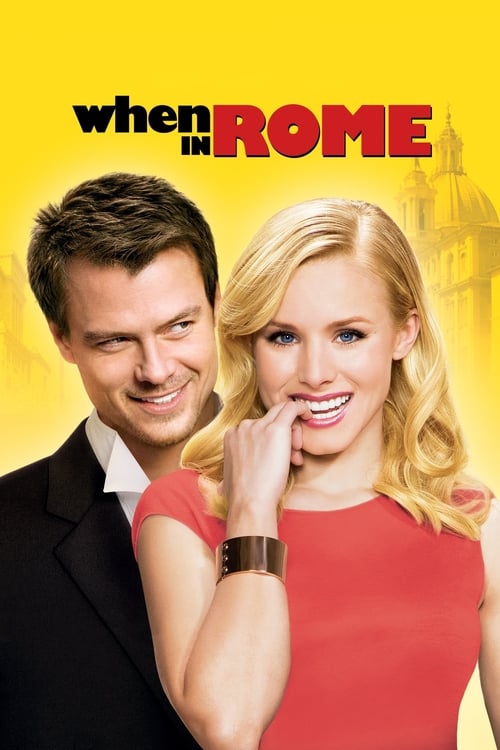
When in Rome
Disillusioned with romance, Beth, an ambitious New Yorker, travels to Rome for her sister's wedding, where she plucks magic coins from a special fountain of love. The coins attract unwanted attention from an assortment of odd yet ardent suitors: a sausage merchant, a street magician, an artist, and a male model. But when the best man from the wedding, persistent reporter Nick, throws his hat in the ring, Beth wonders if his love is the real thing.
The film underperformed commercially against its moderate budget of $55.0M, earning $43.0M globally (-22% loss).


Plot Structure
Story beats plotted across runtime


Narrative Arc
Emotional journey through the story's key moments
Story Circle
Blueprint 15-beat structure
Arcplot Score Breakdown
Weighted: Precision (70%) + Arc (15%) + Theme (15%)
When in Rome (2010) demonstrates carefully calibrated dramatic framework, characteristic of Mark Steven Johnson's storytelling approach. This structural analysis examines how the film's 15-point plot structure maps to proven narrative frameworks across 1 hour and 31 minutes. With an Arcplot score of 6.7, the film balances conventional beats with creative variation.
Structural Analysis
The Status Quo at 1 minutes (1% through the runtime) establishes Beth works obsessively at the Guggenheim Museum, completely devoted to her career while her love life remains nonexistent. She's established as a workaholic who has given up on romance.. The analysis reveals that this early placement immediately immerses viewers in the story world.
The inciting incident occurs at 11 minutes when Joan announces she's getting married in Rome in two weeks to a man she just met. Beth must drop everything and fly to Italy for the whirlwind wedding, disrupting her controlled life.. At 12% through the film, this Disruption aligns precisely with traditional story structure. This beat shifts the emotional landscape, launching the protagonist into the central conflict.
The First Threshold at 23 minutes marks the transition into Act II, occurring at 25% of the runtime. This indicates the protagonist's commitment to Heartbroken and drunk after the wedding, Beth wades into the Fountain of Love and takes five coins, including a poker chip. This impulsive act unknowingly casts a love spell on the coin owners, pulling her into a magical romantic chaos., moving from reaction to action.
At 46 minutes, the Midpoint arrives at 50% of the runtime—precisely centered, creating perfect narrative symmetry. Significantly, this crucial beat Beth and Nick share a genuinely romantic date at a restaurant where everything goes wrong but they connect deeply. This false victory makes Beth believe maybe love is possible, but she still doubts if Nick's feelings are from the spell., fundamentally raising what's at risk. The emotional intensity shifts, dividing the narrative into clear before-and-after phases.
The Collapse moment at 68 minutes (75% through) represents the emotional nadir. Here, Beth returns the poker chip to the fountain, believing she's freeing Nick from the spell. When Nick appears confused and distant afterward, she believes she's lost him forever and that their connection was never real., shows the protagonist at their lowest point. This beat's placement in the final quarter sets up the climactic reversal.
The Second Threshold at 73 minutes initiates the final act resolution at 80% of the runtime. Beth learns the truth: the poker chip wasn't Nick's - he was never under a spell. His love for her has been real all along. She realizes she must take a leap of faith and choose love over fear., demonstrating the transformation achieved throughout the journey.
Emotional Journey
When in Rome's emotional architecture traces a deliberate progression across 15 carefully calibrated beats.
Narrative Framework
This structural analysis employs proven narrative structure principles that track dramatic progression. By mapping When in Rome against these established plot points, we can identify how Mark Steven Johnson utilizes or subverts traditional narrative conventions. The plot point approach reveals not only adherence to structural principles but also creative choices that distinguish When in Rome within the comedy genre.
Mark Steven Johnson's Structural Approach
Among the 4 Mark Steven Johnson films analyzed on Arcplot, the average structural score is 7.1, reflecting strong command of classical structure. When in Rome takes a more unconventional approach compared to the director's typical style. For comparative analysis, explore the complete Mark Steven Johnson filmography.
Comparative Analysis
Additional comedy films include The Bad Guys, Ella Enchanted and The Evening Star. For more Mark Steven Johnson analyses, see Ghost Rider, Simon Birch and Daredevil.
Plot Points by Act
Act I
SetupStatus Quo
Beth works obsessively at the Guggenheim Museum, completely devoted to her career while her love life remains nonexistent. She's established as a workaholic who has given up on romance.
Theme
Joan tells Beth that she needs to open herself up to love and stop hiding behind her work. The theme is stated: love requires vulnerability and the willingness to take a leap of faith.
Worldbuilding
Beth's world is established: her demanding job at the Guggenheim, her cynical view of love, her relationship with her romantic sister Joan, and her parents' failed marriage that shaped her fear of commitment.
Disruption
Joan announces she's getting married in Rome in two weeks to a man she just met. Beth must drop everything and fly to Italy for the whirlwind wedding, disrupting her controlled life.
Resistance
Beth travels to Rome and meets Nick, the best man, at the rehearsal dinner. Despite initial sparks, she witnesses what appears to be Nick kissing another woman, confirming her belief that men can't be trusted.
Act II
ConfrontationFirst Threshold
Heartbroken and drunk after the wedding, Beth wades into the Fountain of Love and takes five coins, including a poker chip. This impulsive act unknowingly casts a love spell on the coin owners, pulling her into a magical romantic chaos.
Mirror World
Back in New York, Nick shows up at Beth's work, pursuing her genuinely. Their connection represents the authentic love subplot that contrasts with the artificial obsession of the enchanted suitors.
Premise
The promise of the premise unfolds: Beth is comically pursued by four enchanted suitors - a sausage magnate, a street magician, a male model, and an artist - while also dating Nick, unsure if his feelings are real or spell-induced.
Midpoint
Beth and Nick share a genuinely romantic date at a restaurant where everything goes wrong but they connect deeply. This false victory makes Beth believe maybe love is possible, but she still doubts if Nick's feelings are from the spell.
Opposition
Beth's fears intensify as she juggles her demanding job with the chaos of the suitors. She discovers Nick's poker chip among the coins, leading her to believe his love is also just a spell. Her cynicism and workaholic tendencies threaten to destroy what could be real love.
Collapse
Beth returns the poker chip to the fountain, believing she's freeing Nick from the spell. When Nick appears confused and distant afterward, she believes she's lost him forever and that their connection was never real.
Crisis
Beth spirals into despair, believing she was right all along about love being an illusion. She throws herself back into work, convinced she'll never find real love and that she was foolish to hope.
Act III
ResolutionSecond Threshold
Beth learns the truth: the poker chip wasn't Nick's - he was never under a spell. His love for her has been real all along. She realizes she must take a leap of faith and choose love over fear.
Synthesis
Beth races to find Nick, finally willing to be vulnerable. She confronts her fears, admits her feelings, and chooses to believe in love. The enchanted suitors are freed when their coins are returned to the fountain.
Transformation
Beth and Nick unite in a kiss, with Beth finally open to love and no longer hiding behind her work. The former workaholic who didn't believe in romance has transformed into someone willing to take risks for love.