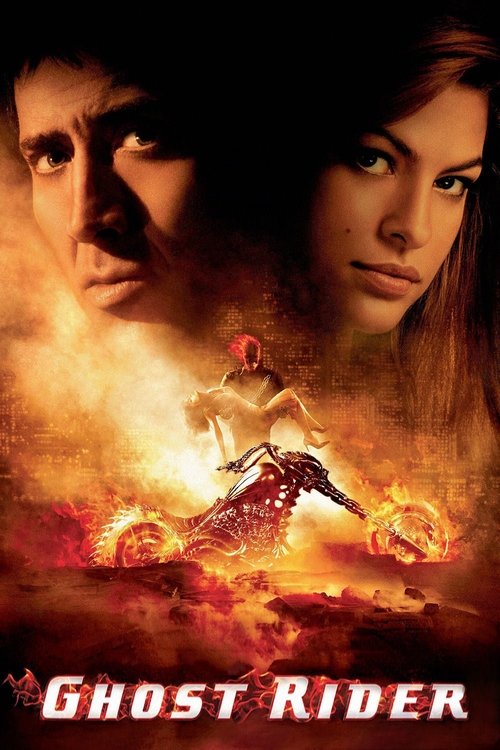
Ghost Rider
In order to save his dying father, young stunt cyclist Johnny Blaze sells his soul to Mephistopheles and sadly parts from the pure-hearted Roxanne Simpson, the love of his life. Years later, Johnny's path crosses again with Roxanne, now a go-getting reporter, and also with Mephistopheles, who offers to release Johnny's soul if Johnny becomes the fabled, fiery 'Ghost Rider'.
Despite a considerable budget of $110.0M, Ghost Rider became a box office success, earning $228.7M worldwide—a 108% return.
1 win & 11 nominations


Plot Structure
Story beats plotted across runtime


Narrative Arc
Emotional journey through the story's key moments
Story Circle
Blueprint 15-beat structure
Arcplot Score Breakdown
Weighted: Precision (70%) + Arc (15%) + Theme (15%)
Ghost Rider (2007) reveals carefully calibrated plot construction, characteristic of Mark Steven Johnson's storytelling approach. This structural analysis examines how the film's 15-point plot structure maps to proven narrative frameworks across 1 hour and 54 minutes. With an Arcplot score of 6.8, the film balances conventional beats with creative variation.
Characters
Cast & narrative archetypes

Johnny Blaze / Ghost Rider
Roxanne Simpson
Mephistopheles
Blackheart
Caretaker
Main Cast & Characters
Johnny Blaze / Ghost Rider
Played by Nicolas Cage
A stunt motorcyclist who sold his soul to save his father and becomes the Devil's bounty hunter by night
Roxanne Simpson
Played by Eva Mendes
Johnny's former love and investigative journalist who re-enters his life
Mephistopheles
Played by Peter Fonda
The Devil who tricks Johnny into a soul contract and manipulates him as the Ghost Rider
Blackheart
Played by Wes Bentley
Mephistopheles' rebellious son seeking to claim souls and overthrow his father
Caretaker
Played by Sam Elliott
A mysterious cemetery caretaker who knows the Ghost Rider's history and guides Johnny
Structural Analysis
The Status Quo at 1 minutes (1% through the runtime) establishes Young Johnny Blaze works as a stunt rider alongside his father Barton at a carnival, living a simple life with his girlfriend Roxanne Simpson. The image of father and son performing together establishes Johnny's world of daredevil stunts and family bonds.. The analysis reveals that this early placement immediately immerses viewers in the story world.
The inciting incident occurs at 14 minutes when Adult Johnny Blaze, now a famous motorcycle stuntman, encounters Roxanne again after years apart. That same night, Mephistopheles appears to call in his debt, transforming Johnny into the Ghost Rider for the first time as Blackheart arrives on Earth seeking the Contract of San Venganza.. At 12% through the film, this Disruption aligns precisely with traditional story structure. This beat shifts the emotional landscape, launching the protagonist into the central conflict.
The First Threshold at 29 minutes marks the transition into Act II, occurring at 25% of the runtime. This shows the protagonist's commitment to Johnny accepts his role as the Devil's bounty hunter after Mephistopheles explicitly commands him to destroy Blackheart and his fallen angel companions. Despite wanting freedom, Johnny chooses to hunt the demons rather than let innocents die, crossing into his new supernatural existence., moving from reaction to action.
At 57 minutes, the Midpoint arrives at 50% of the runtime—precisely centered, creating perfect narrative symmetry. The analysis reveals that this crucial beat Roxanne witnesses Johnny's transformation into the Ghost Rider and flees in terror. Johnny's false victory of defeating the demons is shattered as he realizes his curse has cost him the woman he loves. The stakes escalate as Blackheart reveals he knows where the Contract of San Venganza is hidden., fundamentally raising what's at risk. The emotional intensity shifts, dividing the narrative into clear before-and-after phases.
The Collapse moment at 86 minutes (75% through) represents the emotional nadir. Here, Carter Slade uses his final Ghost Rider transformation to ride alongside Johnny to San Venganza, then fades away forever - sacrificing the last of his power. Johnny arrives alone to face Blackheart, who has already obtained the Contract and absorbed a thousand corrupt souls, becoming Legion., demonstrates the protagonist at their lowest point. This beat's placement in the final quarter sets up the climactic reversal.
The Second Threshold at 91 minutes initiates the final act resolution at 80% of the runtime. Johnny realizes that Blackheart's absorption of a thousand souls has given him a thousand souls worth of guilt. Johnny transforms and unleashes his Penance Stare, using Blackheart's own power against him - the more souls Blackheart consumed, the more vulnerable he became to Johnny's judgment., demonstrating the transformation achieved throughout the journey.
Emotional Journey
Ghost Rider's emotional architecture traces a deliberate progression across 15 carefully calibrated beats.
Narrative Framework
This structural analysis employs systematic plot point analysis that identifies crucial turning points. By mapping Ghost Rider against these established plot points, we can identify how Mark Steven Johnson utilizes or subverts traditional narrative conventions. The plot point approach reveals not only adherence to structural principles but also creative choices that distinguish Ghost Rider within the thriller genre.
Mark Steven Johnson's Structural Approach
Among the 4 Mark Steven Johnson films analyzed on Arcplot, the average structural score is 7.1, reflecting strong command of classical structure. Ghost Rider takes a more unconventional approach compared to the director's typical style. For comparative analysis, explore the complete Mark Steven Johnson filmography.
Comparative Analysis
Additional thriller films include The Warriors, Thunderball and Rustom. For more Mark Steven Johnson analyses, see Simon Birch, Daredevil and When in Rome.
Plot Points by Act
Act I
SetupStatus Quo
Young Johnny Blaze works as a stunt rider alongside his father Barton at a carnival, living a simple life with his girlfriend Roxanne Simpson. The image of father and son performing together establishes Johnny's world of daredevil stunts and family bonds.
Theme
Roxanne tells young Johnny that he can't live in fear, urging him to run away with her. This statement encapsulates the film's central theme: the choice between living paralyzed by fear or embracing one's destiny despite the consequences.
Worldbuilding
The prologue establishes Johnny's carnival stunt life, his love for Roxanne, and his father's terminal cancer. Young Johnny encounters Mephistopheles and unknowingly signs away his soul in blood to save his father. His father dies in a stunt accident anyway, revealing the Devil's cruel bargain.
Disruption
Adult Johnny Blaze, now a famous motorcycle stuntman, encounters Roxanne again after years apart. That same night, Mephistopheles appears to call in his debt, transforming Johnny into the Ghost Rider for the first time as Blackheart arrives on Earth seeking the Contract of San Venganza.
Resistance
Johnny struggles to understand his new reality as the Ghost Rider. He wakes confused after his first transformation, tries to reconnect with Roxanne while hiding his curse, and begins experiencing the painful nightly transformations. He researches demons and encounters the mysterious Caretaker at a cemetery.
Act II
ConfrontationFirst Threshold
Johnny accepts his role as the Devil's bounty hunter after Mephistopheles explicitly commands him to destroy Blackheart and his fallen angel companions. Despite wanting freedom, Johnny chooses to hunt the demons rather than let innocents die, crossing into his new supernatural existence.
Mirror World
Johnny reconnects with Roxanne over dinner, revealing his vulnerable humanity beneath the curse. Their relationship represents everything Johnny is fighting for - the possibility of love and redemption. Roxanne embodies the normal life he desperately wants but fears he can never have.
Premise
Johnny hunts Blackheart's demon henchmen as the Ghost Rider, using his Penance Stare and hellfire chains. He battles Gressil, Abigor, and Wallow in spectacular supernatural confrontations while trying to maintain his relationship with Roxanne and understand the Caretaker's cryptic guidance about the previous Ghost Rider.
Midpoint
Roxanne witnesses Johnny's transformation into the Ghost Rider and flees in terror. Johnny's false victory of defeating the demons is shattered as he realizes his curse has cost him the woman he loves. The stakes escalate as Blackheart reveals he knows where the Contract of San Venganza is hidden.
Opposition
Johnny is captured by police and powerless during daylight. Blackheart kidnaps Roxanne to force Johnny to retrieve the Contract. The Caretaker reveals himself as Carter Slade, the legendary Ghost Rider who hid the contract. Johnny must choose between saving Roxanne and preventing Blackheart from gaining ultimate power.
Collapse
Carter Slade uses his final Ghost Rider transformation to ride alongside Johnny to San Venganza, then fades away forever - sacrificing the last of his power. Johnny arrives alone to face Blackheart, who has already obtained the Contract and absorbed a thousand corrupt souls, becoming Legion.
Crisis
Johnny faces the seemingly invincible Legion-powered Blackheart in the ruins of San Venganza. Roxanne is held hostage, and Johnny appears outmatched against the demon who now contains a thousand evil souls. Johnny must find a way to use his curse as a weapon rather than a burden.
Act III
ResolutionSecond Threshold
Johnny realizes that Blackheart's absorption of a thousand souls has given him a thousand souls worth of guilt. Johnny transforms and unleashes his Penance Stare, using Blackheart's own power against him - the more souls Blackheart consumed, the more vulnerable he became to Johnny's judgment.
Synthesis
Johnny defeats Blackheart with the amplified Penance Stare, destroying the demon with the weight of a thousand guilty souls. Mephistopheles appears to claim victory and offers to release Johnny from the curse. Johnny refuses, choosing to keep the Ghost Rider power and use it against the Devil himself.
Transformation
Johnny rides off at dawn, no longer a victim of his curse but its master. Roxanne accepts him, and Johnny embraces his destiny as the Ghost Rider - not as the Devil's bounty hunter, but as his own agent of vengeance. He has transformed from a man running from fear into one who rides toward it.