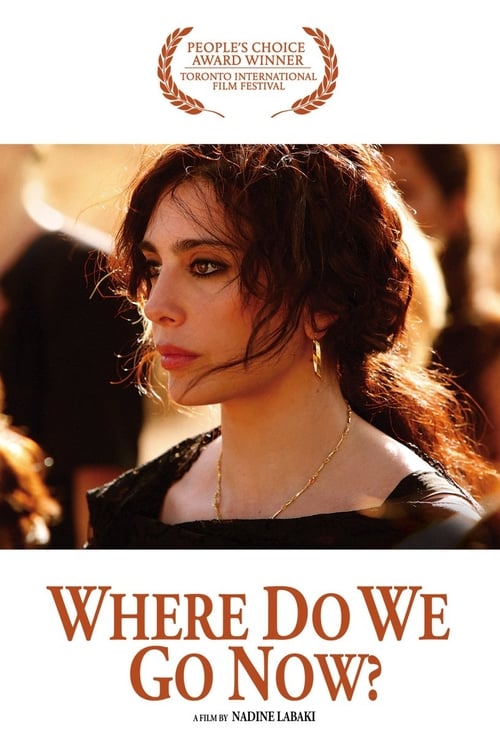
Where Do We Go Now?
In a remote, isolated Lebanese village surrounded by land mines, Muslims and Christians live together in peace. As civil strife starts to engulf the country around them, the women in the village try, by various means and to varying success, to keep their men in the dark by sabotaging the village radio, and then destroying the village TV.
Despite its modest budget of $6.7M, Where Do We Go Now? became a solid performer, earning $21.0M worldwide—a 213% return. The film's unconventional structure resonated with audiences, demonstrating that strong storytelling can transcend budget limitations.
9 wins & 5 nominations


Plot Structure
Story beats plotted across runtime


Narrative Arc
Emotional journey through the story's key moments
Story Circle
Blueprint 15-beat structure
Arcplot Score Breakdown
Weighted: Precision (70%) + Arc (15%) + Theme (15%)
Where Do We Go Now? (2011) exemplifies strategically placed story structure, characteristic of Nadine Labaki's storytelling approach. This structural analysis examines how the film's 15-point plot structure maps to proven narrative frameworks across 1 hour and 50 minutes. With an Arcplot score of 7.4, the film balances conventional beats with creative variation.
Structural Analysis
The Status Quo at 1 minutes (1% through the runtime) establishes Women in black veils walk through a cemetery, switching religious symbols on graves to hide sectarian identities from the men. The opening image establishes the fragile peace maintained through deception.. Of particular interest, this early placement immediately immerses viewers in the story world.
The inciting incident occurs at 13 minutes when News arrives via television about sectarian violence escalating in the cities. The men begin arguing along religious lines, and the women realize their fragile peace is threatened by external forces.. At 12% through the film, this Disruption aligns precisely with traditional story structure. This beat shifts the emotional landscape, launching the protagonist into the central conflict.
The First Threshold at 28 minutes marks the transition into Act II, occurring at 25% of the runtime. This reveals the protagonist's commitment to The women make the active choice to take extreme measures: they hire Ukrainian dancers and smuggle hash into the village to distract the men. This commits them to an escalating series of deceptions., moving from reaction to action.
At 55 minutes, the Midpoint arrives at 50% of the runtime—precisely centered, creating perfect narrative symmetry. Significantly, this crucial beat A false victory: the women stage a "miracle" where the Virgin Mary statue appears to cry, bringing both Christians and Muslims together in shared religious fervor. For a moment, it seems their problem is solved through faith rather than deception., fundamentally raising what's at risk. The emotional intensity shifts, dividing the narrative into clear before-and-after phases.
The Collapse moment at 83 minutes (75% through) represents the emotional nadir. Here, A young Christian man is killed by outside militants. His death - the "whiff of death" - shatters the village's protective bubble. The men prepare for revenge and sectarian war becomes inevitable. All the women's efforts appear to have failed., indicates the protagonist at their lowest point. This beat's placement in the final quarter sets up the climactic reversal.
The Second Threshold at 88 minutes initiates the final act resolution at 80% of the runtime. The women realize they must reveal the truth: they confess to all their deceptions and lies. By exposing their manipulation, they strip away the men's excuses for violence and force them to take responsibility for their own choices., demonstrating the transformation achieved throughout the journey.
Emotional Journey
Where Do We Go Now?'s emotional architecture traces a deliberate progression across 15 carefully calibrated beats.
Narrative Framework
This structural analysis employs proven narrative structure principles that track dramatic progression. By mapping Where Do We Go Now? against these established plot points, we can identify how Nadine Labaki utilizes or subverts traditional narrative conventions. The plot point approach reveals not only adherence to structural principles but also creative choices that distinguish Where Do We Go Now? within the drama genre.
Nadine Labaki's Structural Approach
Among the 3 Nadine Labaki films analyzed on Arcplot, the average structural score is 6.2, demonstrating varied approaches to story architecture. Where Do We Go Now? represents one of the director's most structurally precise works. For comparative analysis, explore the complete Nadine Labaki filmography.
Comparative Analysis
Additional drama films include After Thomas, South Pacific and Dirty Dancing: Havana Nights. For more Nadine Labaki analyses, see Capernaum, Caramel.
Plot Points by Act
Act I
SetupStatus Quo
Women in black veils walk through a cemetery, switching religious symbols on graves to hide sectarian identities from the men. The opening image establishes the fragile peace maintained through deception.
Theme
One of the women states: "We must protect them from themselves." The theme of women using unconventional methods to preserve peace and prevent male violence is established.
Worldbuilding
The remote village is introduced: Christians and Muslims live side by side, sharing a cafe and church/mosque. Daily routines show superficial harmony but underlying tensions. The women run the village while men posture about religion and politics.
Disruption
News arrives via television about sectarian violence escalating in the cities. The men begin arguing along religious lines, and the women realize their fragile peace is threatened by external forces.
Resistance
The women debate how to prevent their village from descending into violence like the rest of the country. Led by Amal (Christian) and Takla, they brainstorm increasingly creative diversionary tactics. Tensions among the men escalate with each news report.
Act II
ConfrontationFirst Threshold
The women make the active choice to take extreme measures: they hire Ukrainian dancers and smuggle hash into the village to distract the men. This commits them to an escalating series of deceptions.
Mirror World
The Ukrainian women arrive, representing an outside perspective free from sectarian hatred. Their interactions with the village men showcase the absurdity of the religious divisions and model a different way of relating.
Premise
The "fun and games" of the women's schemes: the Ukrainian dancers distract the men, hash makes them mellow, fake miracles are staged. Each ploy works temporarily but requires increasingly elaborate deceptions. Comic set pieces alternate with mounting dread as news of outside violence continues.
Midpoint
A false victory: the women stage a "miracle" where the Virgin Mary statue appears to cry, bringing both Christians and Muslims together in shared religious fervor. For a moment, it seems their problem is solved through faith rather than deception.
Opposition
The miracles' effect wears off as reality intrudes. A supply truck is attacked by militants, cutting off the village. The men acquire weapons. The women's tricks become less effective as male pride and fear take over. Interfaith romance between young villagers is discovered, raising stakes.
Collapse
A young Christian man is killed by outside militants. His death - the "whiff of death" - shatters the village's protective bubble. The men prepare for revenge and sectarian war becomes inevitable. All the women's efforts appear to have failed.
Crisis
The women mourn in the dark night of the soul. They gather at the cemetery where the film began, facing the imminent destruction of their community. They must choose between giving up or making one final sacrifice.
Act III
ResolutionSecond Threshold
The women realize they must reveal the truth: they confess to all their deceptions and lies. By exposing their manipulation, they strip away the men's excuses for violence and force them to take responsibility for their own choices.
Synthesis
In the finale, the women publicly confess their schemes. The men, confronted with their own absurdity and the lengths the women went to protect them, must choose. Amal delivers an impassioned plea for peace, synthesizing love and pragmatism. The village must decide its own fate.
Transformation
The closing image mirrors the opening: women in the cemetery. But now they work openly, together, with the men's knowledge and cooperation. The camera pulls back to reveal the village choosing peace - fragile but no longer based on deception, but on conscious choice.