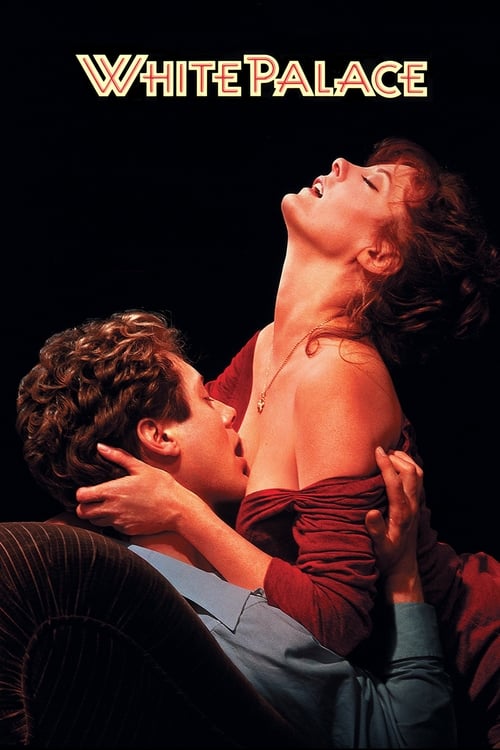
White Palace
Max Baron is a Jewish advertising executive in his 20s who's still getting over the death of his wife. Nora Baker is a 40-something diner waitress who enjoys the wilder side of life. Mismatched or not, their attraction is instant and smoldering. With time, however, their class and age differences become an obstacle in their relationship, especially since Max can't keep Nora a secret from his Jewish friends and upper-crust associates forever.
The film earned $17.5M at the global box office.
1 win & 1 nomination


Plot Structure
Story beats plotted across runtime


Narrative Arc
Emotional journey through the story's key moments
Story Circle
Blueprint 15-beat structure
Arcplot Score Breakdown
Weighted: Precision (70%) + Arc (15%) + Theme (15%)
White Palace (1990) demonstrates deliberately positioned dramatic framework, characteristic of Luis Mandoki's storytelling approach. This structural analysis examines how the film's 15-point plot structure maps to proven narrative frameworks across 1 hour and 43 minutes. With an Arcplot score of 7.0, the film balances conventional beats with creative variation.
Structural Analysis
The Status Quo at 1 minutes (1% through the runtime) establishes Max Baron, still grieving his wife's death two years later, maintains an emotionally frozen, controlled life as a young advertising executive, surrounded by yuppie friends who don't understand his grief.. Notably, this early placement immediately immerses viewers in the story world.
The inciting incident occurs at 12 minutes when Max meets Nora Baker, a brash, working-class waitress at White Palace diner after getting lost. Her unfiltered directness and raw sexuality contrasts sharply with his controlled world.. At 11% through the film, this Disruption aligns precisely with traditional story structure. This beat shifts the emotional landscape, launching the protagonist into the central conflict.
The First Threshold at 25 minutes marks the transition into Act II, occurring at 24% of the runtime. This illustrates the protagonist's commitment to Max makes the active choice to return to Nora's house and begins a sexual relationship with her, crossing the class divide and entering a world of raw emotion and authenticity., moving from reaction to action.
At 52 minutes, the Midpoint arrives at 50% of the runtime—precisely centered, creating perfect narrative symmetry. Structural examination shows that this crucial beat False victory: Max and Nora's relationship deepens emotionally. He begins to fall in love, but the class divide issue remains unresolved - he still hides her from his friends and family., fundamentally raising what's at risk. The emotional intensity shifts, dividing the narrative into clear before-and-after phases.
The Collapse moment at 76 minutes (73% through) represents the emotional nadir. Here, The relationship collapses when Max's shame and inability to defend Nora publicly becomes undeniable. They break up painfully, with Max losing the one genuine connection that brought him back to life., reveals the protagonist at their lowest point. This beat's placement in the final quarter sets up the climactic reversal.
The Second Threshold at 82 minutes initiates the final act resolution at 80% of the runtime. Max realizes that authenticity and love matter more than social status. He chooses to reject his shallow world and fight for Nora, synthesizing his need for genuine connection with courage., demonstrating the transformation achieved throughout the journey.
Emotional Journey
White Palace's emotional architecture traces a deliberate progression across 15 carefully calibrated beats.
Narrative Framework
This structural analysis employs a 15-point narrative structure framework that maps key story moments. By mapping White Palace against these established plot points, we can identify how Luis Mandoki utilizes or subverts traditional narrative conventions. The plot point approach reveals not only adherence to structural principles but also creative choices that distinguish White Palace within the drama genre.
Luis Mandoki's Structural Approach
Among the 4 Luis Mandoki films analyzed on Arcplot, the average structural score is 7.3, reflecting strong command of classical structure. White Palace takes a more unconventional approach compared to the director's typical style. For comparative analysis, explore the complete Luis Mandoki filmography.
Comparative Analysis
Additional drama films include After Thomas, South Pacific and Dirty Dancing: Havana Nights. For more Luis Mandoki analyses, see When a Man Loves a Woman, Angel Eyes and Trapped.
Plot Points by Act
Act I
SetupStatus Quo
Max Baron, still grieving his wife's death two years later, maintains an emotionally frozen, controlled life as a young advertising executive, surrounded by yuppie friends who don't understand his grief.
Theme
At a party, Max's friend comments on authenticity and social barriers, foreshadowing the film's exploration of class division and genuine human connection versus surface-level propriety.
Worldbuilding
Establishment of Max's sterile upper-middle-class world, his friends' superficiality, his inability to move past his wife's death, and the rigid social expectations of his circle.
Disruption
Max meets Nora Baker, a brash, working-class waitress at White Palace diner after getting lost. Her unfiltered directness and raw sexuality contrasts sharply with his controlled world.
Resistance
Max resists the attraction to Nora, recognizing she represents everything his social circle would reject. He debates whether to pursue this connection that violates class boundaries.
Act II
ConfrontationFirst Threshold
Max makes the active choice to return to Nora's house and begins a sexual relationship with her, crossing the class divide and entering a world of raw emotion and authenticity.
Mirror World
Nora becomes the thematic counterpoint to Max's repressed life - she is chaotic, sensual, emotionally honest, and lives in the moment, representing everything he needs to heal.
Premise
Max and Nora explore their passionate relationship in secret. Max experiences genuine emotion and connection for the first time since his wife's death, but keeps Nora hidden from his social world.
Midpoint
False victory: Max and Nora's relationship deepens emotionally. He begins to fall in love, but the class divide issue remains unresolved - he still hides her from his friends and family.
Opposition
Pressure mounts as Max's two worlds collide. His friends discover Nora, reacting with prejudice and shock. Nora feels humiliated by Max's shame about their relationship. Trust erodes.
Collapse
The relationship collapses when Max's shame and inability to defend Nora publicly becomes undeniable. They break up painfully, with Max losing the one genuine connection that brought him back to life.
Crisis
Max returns to his sterile life but recognizes its emptiness. He processes what Nora meant to him and confronts his own cowardice about choosing social acceptance over authentic love.
Act III
ResolutionSecond Threshold
Max realizes that authenticity and love matter more than social status. He chooses to reject his shallow world and fight for Nora, synthesizing his need for genuine connection with courage.
Synthesis
Max publicly declares his love for Nora, confronting his friends' prejudices and choosing her over social acceptance. He pursues Nora and works to rebuild trust and prove his commitment.
Transformation
Max and Nora together, having broken through class barriers. Max has transformed from an emotionally frozen man controlled by social expectations into someone capable of authentic love and emotional honesty.